
A rotary drum dryer stands as one of the most common industrial drying machines for bulk materials. Industrial drum dryers serve as equipment that performs material drying through drum rotation. Also known as roller dryers or rotary dryers, these machines act as the standard and often-used drying equipment in industrial machinery. Rotary drum dryers play a key role in various industries, including building materials, metallurgy, chemicals, and cement, where effective moisture removal is crucial for maintaining product quality and production stability.
Industrial drying proves necessary for gaining steady material features, cutting transportation expenses, and boosting process output. Among different kinds of rotary drum dryers, single drum (single-pass) and three-pass (triple-pass) dryers rank as the two main types.
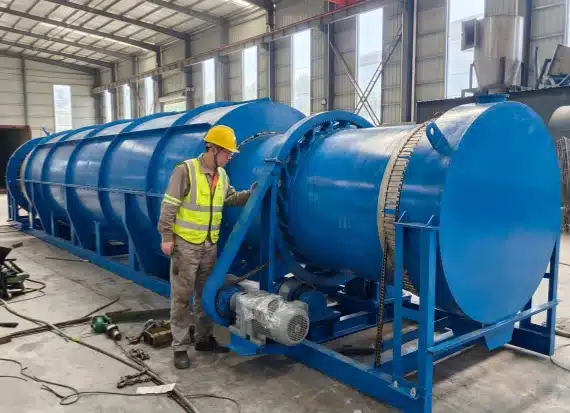
A single drum rotary dryer includes a turning cylindrical shell. Wet materials pass through this shell while facing hot air or gas flow. The drum drying equipment primarily consists of a rotating body, a lifting plate, a transmission device, a supporting device, and a sealing ring. Inside the drum, lifting plates keep raising and scattering the material through the hot gas stream. This process raises heat exchange output.
Single drum rotary dryers suit materials with fair moisture levels, such as sand, mineral powder, coal dust, chicken manure, or clay. Common dried items include sand, mineral powder, coal dust, chicken manure, and cattle manure. These dryers gain broad use in metallurgy, mining, construction materials, and chemical fields.
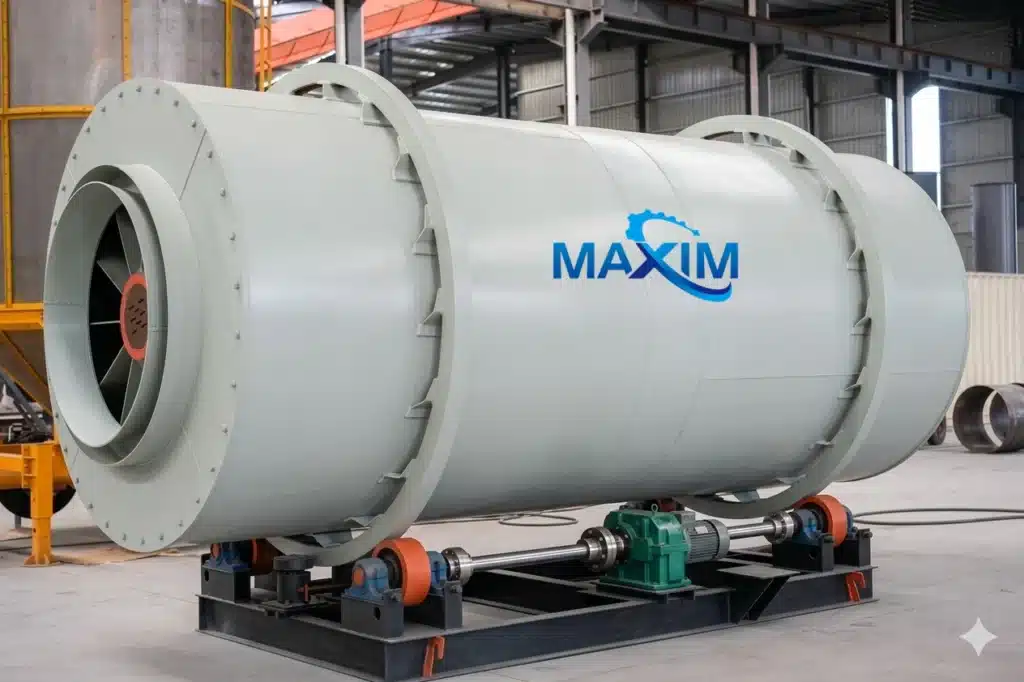
A three-pass rotary dryer has three nested drums—an inner drum inside two outer shells. Materials move through these drums one after another before exiting. This setup lengthens the time materials spend in the dryer without making the whole unit longer.
Material goes in at one end of the inner drum. Flights there lift the material, and it slowly shifts outward via each nested layer while sharing heat with hot air several times. This repeated path boosts contact between the air and the material pieces.
MAXIM machinery supplies custom triple-pass rotary dryers built for strong-capacity tasks where energy saving matters most. Teams adjust each system to fit raw material traits like particle size or starting moisture level.
| Drying Efficiency | Moderate; suitable for uniform materials | High; better heat exchange due to multi-layer design |
| Energy Consumption | Higher energy use per unit output | Lower energy use because heat is reused |
| Space Requirements | Requires a longer installation area | Compact footprint due to concentric structure |
| Investment vs Operating Cost | Lower initial investment but higher operating cost | Higher initial investment but lower long-term cost |
Direct contact occurs between the hot gas flow and the material. Output then matches user needs from 10 tons to 100 tons per hour when heat exchange proves enough. For large-scale steady production lines in areas like metal recycling or biomass handling, the triple-pass dryer brings clear running benefits.
Users pick between a single drum or a three-pass rotary dryer based on key points:
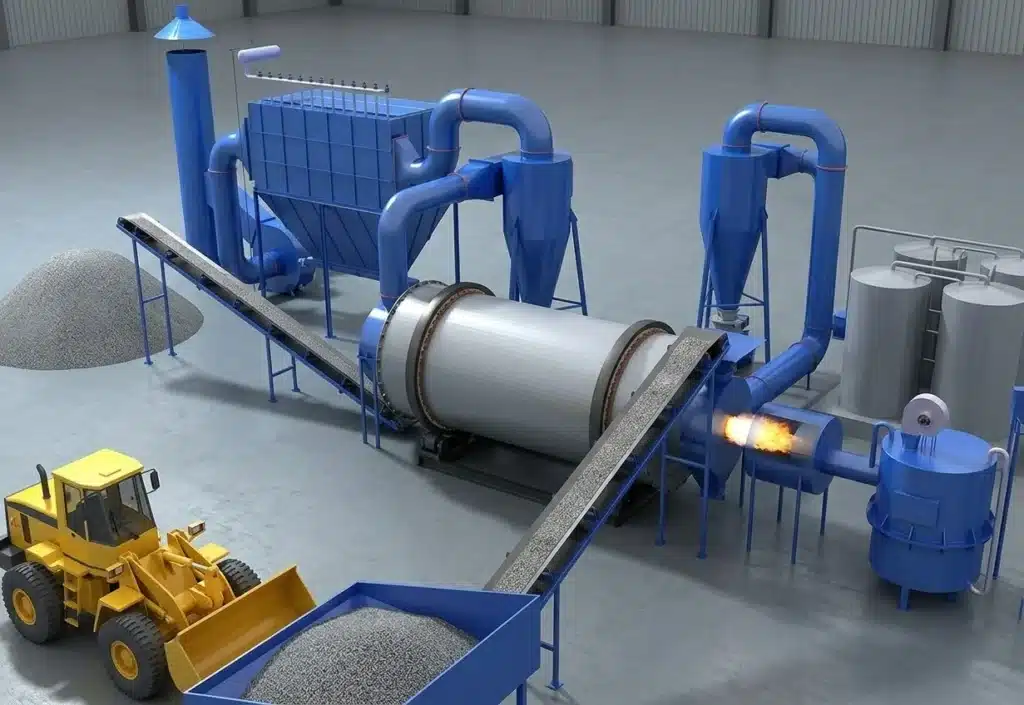
Raw materials with high starting moisture or needs for exact end dryness, such as sludge or biomass, work well with a triple-pass system for even outcomes. Coarse pieces like sand or ore with small moisture changes may need just a single-pass setup.
Sites that call for over 50 tons/hour gain from three-pass dryers’ strong output. Smaller operations often pick single-drum types for their basic nature.
Single-drum units cost less at the start, but triple-pass dryers cut energy bills over the years and lower overall ownership expense.
MAXIM machinery delivers full custom industrial rotary dryer setups that fit client output needs (from small test lines to big industrial sites). Custom work follows customer output demands, material traits, and site setup, so teams shape production line plans and equipment specs to skip “one-size-fits-all” loss.
Plus, every piece of our equipment follows firm environmental rules to match national laws on pollution checks during drying work.
Single drum and three-pass rotary dryers each bring clear benefits based on running aims:
As a skilled maker committed to new ideas in resource recycling tech, MAXIM machinery adds smart control setups to each customized industrial rotary dryer machine for sure automation and simple upkeep over the full service time. MAXIM machinery handles a full-service plan that covers “early talks - plan making - gear building - setup and start - staff training - post-sale upkeep.” Post-sale answers come in under 24 hours to keep production lines running smoothly.
A: Fields like building materials, metallurgy, chemical handling, power making, farm waste care, and mining often turn to rotary drum dryers for bulk solids drying.
A: The triple-pass setup sends hot air back across several layers in nested drums, which lifts thermal use output by as much as 30% and cuts fuel needs per ton handled.
A: Yes. MAXIM machinery focuses on custom industrial rotary dryer machines shaped to exact material traits like particle size spread or moisture amount.
A: Regular checks on lifting plates, seals, bearings, transmission devices, and dust cleaner cleaning keep steady performance going with little stop time.
A: Absolutely. All dryers pass emission checks from outside test groups under national eco protection laws for safe running with low noise and dust output.
Choosing a Rotary Dryer: Single Pass vs. Triple Pass Introduction A rotary drum dryer stands as one of the most common industrial drying machines for bulk materials. Industrial drum dryers serve as equipment that performs material drying through drum rotation. Also known as roller dryers or rotary dryers, these machines act as the standard and excerpt …
