
As worldwide knowledge of ecological durability grows, authorities and sectors face stress. They need to enhance refuse handling methods. Launching a recycling facility tackles this pressing requirement. It provides answers that redirect garbage from dumps. It also lessens dependence on fresh raw substances.
Recycling aids in preserving natural assets. It cuts down greenhouse gas releases. It decreases power use. Financially, it generates new income sources through the trade of treated reusables like metals, plastics, and battery parts. Also, it promotes employment in eco-friendly sectors.
The first step is selecting your target waste stream: batteries, electronic waste, metals, plastics, or mixed solid waste. Each type requires specialized processing lines. For instance, MAXIM machinery offers a lithium battery recycling line that enables efficient separation and resource reuse of valuable components such as battery cells, electrode materials, and metals.
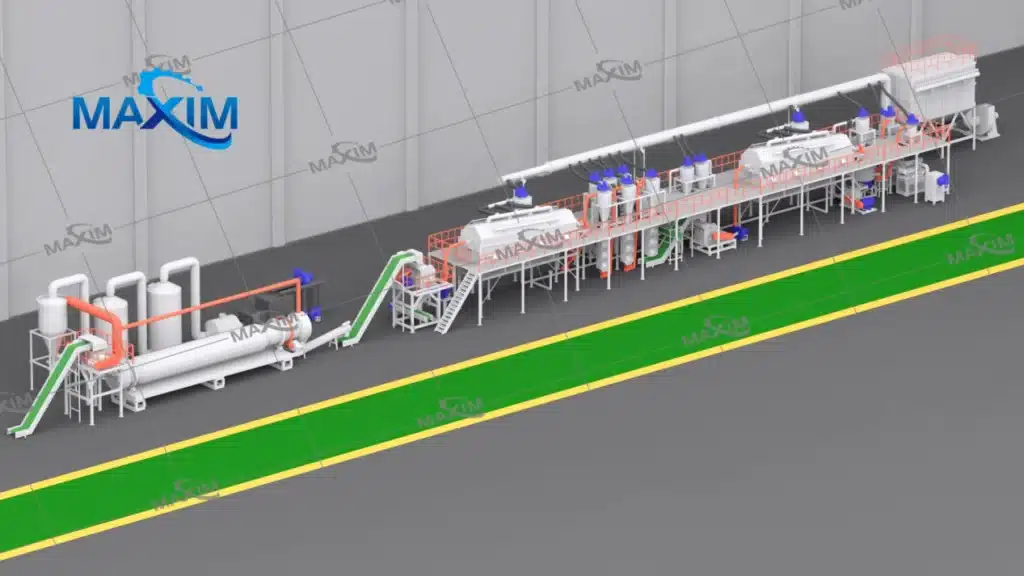
Local rules, like the "Law on the Prevention and Control of Environmental Pollution by Solid Waste," must be observed. MAXIM machinery makes certain the full range of machinery meets those rules. Plus, the machinery features emission levels for dust, noise, and wastewater that third parties have verified.
Select a site spacious enough to accommodate equipment and allow for future growth. Choose a spot close to providers of recyclable materials (industrial parks or municipal collecting stations). This placement reduces transportation costs. Zoning regulations and environmental studies are pre-final selection considerations.
Each recycling line requires specific machines:
MAXIM machinery’s scrap metal recycling production line integrates magnetic separation and eddy current separation technologies to maximize metal purity.
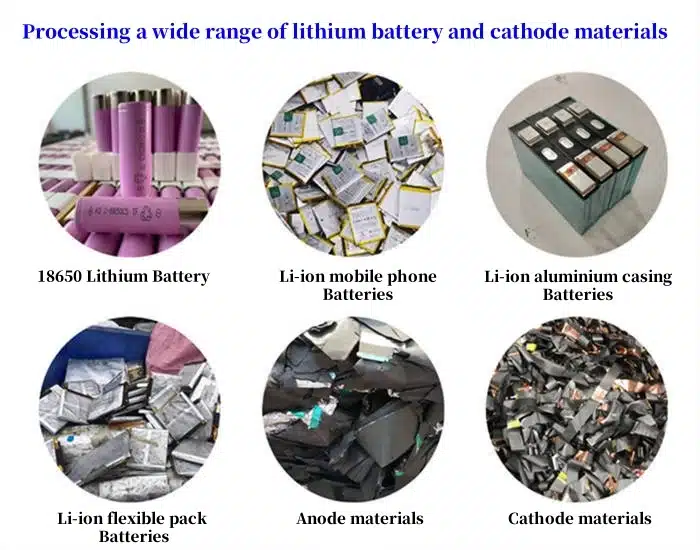
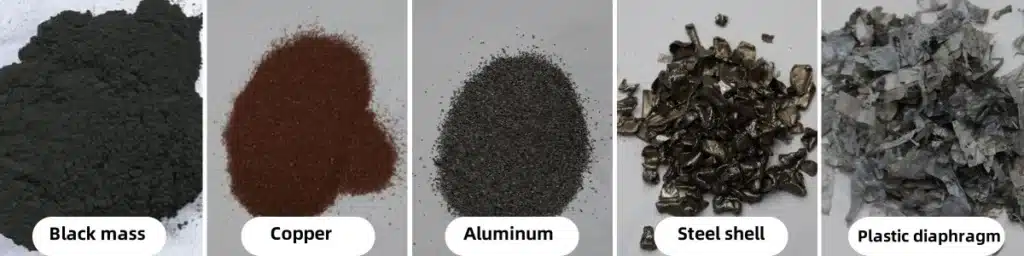
A complete battery recycling plant includes:
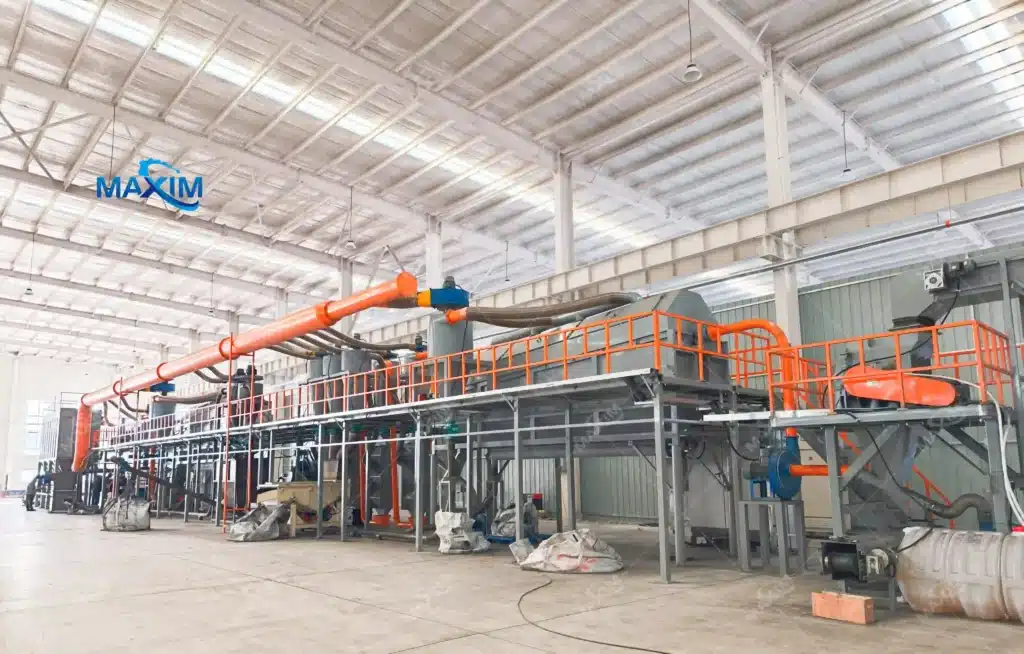
MAXIM machinery’s lithium battery recycling line features full closed-loop processing (Pre-shredding-crushing - sorting) that meets environmental emission standards, supports flexible capacity adjustments from small-scale to industrial-grade operations.
Battery recycling involves hazardous substances like heavy metals and electrolytes. Equip your facility with:
MAXIM machinery’s equipment is equipped with a PLC control system supporting remote monitoring and fault warnings, reducing safety risks during operations.
Costs include:
Depending on scale, investment ranges from hundreds of thousands to several million USD.
Several nations provide funding for sustainable efforts in clean energy or circular economy initiatives. Check with nearby growth organizations for financial aid linked to battery disposal or e-waste handling schemes.
Recovered materials like cobalt, copper foil, and aluminum sheets from batteries can be sold to manufacturers. MAXIM machinery’s solutions help companies reduce costs and increase efficiency by extracting high-purity resources ready for reuse in production chains.
Prepare the ground layout based on workflow requirements: material intake → crushing → sorting → storage → shipping. MAXIM machinery provides custom solutions. These solutions match customer production capacity needs. The solutions also consider material properties and site factors. This method supports smooth layout planning.
Battery recycling requires trained technicians familiar with hazardous waste handling protocols. MAXIM machinery provides personnel training as part of its one-stop service program covering installation through after-sales maintenance.
Partner with local municipalities or electronics retailers offering drop-off points promoted via “battery disposal” campaigns. Offer rewards such as free pickup or refunds on new purchases if consumers bring in old batteries.
Make sure the facility follows every local environmental rule. These rules cover air emission control, noise pollution ordinances, fire codes, and hazardous substance storage ordinances. Such compliance proves particularly important in battery recycling plants. Chemical hazards make this aspect crucial.
Obtain certifications such as ISO 14001 (Environmental Management), hazardous waste operation permits, and pollution discharge permits—all prerequisites before business operations can lawfully commence.
Collaborate with city governments to manage public drop-off locations; collaborate with electric stores or electric vehicle retailers that can route clients to your facility; offer B2B agreements for bulk disposal of lithium-ion batteries using your tailor-made battery recycling scheme.
Implement high-quality containment systems; require employees to wear PPE; implement emergency response systems; include real-time gas leak detectors—especially when handling explosive lithium cells in shredding/crushing operations.
MAXIM machinery’s intelligent control reduces manual intervention, minimizing human exposure during hazardous processes.
Build long-term contracts with electronic repair shops or automotive service centers; launch community buyback programs; integrate IoT-based tracking systems into collection bins to monitor fill levels in real time.
MAXIM machinery’s lithium battery recycling line addresses the pain points of post-decommission lithium battery recycling—including difficulty in recycling, high pollution levels, and resource waste—enabling efficient separation of valuable components. It uses an intelligent PLC system that supports remote monitoring while maintaining compliance with strict emission standards.
You can request a fully customized battery recycling plan based on your target volume or specific types, such as ternary lithium or lithium iron phosphate batteries.
In addition to battery recycling equipment, MAXIM machinery also provides:
All solutions are available as fully customized packages, including layout design based on your site conditions.
A: You’ll need land space, permits/licenses for hazardous waste handling, specialized machinery (e.g., shredders/sorters), trained staff familiar with safety protocols—and ideally a customized solution like MAXIM machinery’s battery recycling equipment tailored to your needs.
A: Demand for rare metals such as cobalt and lithium rises steadily. These materials power EVs and electronics. Regulatory demands mount as well. Battery recycling delivers solid ROI. It achieves this through sales of recovered materials. Government incentives add further value.
A: Thermal runaway (fire/explosion) and toxic gas leaks occur during crush phases. So, advanced safety systems, such as those offered by MAXIM machinery, remain essential for every compliant design.
A: Yes—MAXIM machinery allows flexible capacity adjustments across various chemistries, including ternary lithium & LFP cells via the customized solutions approach.
Discover how integrated lithium battery recycling equipment enhances plant safety, automation, metal recovery rates, and operational efficiency while supporting large-scale, eco-friendly battery recycling production lines.
