
The shift to electric vehicles and renewable energy storage has sharply boosted demand for lithium-ion batteries. The use of lithium-ion batteries continues to grow rapidly across multiple industries. So, managing old batteries turns into a key ecological and industrial issue.
Lithium battery recycling technology lets useful metals like lithium, cobalt, nickel, copper, and aluminum go back into the supply chain. Current recycling setups change waste batteries into raw materials that people can use again. At the same time, these setups cut down on environmental dangers.
Industrial recycling firms thus put money into automatic battery recycling plants that have shredding, crushing, and separation tools. Smart equipment plans and tailored processing options greatly raise recycling output and material recovery levels.
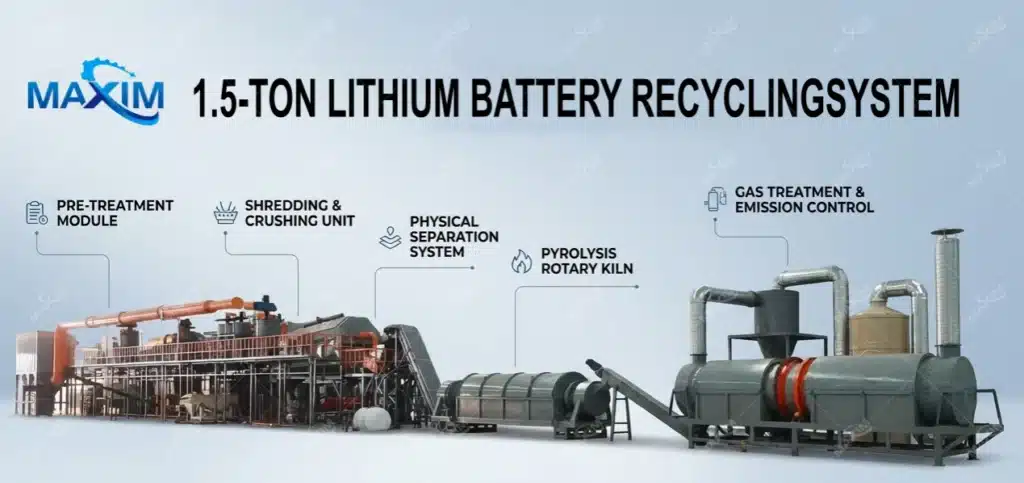
A usual lithium battery recycling plant goes through a few mechanical steps aimed at pulling apart metals and electrode parts from battery scrap.
The process usually covers:
battery dismantling and pre-shredding
secondary crushing
screening and particle classification
magnetic separation
eddy current separation
electrode material recovery
The first step uses a customized shredder machine to break battery packs and cells into sizes that workers can handle. Good shredding makes sure that cathode materials, copper foil, aluminum foil, and separator materials are split apart well.
After shredding and crushing, later sorting tools pull metal parts away from non-metal items. Screening setups sort particle sizes. Meanwhile, magnetic separation and eddy current separation pick out ferrous and non-ferrous metals.
This combined mechanical process guarantees high recovery levels. It also makes useful recycled materials for later refining.
Southeast Asia quickly builds up lithium battery recycling setups. Electric vehicle growth, consumer electronics production, and energy storage systems raise the need for lithium battery recycling in Malaysia.
Malaysia should see solid growth in battery recycling needs as EV use spreads and battery scrap piles up. Reports predict that hundreds of thousands of old EV batteries will need recycling in the years ahead. Thus, strong recycling systems become vital for steady resource handling.
Market studies show that the Malaysian lithium-ion battery recycling market may expand fast over the next ten years. Investment rises, and demand for battery material recovery climbs too.
Since lithium-ion batteries hold useful metals, recycling sites must use strong processing tools to get the most out of resources. This approach also keeps business gains steady.
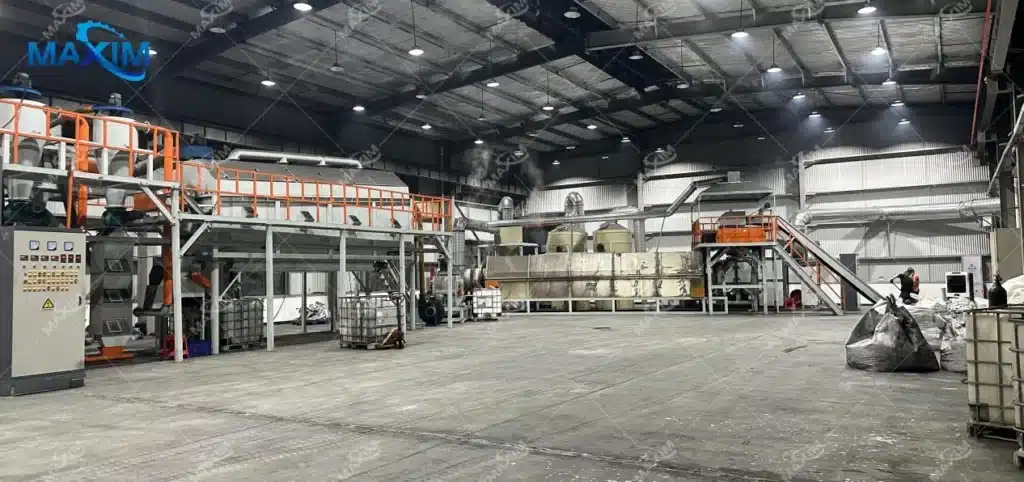
A working lithium battery recycling effort in Malaysia shows how strong recycling tools can fix waste battery handling problems.
The recycling site set up a full lithium battery recycling line from MAXIM machinery. This setup handles waste lithium batteries with a mix of mechanical crushing and sorting tools.
The effort covers a complete recycling process that can be split:
battery shell materials
positive and negative electrode materials
battery separator films
copper and aluminum metals
The full recycling setup boosts recovery output. It also raises the business value of materials that come back.
The effort runs at about 1–1.5 tons of battery waste per hour. This level supports steady factory handling. High material recovery rates stay in place.
This example shows how tailored lithium battery recycling tools help recycling sites set up strong battery recycling plants. These sites meet environmental rules, too.
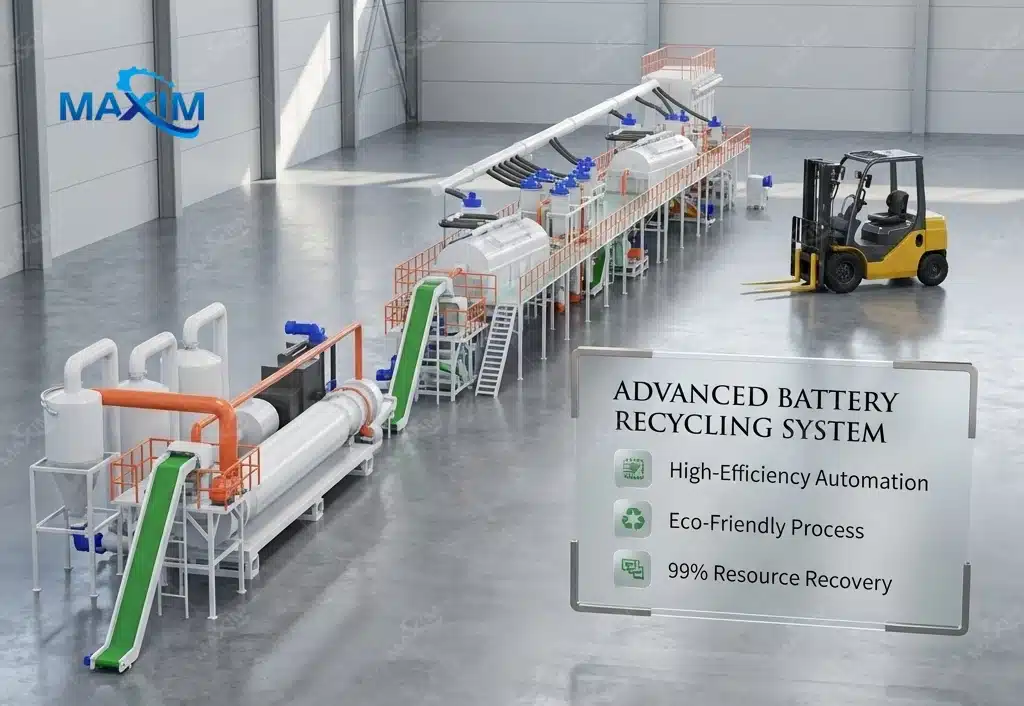
Industrial lithium battery recycling projects require equipment designed for specific processing conditions. MAXIM machinery provides customized solutions for lithium battery recycling plants, allowing recycling companies to build efficient and stable production lines.
The recycling system can be designed according to battery type, production capacity, and plant layout. A typical recycling line includes pre-shredding, crushing, sorting, and metal recovery processes.
This integrated production line helps separate battery cells, electrode materials, copper, aluminum, and other valuable metals efficiently while meeting environmental protection requirements.
The customized shredder machine is the core equipment in a lithium battery recycling plant. It is responsible for breaking battery packs and cells into smaller particles before the separation process begins.
MAXIM machinery designs customized shredder machines specifically for lithium battery recycling. High-torque shredding and wear-resistant blades ensure stable operation when processing complex battery materials.
Stable shredding performance improves downstream separation efficiency and helps battery separator systems recover copper, aluminum, and electrode materials more effectively.
Strong battery separator technology helps a lot in raising material cleanliness levels during recycling.
After the shredding and crushing steps, mixed battery items need to be split into various groups. Better battery separator setups mix several tools to reach exact material splits.
Common split methods include:
magnetic separation for ferrous metals
Eddy current separation for non-ferrous metals
air separation for lightweight materials
screening systems for particle classification
High-accuracy battery separator tools let recycling plants pull copper, aluminum, and electrode materials with good clean levels.
Better split output raises recycling business gains. Material loss drops too.
Current battery recycling plants depend on automation tools to keep work safe and smooth.
MAXIM machinery adds PLC smart control setups that allow:
automated equipment monitoring
remote system control
fault detection and alarm functions
reduced manual intervention
Automation raises production output. It cuts work risks tied to battery recycling.
Bendable system plans let output changes match effort size. These plans back both test recycling plants and big factory sites.
The worldwide lithium battery field will keep growing as electric travel and renewable energy tools advance.
Strong lithium battery recycling setups will stay vital for pulling useful metals. These setups also lessen the need for fresh mining.
Future recycling sites will need more:
automated recycling equipment
high-efficiency battery separator technology
customized shredder machine solutions
flexible lithium battery recycling plant design
Firms that supply customized solutions for recycling tools will hold a big spot in making steady lithium supply lines.
MAXIM machinery keeps working on recycling tool advances. The firm aids recycling firms in building strong and green battery recycling plants.
A: A lithium battery recycling plant usually includes a customized shredder machine, crushing equipment, screening systems, battery separator units, magnetic separators, and eddy current separation systems.
A: Lithium battery recycling pulls useful metals such as lithium, cobalt, and nickel. It stops environmental harm from battery scrap.
A: A battery separator uses magnetic separation, air separation, and eddy current technology to split metal items from plastics and other battery parts.
A: Yes. The lithium battery recycling Malaysia market expands because EV use rises and demand for steady battery scrap handling grows.
A: Yes. Recycling systems can take shape as customized solutions based on battery type, production capacity, and facility layout needs.
The shift to electric vehicles and renewable energy storage has sharply boosted demand for lithium-ion batteries. The use of lithium-ion batteries continues to grow rapidly across multiple industries. So, managing old batteries turns into a key ecological and industrial issue. Lithium battery recycling technology lets useful metals like lithium, cobalt, nickel, copper, and aluminum go excerpt …
