
A scrap steel shredder reduces bulky, irregular steel waste into smaller pieces that are easier to handle, sort, transport, and recycle. For a scrap yard or processing plant, the right machine can improve material flow and prepare steel for further crushing, separation, or sale. Understanding the process helps buyers choose suitable equipment.
Scrap steel can arrive in many different forms, for example thin sheets that have been cut to size, vehicle bodies or household appliances awaiting demolition. Often such materials are difficult to stack in a manner that allows for consistent feeding to a recycling plant. However, once reduced in size by a metal recycling shredder, such material can then be subjected to magnetic separation and/or further crushing within the recycling process and so on.
Note that simple shredding of materials does not remove all contaminants from a material and does not necessarily produce a furnace ready scrap, as the quality of the output is largely dependent on the input material and subsequent sorting.
Breaking up large volumes of scrap into smaller pieces can maximise the use of storage space, aid loading and minimize handling problems. It can also be combined with efficient separation to produce clean metal fractions for sale to downstream processors.
Savings also depend on electricity, blade wear, labor, maintenance and material value. Therefore savings have to be related to the cost per ton of material rather than the purchase price of the crusher.
An industrial metal shredder consists of several connected systems.
· Feeding equipment: The hopper or conveyor of the processing plant is used to control the amount of scrap introduced to the system.
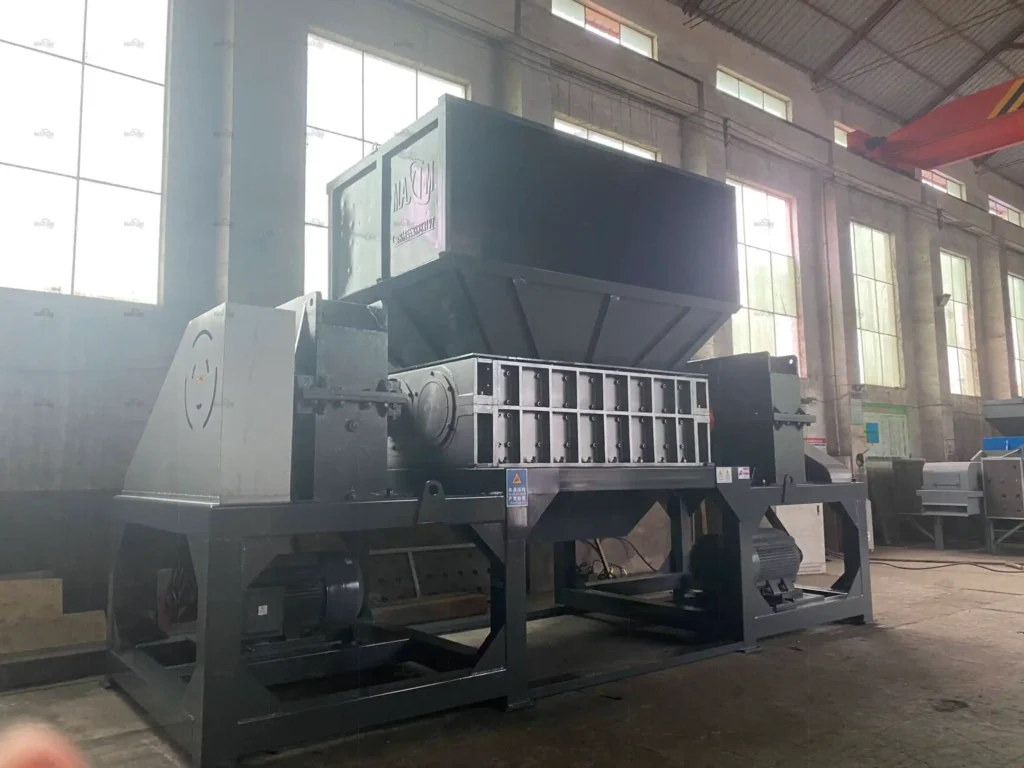
· Shredding chamber: Material is gripped, torn and cut by rotating cutters in a Shear-type machine.
· Drive system: The drive system consists of the motors and gearboxes necessary to generate the necessary torque to crush material.
· Discharge equipment: A conveyor for the discharge of processed material to subsequent plant sections.
· Control system: The controls for the various functions of the drive and can be set up to give an overload alarm and/or monitoring functions.
A hammer shredder is different from a regular shredder. The rotating hammers deliver additional crushing impact. They are not replaceable by each other.
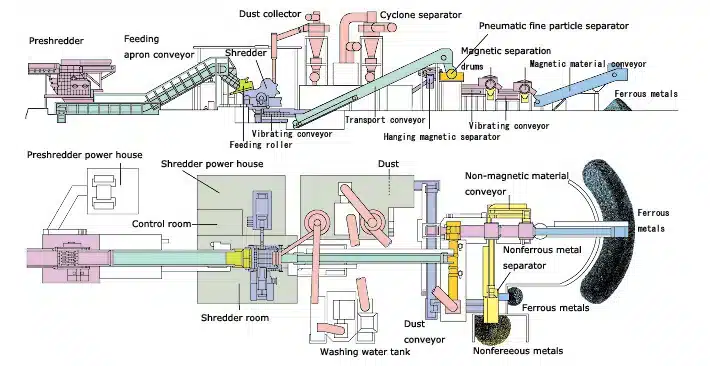
A single machine will normally only reduce in size, but a complete line can also convey and separate material.
Checking for sealed pressurized containers, flammable residues, and other items of concern as well as prohibited items such as batteries should be part of the incoming load inspection. Guards, emergency stops, overload protection, dust control and safe access to the equipment for maintenance purposes must be verified for the installed equipment. Maintenance should only commence after the equipment has been isolated and all hazardous stored energy has been controlled.

Scrap materials which can be fed to an industrial scrap metal shredder depend on the design of the shredder and the feed size. Common scrap metals are scrap steel sheets, light metal plate cuttings, metal drums, empty tin cans, white goods casings, old steel furniture and even salvaged car shells which have been prepared for shredding.
An appliance/sheet steel recycler would use a process of shredding and magnetic separation to recover ferrous metals.
Special consideration is needed for thick beams, heavy castings, long structural sections and other hard solid waste items. Items containing fuel, toxic chemicals, sealed under pressure or containing live batteries require segregation and subsequent treatment prior to being put through a steel shredder.
Verify the allowed dimensions, thickness and hardness of the feed material. A shredder for thin sheet steel scrap typically is not designed for such dense material.
Rated capacity is only a starting point. Actual throughput changes with material density, thickness, feed consistency, and required output size. Before selecting scrap metal processing equipment, record the expected tons per hour, largest incoming pieces, preferred output size, working hours, and downstream sorting requirements.
Capacity of a single shredder must be clearly distinguished from the capacity of a complete recycling line. A high capacity recycling line can include pre-shredding, hammer crushing, conveyor belts and separation units. All these components influence the total throughput of the line.
Scrap often contains sharp edges and unknown hard objects. Ask about cutter material, wear parts that can be replaced, access to the cutting chamber, lubrication points and availability of spare parts. The life of a blade is not fixed in months but rather is dependent upon the material being cut and the operating conditions.
Compare the energy consumption to the amount of material processed in tonnage. Run a test using similar materials to see how efficient the unit will be. Having a powerful motor does not necessarily mean higher efficiency. Feeding steadily, correct cutter geometry, reasonable product size and minimal down time are also key to running efficiently to minimize costs.

A practical inspection schedule should include:
Log hours, vibration, temperature etc. and maintenance. Follow isolation procedures for service.
Possible causes of frequent jams are oversized feed material, foreign objects and overloading. Loss of production due to worn cutters, irregular feeding and material sticking to the inside of the chamber walls. High temperature and excessive vibration could be a sign of inadequate lubrication or possible mechanical failure. Stop and inspect the machine before further trying to dislodge a jam from the chamber.
Wear parts must be replaced after an inspection has shown any damage. If the input material becomes thicker, if the throughput is to be increased or if buyers require a cleaner separation of the metal fractions, it may be more sensible to switch to a higher performance system than to replace the entire system with a new one. A pre-shredder or a separator can be a more useful upgrade than a whole new line.ur make demand grows past current size—a spot where MAXIM’s custom answers shine.
When searching for a scrap metal shredder for sale, send suppliers a detailed request for quotation. Include representative photos, material types, maximum dimensions, expected hourly volume, output requirements, power supply, plant layout, and dust-control needs.
What does the quotation include? The shredder, the feeding and discharge conveyors, the separation equipment, the control cabinet, the installation, the operating instructions, the spare parts or the after sales service? It is best to carry out a practical acceptance test with material corresponding to the material to be shredded.
Don’t simply compare prices of metal shredder manufacturers. Compare them under the same application conditions. Ask questions such as: Is the machine able to handle your specific scrap thickness? How does the manufacturer handle the replacement of the cutters? Can the supplier set up a complete sorting line for you?
For more information on specific products, please visit the metal shredder machine product page. This page also explains how an integrated scrap metal recycling production line can provide size reduction and sorting.
MAXIM machinery specializes in designing and manufacturing recycling equipment and complete recycling systems for scrap metals, lithium battery recycling and waste materials. The scrap metal line from MAXIM machinery can be configured with a feeder, pre-shredder, hammer mill, magnets, eddy current separators, dust collectors and PLC control system.A service process for our equipment is outlined below, and clients should verify the specific details that relate to their project including configuration and performance targets.
Additional equipment for metal recycling can comprise of hammer crushers to reduce material to a smaller size, metal shears to cut over sized materials and balers to compact materials which are suitable for baling. When selecting equipment consider the required output size, density and metal recovery, as well as the subsequent processes.
A: This piece of steel recycling machinery reduces large bulky scrap steel into smaller easier to manage steel pieces. These can then be easily collected, transported, sorted and recycled as required. Some steel recycling machines are used as the first part of a larger steel processing line.
A: There are suitable machines for processing carshells and appliance casings that have been prepared in advance. However, any hazardous materials or prohibited materials must be removed prior to processing. Material to be processed must be of suitable feed thickness and dimension to be processed by the machine.
A: Not necessarily. There are shear-type shredders which cut material with rotating cutters and hammer crushers which crush material by impact in order to achieve a deeper degree of size reduction. Some recycling lines even use a combination of both.
A: The intervals for replacement depend on the scrap mix, the run hours, the material of the cutting tools and the results of the inspection. Work with the wear limits of your supplier instead of fixed time frames.
A: Provide the scrap type, typical and maximum feed dimensions, target throughput, required output size, site conditions, and desired downstream separation. This allows suppliers to propose an appropriate machine or complete line.
A low offer for a metal shredder is of little value if no conveyors, no commissioning, and no necessary spare parts are included. When purchasing scrap metal shredders for sale, the material and the scope of supply by the supplier have to be defined first. In comparison to other processing equipment for sale of scrap excerpt …
