
A battery recycling plant layout needs more than equipment rectangles. For a mechanical lithium-ion line, review the building plan alongside feed, discharge, service, and ownership interfaces. The checklist follows those interfaces from receiving to dispatch, so that each drawing can be checked against the actual room before work is fixed. Neither floor area nor utility duty can be read from machine footprints.
A revision number tells both teams which room they are designing. Use the built or approved plan, with columns, door swings, level changes, services, and excluded areas. Give that revision to the supplier; a door shift can spoil the battery recycling plant layout.
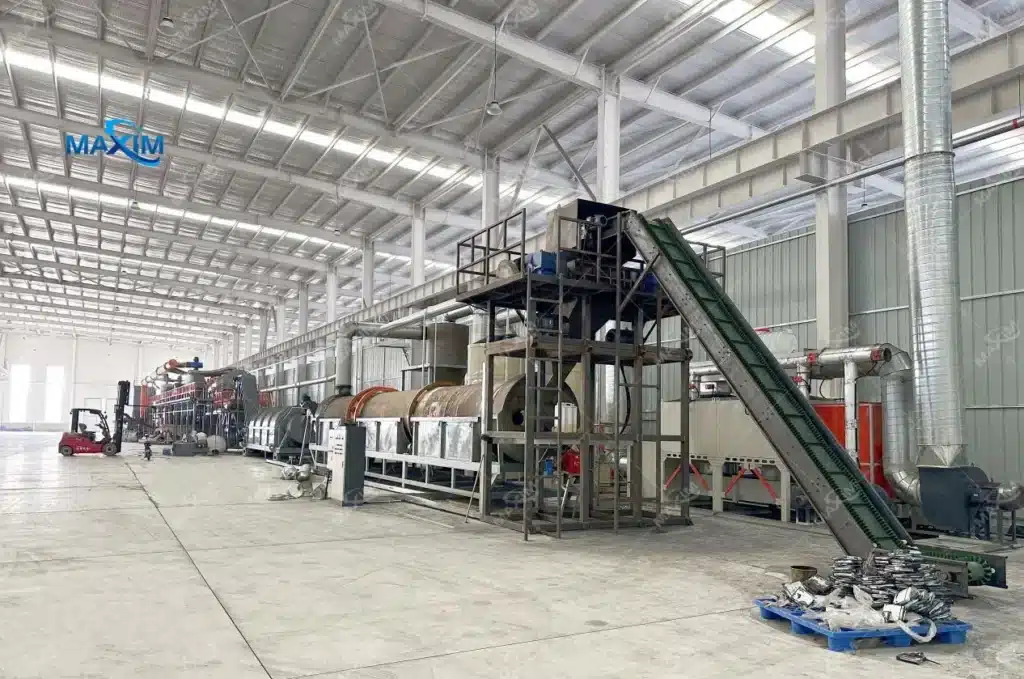
“Battery” is too broad for a receiving plan. Specify complete batteries, discharged cells, modules, electrode sheets, or prepared scrap. Mark each feed entrance, recovered material's exit, and container waiting points. The site safety team reviews suspect or damaged batteries separately, including their route and holding area.
Keep the feed description beside the process drawing. MAXIM machinery's lithium battery line includes crushing, conveying, screening and sorting, air separation, controls, and centralized dust collection. On the battery recycling plant layout, these are starting blocks only. Their actual positions need the selected line's dimensions and connection points.
Where will the tallest conveyor sit? A plan view may hide an overhead beam. From the elevation and machine schedule, record every unit's size, mass, service envelope, and material levels. Add a section view wherever a duct or lifting route crosses the battery recycling factory layout. The structural engineer uses the same record for floor and foundation checks.
A service note needs more than “by others.” Record each connection's endpoint, duty, and design owner. Put power, controls, extraction, and other agreed battery recycling utilities on the battery recycling plant layout revision. An unresolved duct route means an unresolved wall opening.
An hourly tonnage cannot size a feeder. Ask which drives and panels belong to the selected package. Record battery recycling power requirements by item: connected rating, running duty, start method, and panel position. Write the site's voltage and frequency on that sheet too. It then gives the electrical engineer a basis for the feeder, protection, cables, earthing, and isolation.
Feed and operating hours may still be open. The lithium battery recycling plant capacity checklist helps settle those assumptions before a machine list is fixed. Put that list back onto the battery recycling plant layout; earlier electrical loads are only allowances.
For the lithium battery line, MAXIM machinery combines centralized dust collection with negative-pressure operation. That combination identifies equipment interfaces for the building team; it is not a completed ventilation plan. Sketch the duct run before assuming the collector fits. Where is its service side? How will collected dust leave the building? Add those routes and extraction points to the battery recycling ventilation design. The supplier states equipment-side duty; local specialists calculate volumes and settle zones, treatment, and approvals.
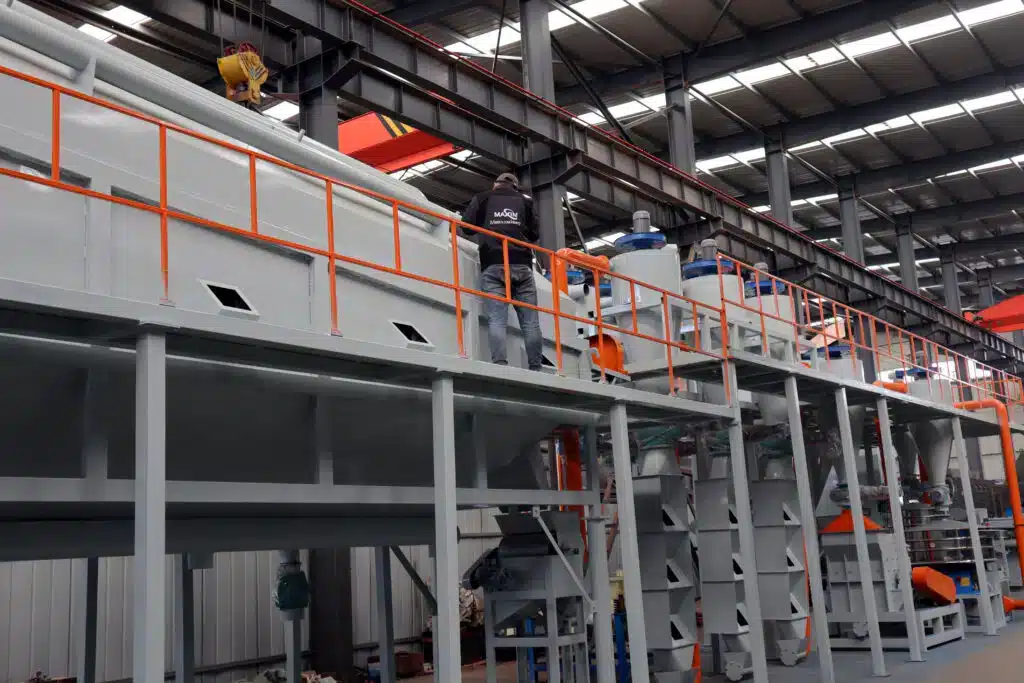
The quoted battery recycling floor space should describe a working line. On the battery recycling plant layout, show doors at their full opening, space to withdraw components, room to change containers, and emergency access. Then test the route for the largest item that must come in during installation or go out during maintenance.
For maintenance, show which panel opens, where a lifting device stands, and how a removed part leaves. Trace that route across the battery recycling plant layout. If the forklift path meets incoming feed, leave aisle widths and lifting limits open until the clash is resolved.
A loading bay may receive batteries while an outgoing container waits. Mark both moves on the battery recycling plant layout. Then add paths for residual waste and empty containers, checking holding points and doors. Fire is not the only issue: OSHA also identifies chemical hazards in lithium-ion battery recycling. The site safety team checks storage, ventilation, emergency access, and response plans against the actual inventory.

Circle disagreements between building and supplier drawings. Give each an owner and due date. The battery recycling plant layout can enter review with open items; approval needs the same values, units, and references on both drawings.
| Site input | Record before layout approval | Review owner |
| Building | Usable dimensions, columns, doors, floor levels, floor and foundation load limits | Site and structural engineers |
| Feed and output | Accepted feed forms, receiving and hold areas, discharge points, container routes | Plant and safety leads |
| Equipment | Final block list, footprints, elevations, weights, service and lifting envelopes | Equipment supplier |
| Electrical | Supply voltage and frequency, motor list, connected and operating loads, panel positions | Supplier and electrical engineer |
| Extraction | Hood connections, duct paths, collector access, discharge interface, design duty | Supplier and ventilation designer |
| Logistics | Aisles, vehicle turns, loading doors, output staging, emergency access | Site and safety leads |
MAXIM machinery provides project design support for lithium battery recycling lines. Send the feed description and marked plan to MAXIM machinery's contact team. We can identify the equipment-side interfaces for the site engineers. When the machine list changes, affected electrical, extraction, and civil connections go back into review.
A: Treat the scaled plan as a maintenance rehearsal. Can every access door open? Can the largest replaceable part come out, and where will a container wait? Add traffic and emergency routes to the battery recycling plant layout. Measure usable area after checking those paths against doorways, columns, and floor-load limits.
A: Give the supplier's motor and control list to the electrical engineer. Each item should carry a connected rating, duty, start method, and panel position. Add site voltage and frequency to the sheet. The engineer can address the feeder, protection, cables, earthing, and isolation. Tonnes per hour cannot do that job.
A: Ask the supplier where air is taken from the machines and what duty each connection needs. Local ventilation and safety teams turn those points into duct routes, collector location, discharge, and fire interfaces for the building. Building airflow calculations and site approvals remain with local teams.
A: Begin when the controlled building plan and supplier arrangement are on the same table. If a footprint works on only one sheet, check the process block diagram and sections for level changes. Use load and service schedules to settle interfaces. Record drawing owners and revisions; close the review when routes, access, ducts, and panels agree.
A: Reserve possible routes, but leave final positions and duties open. Feed, the chosen machines, and the building determine the connection points. The electrical, extraction, and civil schedules can move together once supplier drawings fix those points. A generic line picture cannot justify ordering fixed services or cutting penetrations.
A battery recycling plant layout needs more than equipment rectangles. For a mechanical lithium-ion line, review the building plan alongside feed, discharge, service, and ownership interfaces. The checklist follows those interfaces from receiving to dispatch, so that each drawing can be checked against the actual room before work is fixed. Neither floor area nor utility excerpt …
