
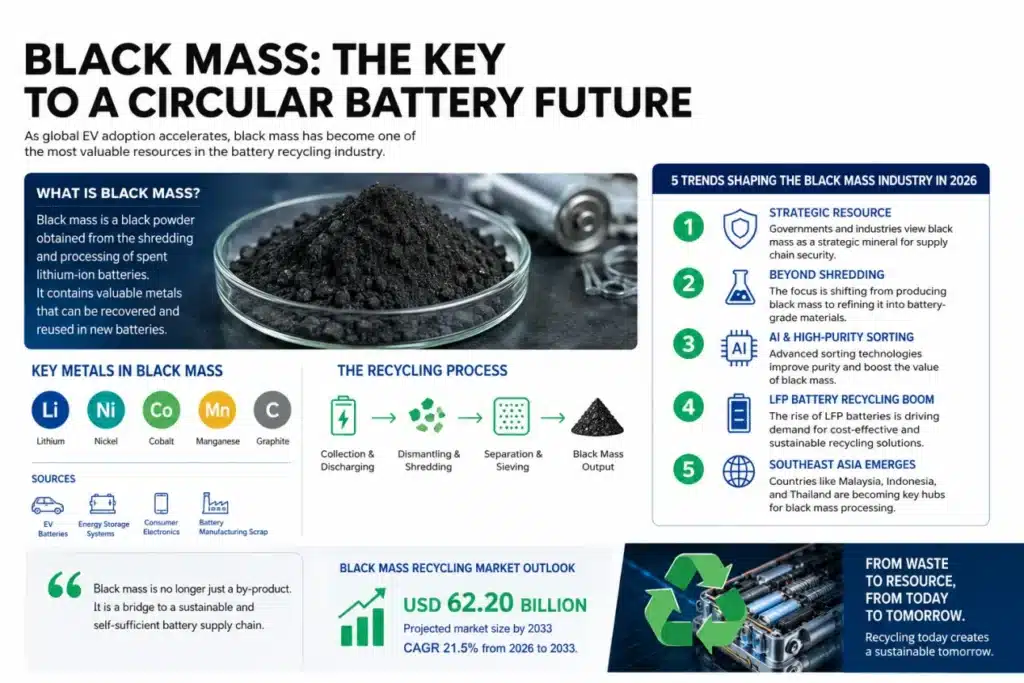
Black mass serves as the standard name for the dark, powdery substance recovered from end-of-life (EOL) lithium-ion batteries or manufacturing scrap. Black mass forms a dense blend of cathode and anode components, often showing up as a gloomy dust with shiny metal bits. By 2026, the recycling sector will recognize black mass as a critical "urban mine," as it contains significantly higher concentrations of strategic metals—such as lithium, cobalt, and nickel—than primary ores. Worldwide markets now stress closed-loop recycling more than before to cut reliance on fresh mineral stocks and ease carbon output, so effective black powder creation forms a base for the circular economy.
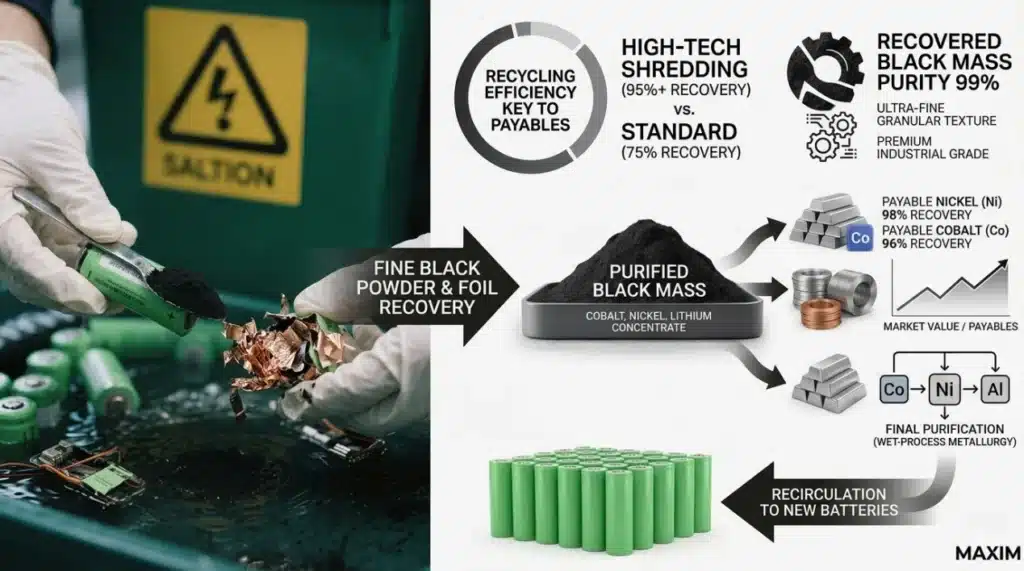
NCM batteries, based on Lithium Nickel Cobalt Manganese Oxide, produce black mass packed with costly metals. Black mass powder usually carries cobalt at 5-20% and nickel at 5-15% by weight, offering solid leftover worth that boosts strong returns for recyclers. In today's market setting, non-ferrous metals in NCM black mass turn black mass into a top commodity for hydrometallurgical plants focused on battery-grade precursors.
LFP black mass lacks high-worth cobalt or nickel, but LFP black mass provides a reliable lithium supply, with compounds often accounting for 2-6% of weight. LFP batteries lead in energy storage, and the electric bus fields, and the large number of used LFP cells guarantees steady input for lithium extraction. Raising LFP recycling worth hinges on bulk processing and reaching top purity in isolated black powder, which makes downstream lithium carbonate settling smooth and affordable.
Handling NCM batteries demands careful steps because of CMR risks from small drifting particles and heat dangers during breakdown. MAXIM machinery tackles these issues with a complete closed-loop system that covers pre-shredding, crushing, and smart sorting. Our equipment operates under continuous negative pressure, which effectively prevents dust overflow and ensures a cleaner production environment that meets stringent environmental requirements. We use a built-in PLC control system to enable distant checks and error alerts, cutting the need for hands-on work in risky spots and keeping running costs even.
LFP black mass shows less basic metal worth per ton than NCM, so profits rest on handling speed and gear strength. MAXIM machinery delivers tailored recycling setups, allowing users grow output to match market needs. Our technical edge comes from self-made main parts, like shredder blades with strong wear and strike resistance beyond trade levels, making sure the line manages the big flow needed for LFP items. Furthermore, our multi-stage separation process, which includes magnetic, air, and eddy current separation, ensures that the purity of black mass must reach over 92% before it can proceed to the next stage.
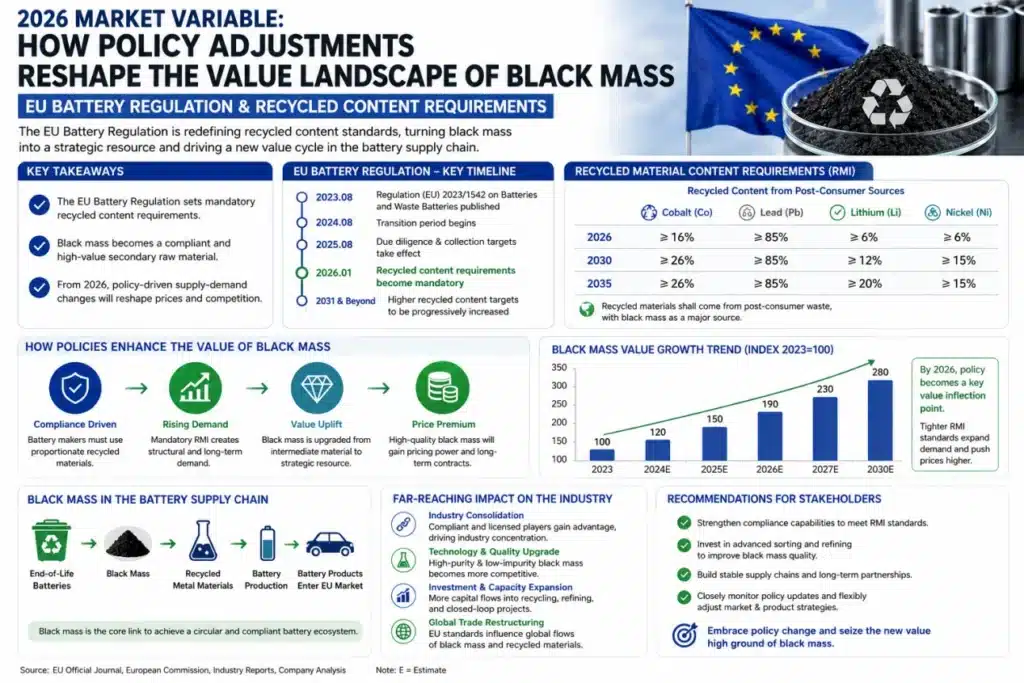
Global standards like China's GB/T 45203-2024 now define regenerated black mass and set quality needs clearly. Rules requiring base recycled content in new batteries push up the extra price for pure black powder. MAXIM machinery aids firms in meeting these rules by supplying outside-verified signs for dust, noise, and wastewater releases. MAXIM machinery lithium battery recycling lines shape to fit different battery sorts, covering ternary and LFP setups, and supply the range required to adjust work as local battery mixes change with new law structures.
Picking NCM or LFP recycling rests on clear business aims and local input supply. While NCM processing remains the preferred option for high-margin rare metal recovery, LFP recycling provides a strategic pathway for large-scale lithium circulation. In both cases, operation worth stems from black powder purity. MAXIM machinery solutions reach over 99% black powder pull rate with under 1% aluminum or copper dirt, so output fits the front raw needs in smelting. MAXIM machinery offers a full-life service plan—from first design to setup and 24-hour after-sales support—which secures that resource recycling investment builds steady worth over gear life.
As the global market transitions toward a circular economy, staying ahead of recycling trends and regulatory requirements is essential. MAXIM Machinery invites you to explore our advanced lithium-ion battery recycling solutions at the upcoming Metal; E-Waste; Battery Recycling Expo 2026.
Visit us at Stand B54 to learn how our tailored recycling setups and full-life service plans can secure steady value for your resource recovery investment. We look forward to connecting with you in Frankfurt!
A: Black mass market price depends a lot on lithium, cobalt, and nickel levels found by tools like X-ray fluorescence (XRF) or ICP-OES. Prices shift with global commodity rates and powder purity, because less dirt lowers handling costs for hydrometallurgical plants.
A: Smelters need top feedstock to keep the chemical leaching and solvent extraction steps running well. High aluminum or copper levels mess up cleanup steps, causing more chemical use and risk of grime in final battery-grade lithium salts or cathode precursors.
A: Strong yields call for a careful mix of tearing, hammer crushing, and detailed sorting methods. MAXIM machinery applies a combined magnetic and eddy current split to pull metals away from non-metal junk cleanly, guaranteeing over 99% of key black powder comes back from broken battery units.
A: Yes, current automated recycling lines are built for adaptability. MAXIM machinery equipment shapes to match various battery types. The PLC control system permits changes to equipment settings to fit varying material traits.
A: Black mass is classified as a hazardous powder composed of fine, airborne particles; designated as a CMR (Carcinogenic, Mutagenic, or Reprotoxic) substance, it requires processing within hermetically sealed environments to eliminate fugitive emissions. Factory dust capture systems and special big bag unload points work well for safe storage and emptying, and moisture requires avoidance since particles repel water and easily jam.
A request such as “quote a scrap metal recycling line” leaves many technical questions open. Similar scrap can still require different feeding, shredding, conveying, sorting, and discharge arrangements. A better RFQ defines the job before asking for a machine. Material, capacity, sorting goals, final product, and site conditions should all be clear. What Information Should a excerpt …
