
Choosing a scrap steel shredder is not only about buying a powerful machine. For a recycling plant, the real question is whether the equipment can match the material stream, keep feeding stable, reduce sorting pressure, and produce metal that is easier to transport, sell, or send to smelting.
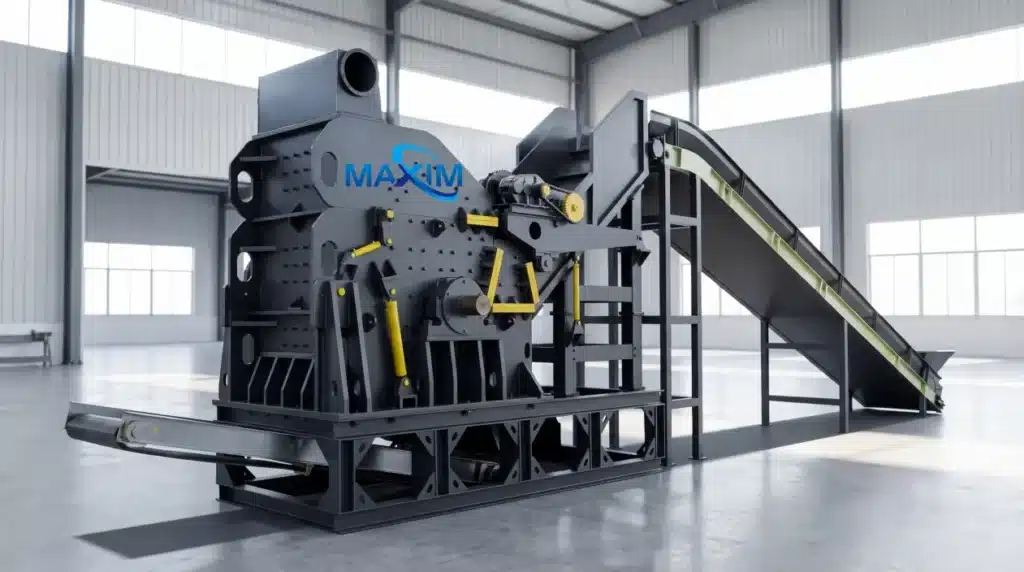
Throughput should be calculated from real operating conditions, not only from the rated capacity on a product sheet. A plant processing light steel, car shells, and mixed appliances may need a different configuration from a yard handling dense steel plates or heavy structural scrap. Feed size, material thickness, contamination level, and downstream separation all affect actual output.
Light and thin scrap is usually easier to feed continuously, but it can create mixed output that requires strong separation. Bulky scrap, such as drums, car shells, or appliances, may first need tearing, squeezing, or pre-shredding before deeper crushing. MAXIM machinery’s metal shredder is used for scrap metal such as paint drums, diesel drums, thin iron sheets, car shells, metal briquettes, and metal plate scraps, with the purpose of increasing bulk density for transportation and recycling.
Material also changes wear behavior. Thin sheet steel may pass quickly, while mixed scrap with hidden hard parts can raise blade load and increase downtime risk. This is why a capacity discussion should include three points: what enters the machine, what output size is required, and how clean the final metal must be.
A small yard may only need a single shredder to reduce volume before resale. A mid-size recycler often needs feeding, shredding, magnetic separation, and dust control. A high-capacity plant usually needs a complete scrap metal recycling production line, especially when output quality affects downstream price.
| Plant type | Typical need | Better configuration |
| Small scrap yard | Volume reduction | Metal shredder machine |
| Mid-size recycling plant | Stable output and cleaner ferrous metal | Double shaft shredder with conveyor and magnetic separation |
| Large processing center | Continuous processing and higher purity | Full scrap metal recycling production line |
MAXIM machinery’s metal shredder model range includes MX-600 to MX-2600, with listed capacities from 2–3T/H up to 25–60T/H and product size of 3–10CM, giving buyers a practical basis for capacity matching.
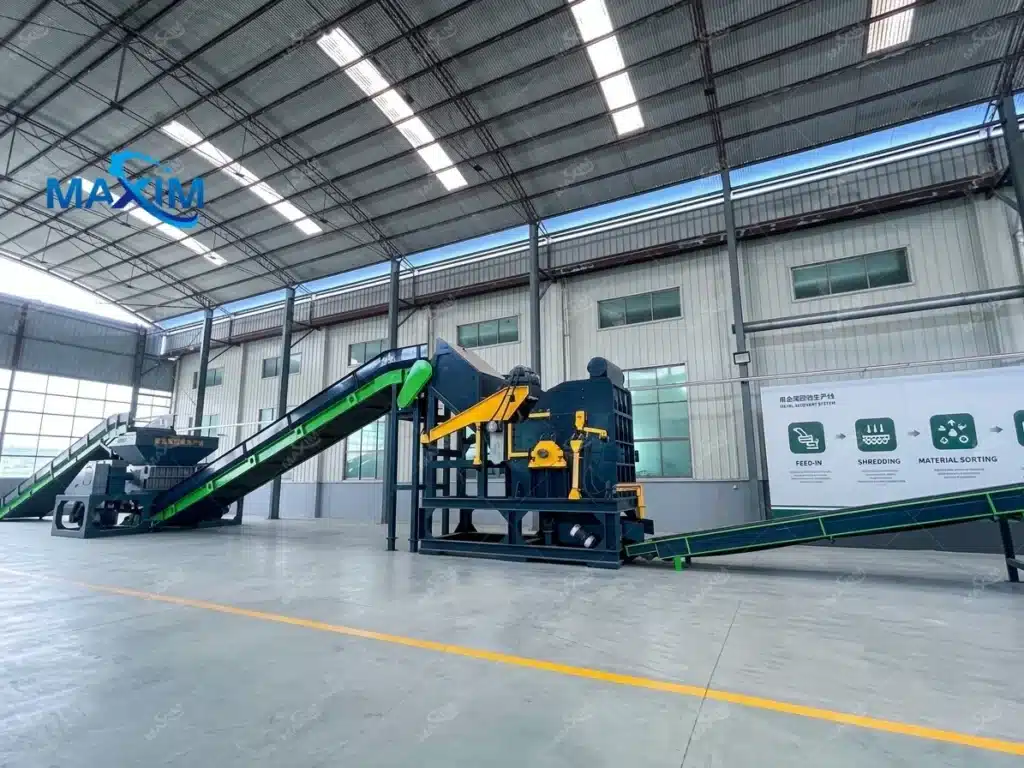
The best machine depends on the first problem to solve. Some plants need to open and tear bulky metal. Some need dense, small granules. Others need a front-end machine to protect the main crusher from oversized scrap.
A double-shaft shredder is suitable when the incoming scrap is irregular, hollow, or mixed. It works well as a pre-shredding unit because the material is pulled into the shredding chamber and reduced by tearing, squeezing, and shearing actions. MAXIM machinery lists the Double Shaft Shredder for scrap steel and iron, scrapped vehicles, waste household appliances, hollow containers, industrial scraps, and other waste streams.
For example, if a recycling plant receives mixed appliances and light car body materials, a double-shaft shredder can reduce oversized pieces before magnetic separation or secondary crushing. This improves feeding stability and reduces the risk of sudden blockage in later equipment.
A hammer shredder or scrap steel crusher is more suitable when the goal is deeper crushing and denser output. MAXIM machinery’s scrap steel crusher machine is used for scrap steel, especially scrap cars, household appliances, and light and thin scrap steel. Our production line includes a feeding conveyor, main engine, vibration feeder, discharging conveyor, magnetic separator, dust collector, and PLC control cabinet.
This type of system is useful when the final material needs to be cleaner and more compact. The listed Scrap steel crusher machine range covers small models such as MX140 at 2–3T/H and larger configurations up to 10000HP with 200–260T/H capacity, so buyers should avoid selecting only by motor power and instead match the machine to material size and target output.
Heavy steel sections, long bars, and thick plates may not be ideal for direct entry into a shredder. In these cases, shearing equipment can reduce length and control feed size before shredding. This step protects the main machine, improves feeding rhythm, and helps the plant avoid forced stoppages caused by oversized material.
A practical rule is simple: if the scrap is too long, too thick, or too irregular to feed smoothly, cut it first. Shredding should then focus on size reduction and density improvement rather than fighting unstable feeding.
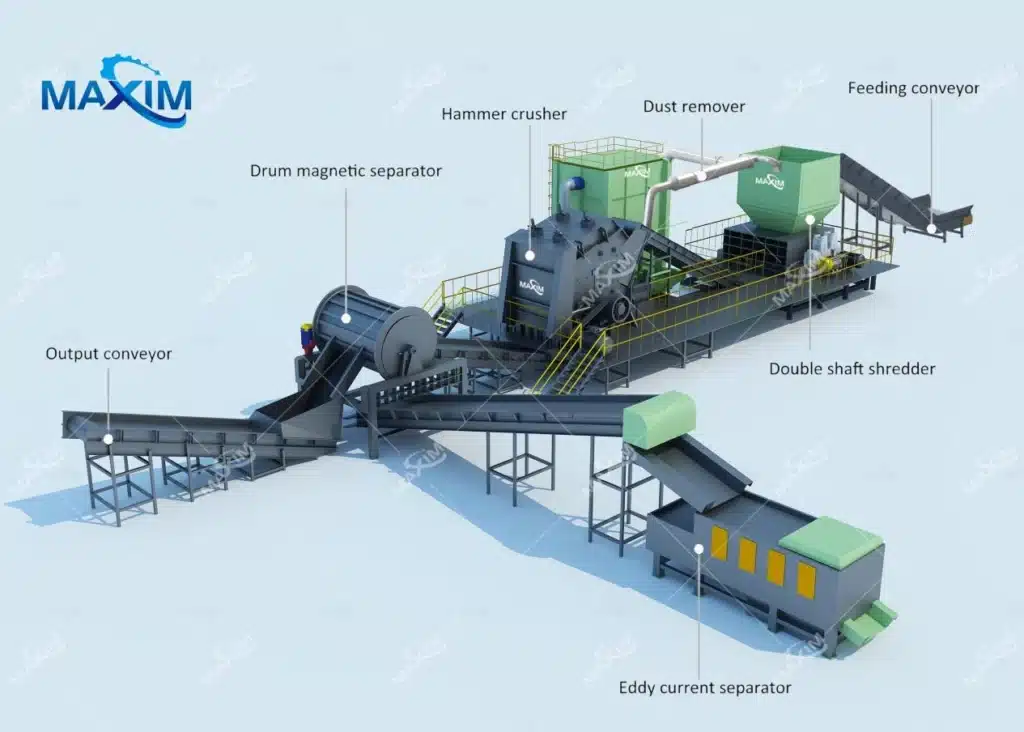
A complete line is needed when the plant wants more than volume reduction. It is the better choice when the goal is stable capacity, cleaner metal, lower manual sorting, and easier connection to downstream smelting or resale.
A scrap metal recycling line should move material in a controlled sequence. MAXIM machinery line includes a feeding conveyor, host machine, vibrating feeder, discharging conveyor, magnetic separator, iron conveyor, impurity conveyor, dust collector, and PLC control cabinet.
This layout matters because every unstable point can reduce throughput. If feeding is uneven, the shredder may alternate between overload and idle running. If discharge is slow, material can accumulate and affect output. If the PLC system is well configured, operators can coordinate feeding and downstream movement more consistently.
Separation is where recycling value improves. MAXIM machinery’s scrap metal recycling production line is designed for “crushing, impurity removal, sorting, and forming” for scrap steel, aluminum alloy, and copper, with integrated magnetic separation and eddy current separation technologies to separate metals from non-metallic impurities. The line is described with a processing capacity of 10–50 tons per hour.
Magnetic separation helps separate ferrous metals from mixed material, while eddy current separation supports the recovery of non-ferrous metals such as copper and aluminum. Dust collection also matters. The dust collector creates a negative-pressure environment and filters dust before clean gas is discharged.
The cost per ton is shaped by more than electricity. It includes feeding labor, blade wear, downtime, output purity, transport density, and maintenance planning. A machine with a higher rated capacity may not be economical if it frequently jams or produces material that needs heavy manual sorting.
Wear parts are central to shredder economics. Blades, hammers, screens, conveyors, and magnetic separation parts must match the scrap stream. MAXIM machinery's core components, such as shredder blades and sorting systems, are independently developed, with wear and impact resistance emphasized, and the equipment can be equipped with PLC control supporting remote monitoring and fault warnings.
Operators should watch three warning signs: slower feeding, irregular product size, and rising power load. These symptoms often show that the cutter system, screen, or discharge area needs attention.
Shredding improves bulk density, which can reduce storage pressure and transportation cost. Cleaner shredded steel can also improve resale value because buyers prefer material with fewer impurities. This is why separation should not be treated as an optional step in medium or large plants.
A reliable supplier should help match equipment to the plant, not only quote a machine. The supplier should ask about raw material type, hourly capacity, output size, plant layout, power conditions, dust control, and downstream use.
Before purchasing, buyers should request material-based configuration advice. MAXIM machinery provides a one-stop service program covering preliminary consultation, solution design, equipment production, installation and commissioning, personnel training, and after-sales maintenance, with after-sales response provided within 24 hours.
For a recycling plant, layout design is especially important. The wrong conveyor height, discharge direction, or separator position can make a good machine difficult to operate. A supplier should consider space, maintenance access, and future capacity expansion.
Prepare the following information before asking for a quote:
1. Main scrap type, such as car shells, appliances, drums, steel plates, or mixed ferrous scrap.
2. Average feed size and maximum feed size.
3. Required tons per hour.
4. Target output size and whether final granules are needed.
5. Required separation level for ferrous and non-ferrous metals.
6. Available plant space and power supply.
7. Need for dust collection, PLC control, or full production line design.
A: The right capacity depends on material type, feed size, working hours, and target output. A small yard may only need a single shredder, while a larger plant may need a full scrap metal recycling production line with feeding, crushing, separation, and dust collection.
A: A scrap steel shredder machine reduces metal size. A scrap metal recycling production line includes more steps, such as feeding, shredding or crushing, conveying, magnetic separation, impurity removal, dust collection, and discharge control.
A: Scrap shredding separation removes impurities and separates ferrous metal from mixed waste. Magnetic separation can make the final steel cleaner, while eddy current separation helps recover non-ferrous metals such as copper and aluminum.
A: Buyers should prepare raw material type, hourly capacity, feed size, output size, plant layout, power conditions, dust control needs, and whether the project requires a single machine or a complete recycling line.
A request such as “quote a scrap metal recycling line” leaves many technical questions open. Similar scrap can still require different feeding, shredding, conveying, sorting, and discharge arrangements. A better RFQ defines the job before asking for a machine. Material, capacity, sorting goals, final product, and site conditions should all be clear. What Information Should a excerpt …
