
Damaged EV batteries cannot be treated like ordinary metal scrap. A collision-damaged pack may contain substantial electrical energy, crushed cells, leaking electrolyte, or hidden short circuits. Operators must identify its chemistry, physical condition, remaining charge, and structure before choosing reuse, dismantling, or material recovery.
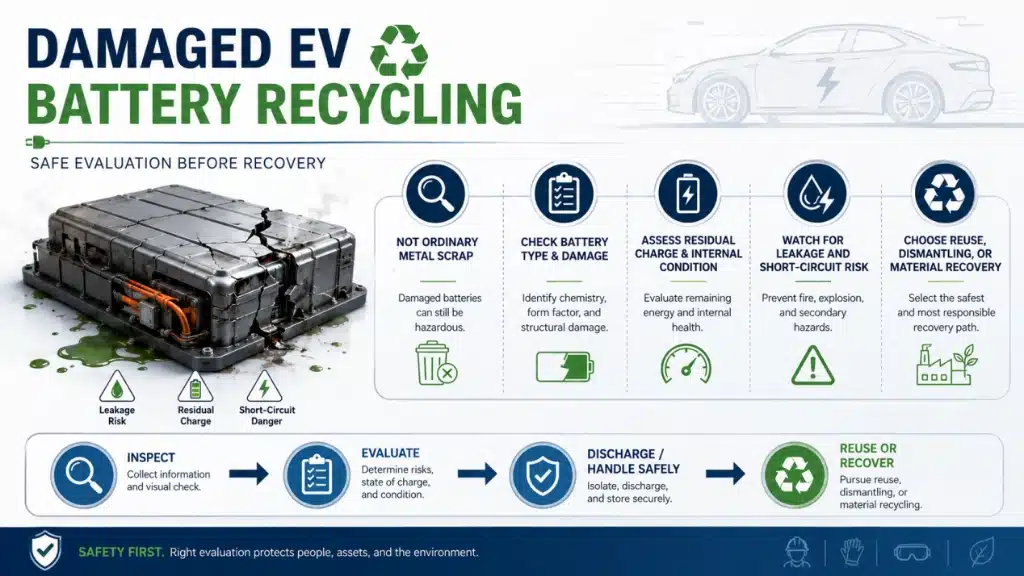
“Damaged EV batteries” include several feedstock types. Accident-damaged packs may have deformed housings, broken cooling channels, or crushed modules. Defective and recalled batteries may look intact but contain unstable cells. Production scrap includes rejected cells, electrode sheets, edge trim, and off-specification materials.
| Feedstock | Main concern | Typical preparation |
| Accident-damaged pack | Short circuits and deformation | Isolation and controlled dismantling |
| Defective module | Uncertain cell stability | Traceability check and discharge |
| Production scrap | Mixed foil and active material | Sorting and controlled feeding |
| End-of-life pack | Residual charge and mixed parts | Discharge and pack dismantling |
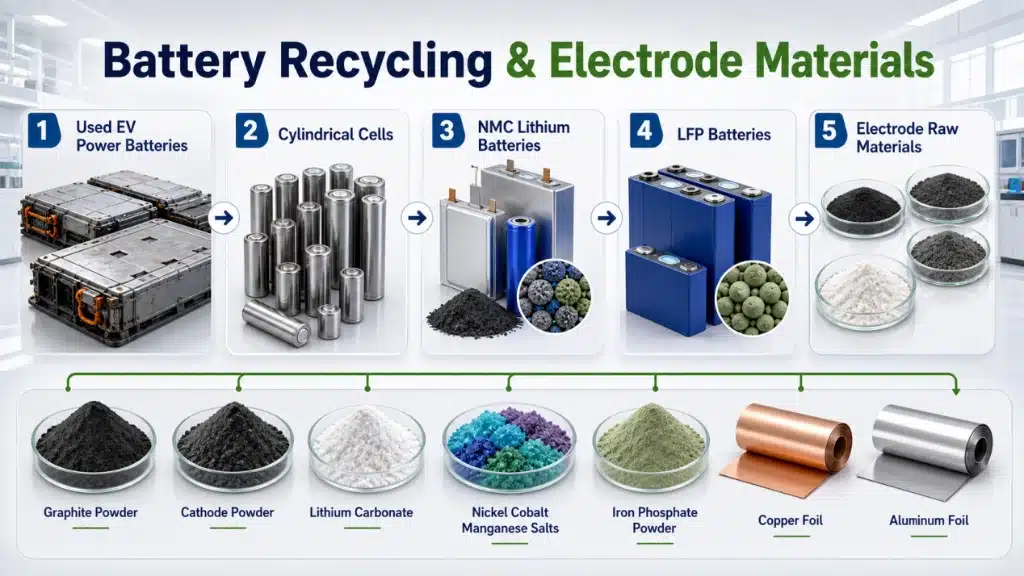
MAXIM machinery’s waste lithium battery recycling equipment is intended for feedstocks such as scrap automotive batteries, cylindrical cells, ternary lithium batteries, lithium iron phosphate batteries, and electrode materials. The final configuration must still match the incoming material.
Capacity loss alone does not always rule out second-life use. A structurally intact pack with traceable service history and stable cell behavior may be assessed for stationary energy storage or another lower-demand application.
Material recycling is generally more suitable when a pack has severe deformation, leakage, fire or water damage, internal short-circuit risk, unknown history, or inconsistent cell condition. The decision should consider:
This classification keeps unsafe material out of reuse channels.
Pre-treatment is a critical safety stage. Operators should check for swelling, heat, smoke, odor, leakage, exposed conductors, and damaged cooling components. Suspect units need a controlled isolation area.
Residual energy must then be reduced or managed. The method depends on battery management system status, terminal access, and thermal risk.
A practical sequence is:
Intact packs, damaged modules, loose cells, and production scrap should not be mixed before their risks are understood.
An EV battery pack contains housings, busbars, cooling plates, wiring, plastics, sensors, and control electronics. Dismantling removes oversized parts and creates a suitable downstream feed.
The dismantling depth depends on the project. A facility receiving modules or cells needs a different front end from one receiving complete packs. Before selecting equipment, the recycler should define the expected proportions of packs, modules, cylindrical cells, pouch cells, electrode sheets, and production scrap.
The feedstock profile affects feeding, shredding, screening, dust collection, throughput, and purity.
After safe preparation, size reduction opens cells, releases electrode material from copper and aluminum foils, and prepares components for separation.
Controlled feeding is especially important because bent housings, broken modules, and irregular sizes can create sudden load changes. Pre-treatment and mechanical processing should function as one coordinated system.
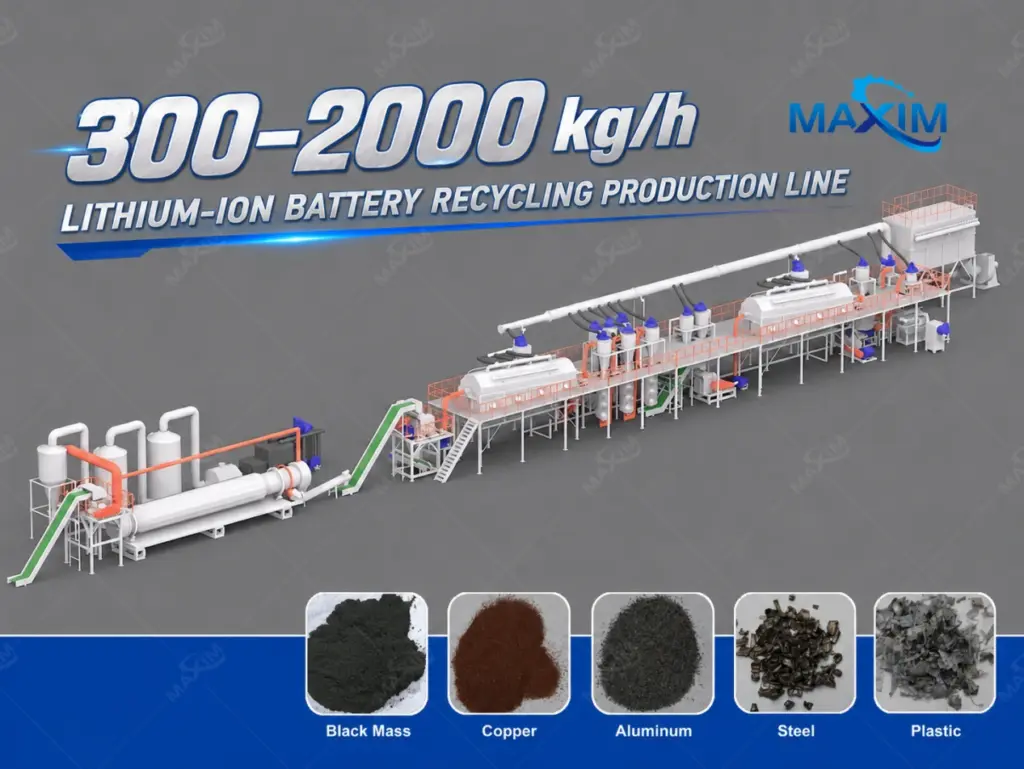
MAXIM machinery recycling process combines tearing, hammer crushing, vibrating screening, wind separation, and air separation. A typical route includes metered feeding, primary tearing, further crushing, screening, and recirculation of oversized particles when required.
After crushing, equipment separates materials according to size, density, magnetic response, and aerodynamic behavior.
Screens remove fine electrode powder from larger pieces. Magnetic separation extracts ferrous components. Wind and air separation divide lighter films and plastics from denser copper, aluminum, and active-material fractions.
MAXIM machinery’s lithium battery line includes crushing, sorting, conveying, air purification, automatic control, and centralized dust removal. It operates under negative pressure to reduce dust escape.
Separation quality depends on the complete system. Poor liberation lowers purity, unstable feeding overloads screens, and weak dust collection reduces yield.
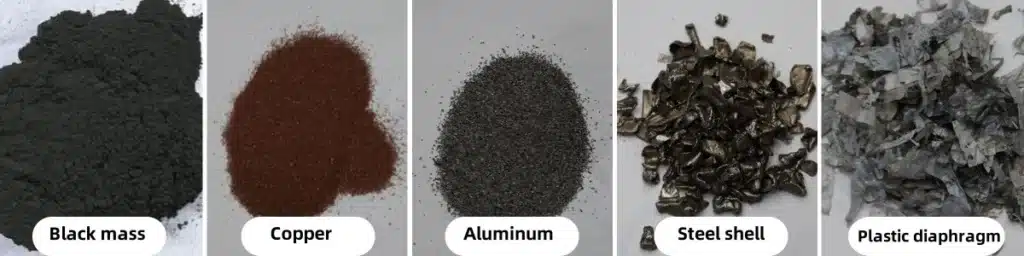
Mechanical processing can generate several recoverable streams. Coarse fractions may contain steel, aluminum, copper, plastics, and casing material. Fine fractions form black mass, a mixture of cathode and anode materials that may contain lithium, nickel, cobalt, manganese, graphite, and small metallic particles.
Black mass is generally a feedstock for downstream chemical recovery. Copper and aluminum fractions can enter refining when they meet buyer specifications.
Cross-contamination also matters. Excess copper or aluminum lowers black mass quality, while active powder reduces metal-stream value.
NMC batteries contain nickel, manganese, and cobalt in the cathode. LFP batteries use lithium iron phosphate and do not contain nickel or cobalt in the same way. This changes the composition and value of the recovered black mass.
An NMC project may prioritize nickel- and cobalt-bearing black mass. An LFP project may focus more on lithium, graphite, process cost, and higher-volume treatment. Mixed-feed facilities should identify chemistry whenever possible.
No single machine can control every battery hazard. A safer facility combines incoming inspection, segregation, discharge, temperature monitoring, enclosed transfer, negative-pressure dust collection, gas management, emergency isolation, and trained procedures.
Fine electrode powder can escape from open transfer points and reduce yield. Enclosed conveying and centralized collection help contain it. Thermal and gas controls should match battery condition, chemistry, process, and local requirements.
A recycling line should be selected around four questions:
Consider a hypothetical recycler receiving damaged EV modules and clean electrode production scrap. The modules require inspection, discharge, and dismantling, while the production scrap can follow a more direct controlled-feeding route. Both streams may use common crushing and separation equipment, but separate preparation procedures can improve safety, throughput stability, and output consistency.
Automation should coordinate feeding, crushing, screening, separation, conveying, and dust collection, but it cannot compensate for poorly prepared feedstock.
A: Yes. They can usually be recycled after inspection, isolation, and safe discharge. Packs with severe structural damage or safety risks are normally directed to material recovery rather than second-life use.
A: Trained personnel remove and classify the pack according to its physical condition and remaining charge. It may then be isolated, transported under controlled conditions, dismantled, and sent to an electric car battery recycling line.
A: Residual energy must be reduced or controlled before dismantling and size reduction. The method depends on pack design, battery condition, terminal accessibility, and facility safety procedures.
A: The process can recover steel, copper, aluminum, plastics, and black mass. Depending on chemistry, black mass may contain lithium, nickel, cobalt, manganese, graphite, and other electrode materials.
A request such as “quote a scrap metal recycling line” leaves many technical questions open. Similar scrap can still require different feeding, shredding, conveying, sorting, and discharge arrangements. A better RFQ defines the job before asking for a machine. Material, capacity, sorting goals, final product, and site conditions should all be clear. What Information Should a excerpt …
