
When planning an efficient scrap processing system, one of the most critical challenges operators face is selecting the right size reduction equipment. A common misconception in the industry is that a single machine can instantly transform bulky scrap into pure, sorted materials. In reality, effective recycling relies on a staged approach. Deciding between an industrial metal shredder and a hammer crusher machine is not about choosing one over the other; rather, it is about understanding which specific stage of the recycling process each machine serves.
In a comprehensive scrap metal recycling production line, primary volume reduction and secondary material liberation are distinct operational phases. By distinguishing between these roles, recycling plant owners can improve their daily work. Process engineers can also reduce wear on the equipment. This helps them get the highest purity from the recovered metals.
The path from mixed, large waste to valuable recovered metal is quite complex. Trying to push the wrong materials through just one processing step is a bad idea. It often causes heavy damage to the equipment. It also leads to high repair costs and poor output quality. Knowing the step-by-step nature of size reduction is the very first step. This knowledge helps you build a money-making operation.
A frequent error in facility design is the assumption that a single piece of heavy-duty metal shredder machinery can handle both the initial breakdown of large items and the fine separation of mixed components. These two tasks require fundamentally different mechanical actions.
The initial stage, known as primary size reduction, demands immense torque to tear apart large, resistant structures like car body shells or large appliances. The goal here is volume reduction and preparing the material for the next step. The secondary stage, known as liberation, requires high-speed kinetic energy to shatter and separate composite parts—such as freeing copper windings from iron casings in electric motors. Using a high-speed machine for the primary stage can lead to catastrophic rotor failure, while using a low-speed machine for the secondary stage fails to achieve the necessary material separation. Therefore, a staged approach utilizing both a pre-shredder machine and a secondary crusher is essential for optimal performance.
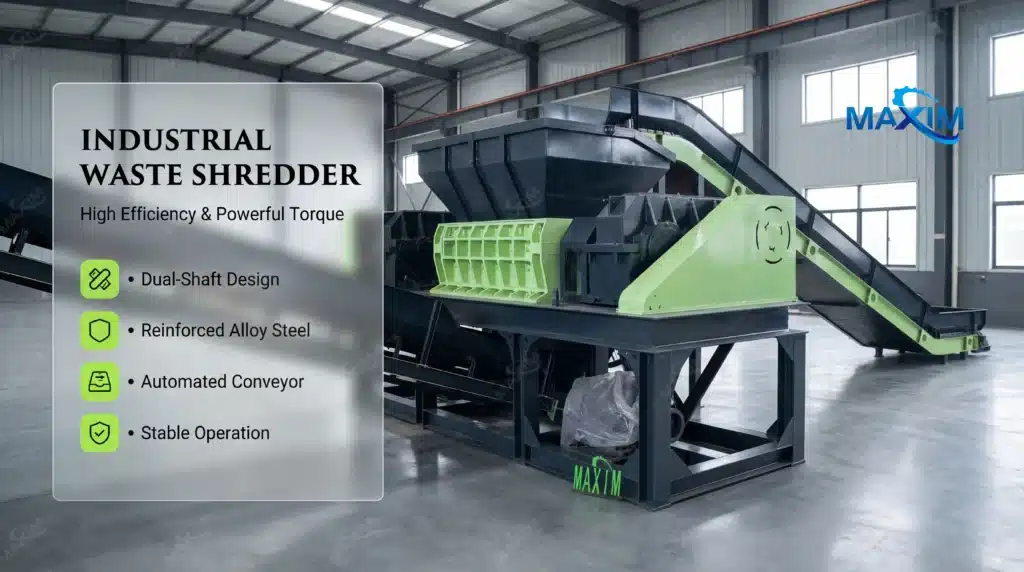
The primary stage of scrap processing is the industrial metal shredder. This equipment acts as the robust first line of defense in a recycling plant, handling the most challenging, oversized feedstocks.
An industrial metal shredder operates on a low-speed, high-torque principle. The most common configuration is the dual-shaft design. Inside the cutting chamber, massive, independently driven shafts rotate in opposite directions. These shafts are fitted with aggressively profiled blades or knives that grab, pierce, and tear the incoming scrap.
Unlike machines that use heavy smashing force, the pre-shredder machine uses a strong cutting or shearing action. This slicing motion allows it to cut through hard materials smoothly. It does this without making too much heat or dust. The slow turning speed makes sure the machine does not get stuck easily. This provides a smooth and steady output. The main focus is totally on making the physical size of the waste smaller. It turns big, bulky items into rough, long strips. These strips are much easier to move and process later.
Because of their immense shearing power, scrap metal shredders are the ideal choice for initial volume reduction of large, bulky items. Suitable materials for this primary stage include:
*End-of-life vehicle (ELV) body shells
*Large household appliances (white goods)
*Loose light scrap steel
*Industrial metal offcuts
*Baled aluminum or steel
Processing these materials through a heavy-duty metal shredder machine prepares them for the more delicate liberation phase, protecting downstream equipment from sudden shocks or overloads.
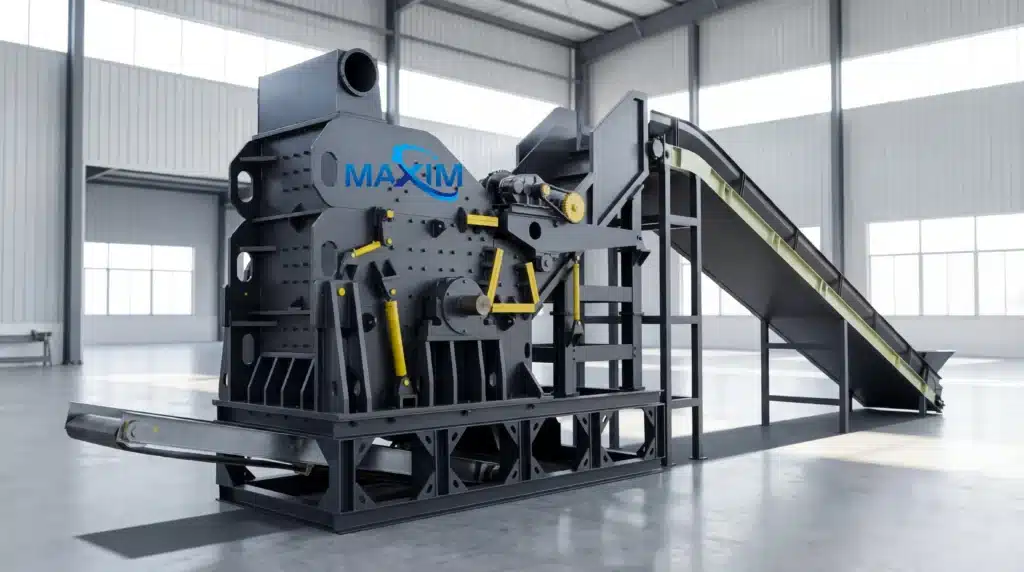
Once the bulky scrap has been reduced to manageable strips by the pre-shredder, the material moves to the secondary processing stage: the hammer crusher machine. This equipment focuses on densification and separation.
In contrast to the slow shearing action of a primary shredder, a metal scrap hammer mill operates at high speeds. The core of this machine is a heavy, rapidly spinning rotor equipped with swinging steel hammers.
As the pre-shredded material enters the chamber, it is struck violently by the spinning hammers. The kinetic energy smashes the scrap against heavy-duty anvils and breaker plates lining the interior. This dynamic impact force continues until the material is small enough to pass through the discharge grates at the bottom of the machine. This action not only reduces the size further but also causes different materials—such as plastic, copper, and steel—to break apart from one another, a process known as liberation. The high-speed impacts also ball up the metal, increasing its bulk density and making it easier to handle and melt.
A hammer shredder is most effective when fed material that has already undergone primary size reduction. It excels at processing complex, mixed scrap where the primary goal is the separation of distinct materials. Ideal feedstocks include:
*Pre-shredded automobile scrap
*Engine blocks (previously broken down)
*Electric motors and transformers
*Mixed non-ferrous scrap (to separate aluminum from iron)
By smashing these composite items, the hammer crusher machine ensures that the distinct metals are fully liberated, ready for efficient downstream sorting via magnetic or eddy current separators.

While both machines are integral to a modern recycling facility, their outputs and maintenance profiles are distinctly different. Understanding these differences helps in planning the overall plant layout and operational budget.
The output from an industrial metal shredder is typically rough, elongated strips. The primary objective is volume reduction, so the material remains mixed; a piece of shredded appliance casing may still have plastic or copper attached to the steel. The purity at this stage is relatively low, as the materials have only been cut, not separated.
Conversely, the output from a hammer crusher machine is highly densified and thoroughly liberated. The high-speed impacts shatter the connections between different materials, resulting in fist-sized, “clean” nuggets of metal. For example, when processing a complex motor, the hammer mill will physically detach the copper wire from the steel core. This high degree of liberation allows subsequent magnetic separators to achieve exceptional purity levels, ensuring the final recovered metal meets strict smelter standards.
The maintenance profiles of the two machines reflect their operating principles. A heavy-duty metal shredder machine experiences wear primarily on its cutting blades. Because it operates at low speeds, the wear is generally gradual, though the blades must be periodically hard-faced or replaced to maintain shearing efficiency. The primary risk is introducing uncuttable solid steel blocks, which can fracture the knives.
A metal scrap hammer mill, operating at high speeds and relying on violent impact, experiences significantly higher wear rates. The swinging hammers, internal anvils, and discharge grates are subjected to extreme abrasion and constant shocks. These wear parts require frequent inspection and replacement. However, because a pre-shredder machine handles the initial breakdown, the stress on the hammer mill is greatly reduced, extending the lifespan of its wear parts and lowering overall maintenance costs.
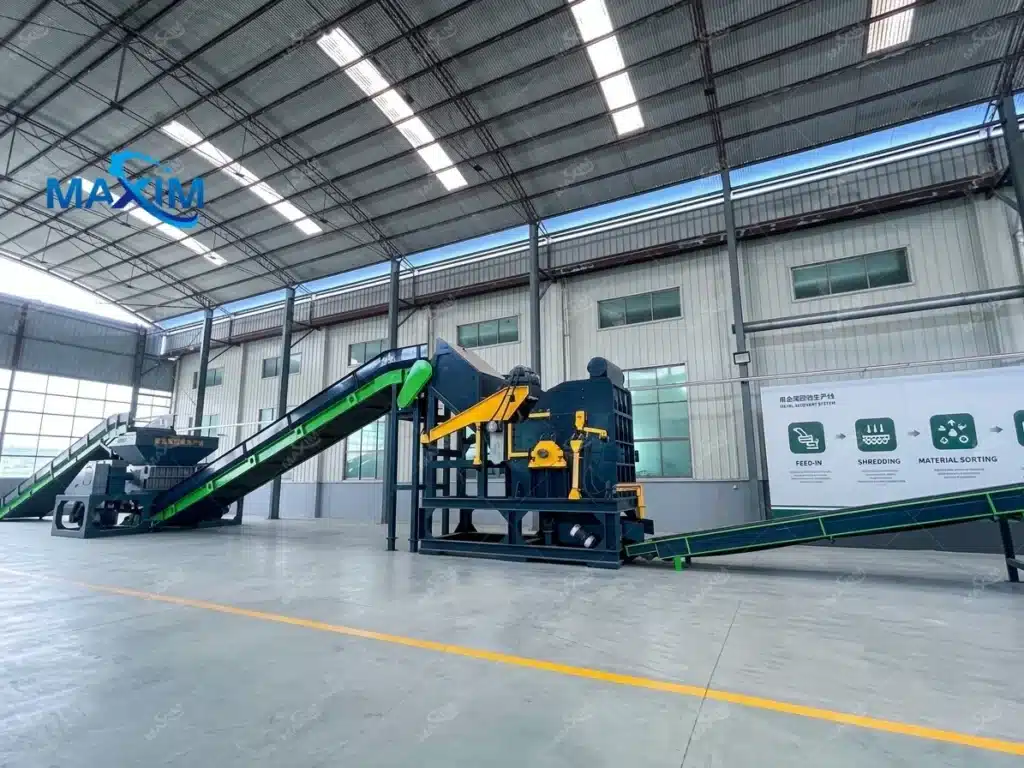
For operators seeking maximum efficiency and the highest possible material purity, the solution is not choosing between the two machines, but integrating them into a cohesive system.
At MAXIM machinery, we understand that effective resource recovery requires specialized equipment for each stage of the process. Our approach avoids the pitfalls of “one-size-fits-all” solutions. By strategically combining a pre-shredder machine with a secondary hammer crusher, we create a staged processing environment.
This integration ensures that bulky waste is efficiently reduced in volume before being subjected to the high-speed liberation of the hammer mill. This synergy protects the equipment, minimizes downtime, and prepares the liberated material for our advanced magnetic and eddy current sorting technologies. The result is a fully optimized scrap metal recycling production line capable of processing 10 to 50 tons per hour, delivering high-purity metals ready for the downstream supply chain.
A: The main difference is in their working stages and internal parts. An industrial metal shredder runs at a slow speed with high torque. It cuts and tears large materials for the first size reduction. On the other hand, a hammer crusher runs at a high speed. It uses strong hitting force to smash and free mixed materials during the second crushing stage.
A: No, a metal scrap hammer mill cannot effectively replace a pre shredder machine. Feeding bulky, uncut, or extremely hard materials directly into a hammer mill can cause severe damage to the rotor and wear parts. A pre-shredder is essential to reduce the material’s initial volume, ensuring the hammer mill operates safely and efficiently.
A: Both are required for optimal processing. A heavy-duty scrap metal shredder is first used to break down the bulky engine block into smaller, manageable chunks. These pre-shredded chunks are then fed into a hammer crusher machine to smash the cast aluminum and iron, liberating the tightly bound metals for efficient downstream sorting.
A: To minimize maintenance costs, ensure you only process suitable feedstock, avoiding uncuttable solid steel blocks that can fracture the shearing blades. Regularly inspect the cutting tools, maintain proper hydraulic and lubrication levels, and use an automated feeding system to prevent overloading the industrial metal shredder machine.
A: Combining a scrap metal shredder and a hammer shredder in a single recycling production line maximizes both throughput and final material purity. The pre-shredder provides critical volume reduction and protects downstream equipment, while the hammer shredder densifies the scrap and liberates mixed metals, making them perfectly prepped for magnetic and eddy current separation.
When planning an efficient scrap processing system, one of the most critical challenges operators face is selecting the right size reduction equipment. A common misconception in the industry is that a single machine can instantly transform bulky scrap into pure, sorted materials. In reality, effective recycling relies on a staged approach. Deciding between an industrial excerpt …
