
The quotation may appear to contain all the information needed, but hidden within could be details concerning the testing, installation, and the supply of spare parts. As with the selection of any supplier of PCB recycling equipment, it is necessary to check out these finer details before handing over any money. Compare the supplier’s technical information and their delivery promises, not just price. For the supply of a PCB recycling plant, what does the supplier promise to provide as proof before you accept delivery of the plant?
Who designs the line? Who builds the control cabinet? Who commissions the line? Require references for similar types of boards; offer a factory visit. The project engineer's pictures are only of interest. It is the people who can explain the operating limits of the process that you want to speak with. Not the salespeople who sell you the process.
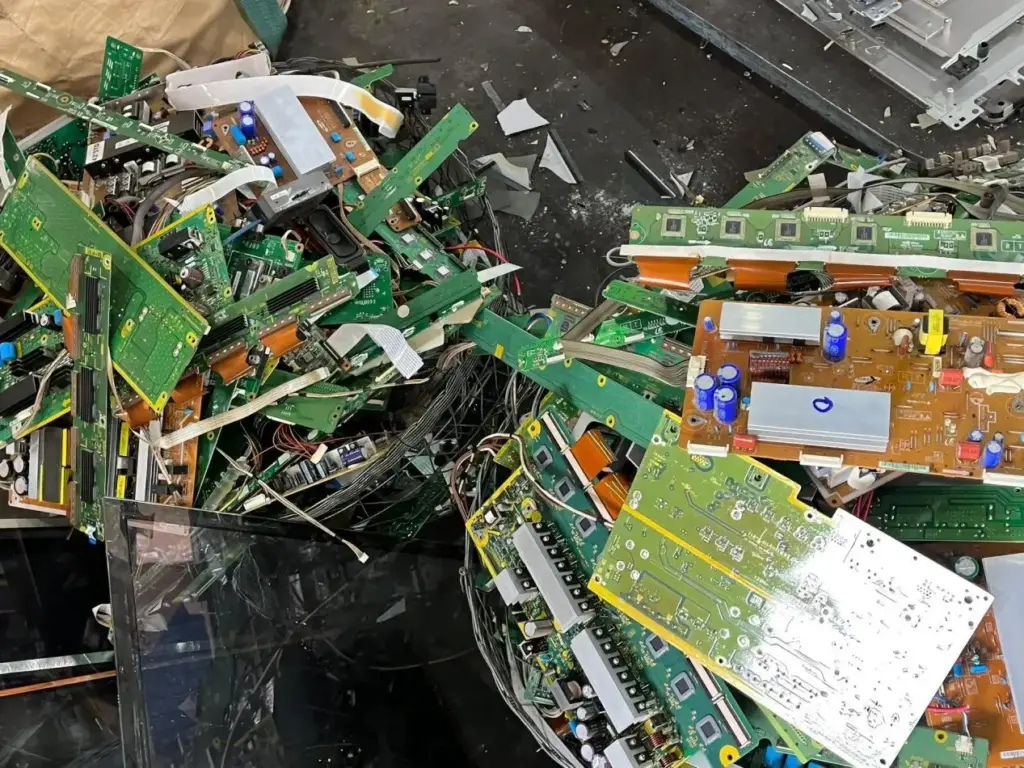
For circuit board recycling, our PCB line processes computer, mobile phone, and television boards, plus copper-clad laminates, separating mixed metals from nonmetals. Before testing, agree on board condition, attachments, and pretreatment responsibilities. Send representative material rather than a conveniently clean sample, and confirm which incoming materials the proposal excludes. A written boundary should distinguish board processing from any downstream refining your buyer may require.
Our MX-PCB 500 PCB recycling machine has a specified capacity of 400-500 kg/h and 134 kW power. These figures are only a starting point for discussion of the specific feedstock in question. For any PCB recycling machine, ask for test conditions as well as throughput figures. Also ask for voltage, installation drawings, and access to the machine for maintenance. Ask if the power figure refers to the connected plant or actual consumption during test.
The crushing system provided consists of a three-stage crushing circuit with recirculation of products. The system incorporates magnetic separation, air classification, and a high-voltage electrostatic separator. The system is controlled by a PLC which also controls the feeders and line as a whole. The system utilizes negative-pressure feeding and a pulse dust collector to deal with the production of dust, and elevated walkways and guardrails are provided for maintenance access. Please ensure that all quoted equipment and services are clearly shown and that responsibility for guarding and for carrying out safety checks is clearly assigned.

Agree on three checks:
1. Record the feed weight, board composition, operating time and stoppages.
2. Weight the output fractions, including retained material and collected dust.
3. Use the agreed test method to generate test results to measure metal carryover.
Recovery and product purity should be reported separately, using agreed definitions, sampling method and calculation for each result.
A short demonstration of performance on bare laminates does not establish performance on your mixed board supply. Test under comparable conditions before comparing results.
Use a factory acceptance test checklist to verify the correct assembly of all parts, the correct settings for all controls, and the agreed trial conditions before shipping. Site acceptance test (SAT) should be defined around the installed system and its interfaces to the site. Assign person to test emergency-stop, interlocks, verify system performance and register any outstanding items. Specify retesting arrangements in writing before dispatching. Although a successful factory trial may verify a number of acceptance items, these remain the customer’s responsibility until verified on site and a formal close-out agreed.
Check the quotation against a scope checklist for conveyors, dust collectors, ductwork, cables, drawings, packaging and installation. Who supplies what and where does the responsibility transfer? A dust collector that is included should not leave connecting ductwork unassigned. “Complete line” is not the same as a complete scope of supply and should be rejected in favor of a detailed scope.
We provide support covering consultation, solution design, production, installation, machine commissioning, personnel training and after-sales maintenance. Ask for the project-specific schedule and responsibilities. Clarify warranty exclusions, service response arrangements and replacement-part lead times. Request separate recommendations for routine consumables and critical spares, including blades, screens and filtration components where applicable. Confirm which maintenance tasks operators will perform themselves and which require a service technician.

Use the following supplier evaluation criteria and illustrative weights. Adapt to the requirements of your tender before opening bids. Score from zero to five for each of the criteria and multiply by the respective weight. Then just add them together.
| Evaluation area | Evaluation area | Evaluation area |
| Engineering capability | 20% | Drawings and project references |
| Performance verification | 30% | Representative tests and output samples |
| Dust and safety scope | 20% | System boundaries and inspection plan |
| Delivery responsibilities | 15% | Itemized scope and acceptance terms |
| Lifecycle support | 15% | Training, warranty and spare-parts plan |
All bidders are scored with the same weights. Unresolved Essential Safety Requirements can form the basis of a refusal to approve even if the total score is otherwise high.
Recycling equipment can be tailored to suit any material, production capacity and site constraints. Our range of e-waste recycling systems includes PCB recycling machines that effectively separate the metallic and nonmetallic fractions. We can propose a suitable model for your PCB recycling plant based on the board descriptions, sample provision, production output required and site constraints, together with the necessary evidence to support a purchasing decision.
A: Engineering – compare their capabilities. Compare relevant project references. Compare test results. Compare written delivery obligations. Agree unclear conditions prior to choosing supplier.
A: Could you please arrange a trial using some representative test boards? I would like to agree on the corresponding test conditions, sampling of the output as well as the corresponding acceptance criteria first.
A: Detail the equipment schedule, installation plans, electrical diagrams, operator manuals, inspection records and required spare parts against each purchase agreement.
A: Request details of collection points, system drawings and test evidence. Clarify who is responsible for checking the system’s performance after it has been installed rather than just relying on the filter efficiency figure.
A: Agree the commissioning assistance, operator training, maintenance assistance etc., and also the warranty terms and conditions and spare parts availability. Agree a contact for all faults and for replacement parts orders.
The quotation may appear to contain all the information needed, but hidden within could be details concerning the testing, installation, and the supply of spare parts. As with the selection of any supplier of PCB recycling equipment, it is necessary to check out these finer details before handing over any money. Compare the supplier’s technical excerpt …
