
A request such as “quote a scrap metal recycling line” leaves many technical questions open. Similar scrap can still require different feeding, shredding, conveying, sorting, and discharge arrangements.
A better RFQ defines the job before asking for a machine. Material, capacity, sorting goals, final product, and site conditions should all be clear.
A useful RFQ covers both incoming scrap and the expected result. Feed characteristics affect reduction, conveying, separation, and wear, so starting with a machine name alone is rarely enough.
State whether the feed is mainly scrap steel, aluminum alloy, copper-bearing scrap, mixed industrial metal, or a combination. Then describe its form, such as loose pieces, baled scrap, drums, sheet metal, shells, or bulky items.
Add maximum dimensions, approximate thickness, bulk density when known, and obvious contaminants. Rubber, plastic, fabric, glass, dirt, and attached non-metallic parts may change the required processing stages.
Avoid writing only “mixed scrap.” A stronger RFQ answers four questions:
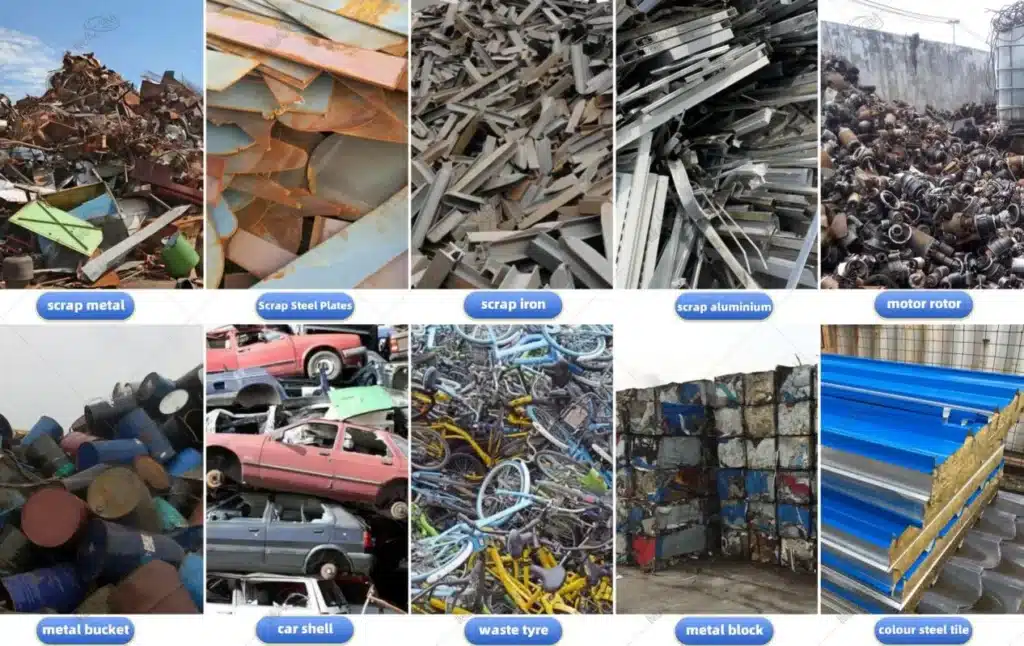
Include photos of normal material, oversized pieces, and difficult batches. Where practical, add representative samples or a composition estimate.
Feed variation matters too. If some loads contain light sheet while others include heavier sections, mention it. Scrap metal processing equipment should be reviewed against the range of material it will actually receive.
Capacity should reflect the operating plan, not just a tons-per-hour target.
Give required hourly throughput, operating hours per shift, number of shifts, and peak feed conditions. If expansion is likely, state that too.
For buyers asking how to choose the right shredder capacity for scrap yard volume, throughput must be considered together with bulk density, feed form, loading method, and downstream capacity.
For example, a yard receiving irregular truckloads may need a different feeding or buffering arrangement from a plant with controlled continuous input, even if average daily tonnage is similar.
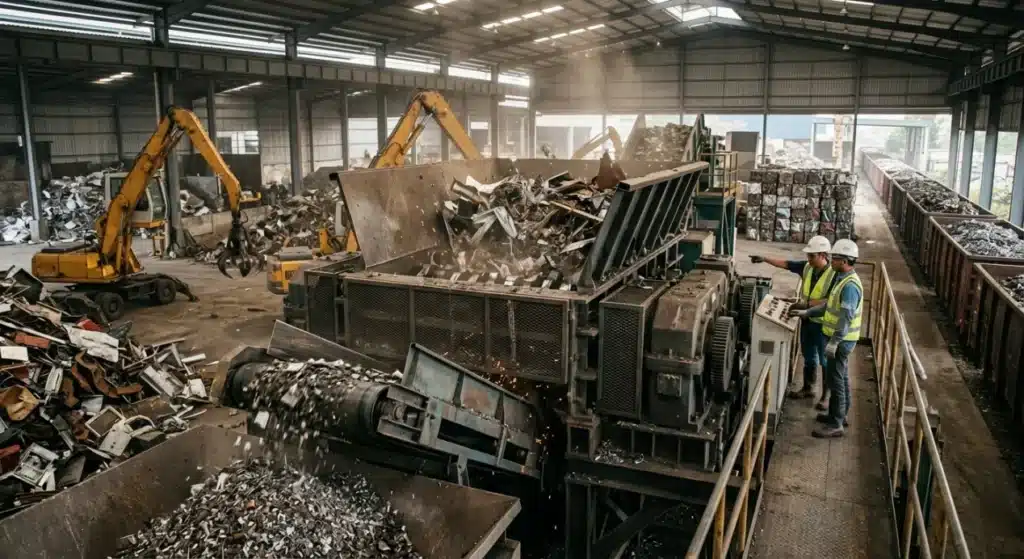
Include usable floor area, clearance limits, local voltage and frequency, installation access, and loading method. State whether material enters by loader, conveyor, grab, or another system.
Also identify existing conveyors, platforms, separators, bins, dust-control units, or foundations. These details affect layout and equipment interfaces.
Sorting requirements are clearer when written as product goals instead of a preselected machine list.
State which streams must be recovered separately. These may include a ferrous fraction, one or more non-ferrous fractions, and non-metallic residue. If certain contaminants must be removed before sale or downstream processing, identify them.
At MAXIM machinery, our scrap metal recycling process combines crushing, impurity removal, sorting, and forming. Magnetic separation and eddy current separation can be integrated when the feed and separation target require them.
The RFQ should not assume every scrap sorting system needs the same sequence. Define the separation target first, then let process design follow.
Another common question is whether an industrial shredder can connect directly to the separation line without a loader or intermediate step. That depends on material flow.
Describe discharge size, flow stability, conveyor position, height differences, buffer needs, and the feeding condition required by the next machine. Also state whether the quotation is for one machine or a complete scrap processing line.
This helps avoid buying individually suitable machines that do not transfer material smoothly from one stage to the next.
Output size and recovered fractions influence reduction stages, screens, sorting equipment, and discharge arrangements.
Define the desired particle or piece size. Then identify the output streams required from the line. If the material will be packed, stored, sold, remelted, or sent to another process, include that information.
| Weak RFQ wording | Better RFQ wording |
| Need small output | State target size or downstream size limit |
| Need clean metal | Define which fractions must be separated |
| Need high capacity | State required t/h, hours, and peak conditions |
| Need complete line | State feed point, final streams, and site constraints |
Do not apply a generic purity target unless it comes from the actual downstream buyer or process. Smelters, traders, and reuse applications may require different sizes, forms, and impurity limits.
If the next customer has a maximum size, prohibited contaminant, density preference, or composition limit, put it into the RFQ. This gives the supplier a real commercial target.
Once the information is collected, put it into a format an engineer can review quickly. A concise data sheet supported by photos is often more useful than a long email.
| RFQ Category | Data to Provide | Why It Matters |
| Material | Type, composition, form, contaminants | Defines reduction and sorting needs |
| Feed size | Maximum dimensions and thickness | Affects inlet and primary reduction |
| Capacity | Required t/h, shifts, peak feed | Supports line sizing |
| Sorting | Required recovered fractions | Guides separator selection |
| Final product | Target size and downstream use | Defines finishing requirements |
| Site | Space, voltage, access, existing equipment | Shapes layout and integration |
Add drawings, photos, and short notes behind the table. The goal is to remove unknowns that force suppliers to make assumptions.
Mark fixed building limits, unusual feed, existing equipment interfaces, future expansion plans, and special discharge requirements early.
At MAXIM machinery, we tailor recycling production-line layouts and equipment parameters around capacity needs, material characteristics, and site conditions. Our service scope can extend from consultation and solution design to equipment production, installation, commissioning, personnel training, and after-sales maintenance.
A well-prepared RFQ gives both sides the same project picture and makes quotation comparison more meaningful.
A: Include feed material and composition, maximum feed size, hourly capacity, sorting targets, final output requirements, site dimensions, electrical conditions, and existing equipment that must connect to the line.
A: Start with incoming volume, bulk density, operating hours, peak feed rate, loading method, and downstream capacity. These conditions are more useful than a nominal tons-per-hour target alone.
A: It depends on discharge size, flow stability, conveyor arrangement, buffer needs, and the feed condition required by downstream sorting equipment. Define these interfaces before configuring the line.
A: Project-specific configuration is possible when feed characteristics, capacity, site layout, and downstream requirements are clear. Put these details in the RFQ for engineering review.
A: Specify target output size, recovered material streams, downstream use, and any verified impurity or size limits from the buyer, furnace, or next processing stage.
A request such as “quote a scrap metal recycling line” leaves many technical questions open. Similar scrap can still require different feeding, shredding, conveying, sorting, and discharge arrangements. A better RFQ defines the job before asking for a machine. Material, capacity, sorting goals, final product, and site conditions should all be clear. What Information Should a excerpt …
