
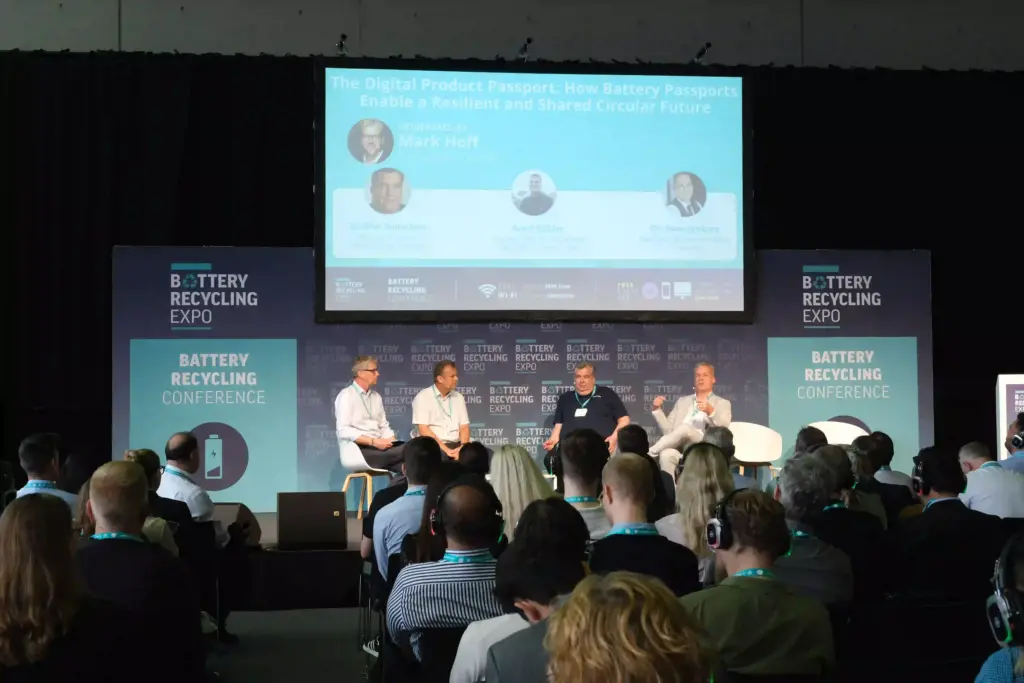
The worldwide picture of resource handling keeps changing in major ways. After the well-known industry meeting that took place from June 17 to 18 in Frankfurt, Germany, it has become clear that the recycling field now moves past simple disposal steps. Talks inside the exhibition areas showed that current environmental rules and the growing economic value of recovered materials push facilities toward full closed-loop processing solutions.
In the past, facilities found it hard to balance running costs with environmental rules. But the latest displays showed that technology has now reached a level that matches ecological needs. The main point stands that efficient, smart, and environmentally sound equipment counts as a basic necessity. Such equipment helps companies cut costs, raise efficiency, and support green sustainable growth. Today, reaching the highest extraction purity of key metals while stopping secondary pollution sets the standard for success in the sustainable processing field.
Printed circuit boards stand as one of the most difficult waste flows in the current recycling system. Electronic waste recycling equipment works to handle these materials. The equipment separates mixed metals from non-metals so that reuse becomes possible. The basic difficulty comes from the complex makeup of the boards. Studies on standard printed circuit boards show that electronic parts make up 58 percent of the total, the substrate forms 37 percent, and solder accounts for 5 percent.
When the substrate receives further breakdown, each tonne holds close to 40 percent metallic materials and 60 percent non-metallic materials. These materials include nearly every common element from the periodic table. Such variety makes the separation process much harder. In addition, one tonne of computer circuit boards holds a wide range of valuable materials. The list includes 0.5 kg of gold, 130 kg of copper, 10 kg of iron, 60 kg of lead, 40 kg of tin, 36 kg of nickel, 40 kg of antimony, and other rare precious metals such as platinum and palladium. Work on electronic waste like used mobile phones, computers, televisions, and home appliances needs solutions that deal with tough disassembly, loss of precious metals, and toxic contamination. Processors must reach exact recovery of these precious metals and at the same time prevent environmental contamination from dangerous substances like lead, mercury, and cadmium.
Handling retired power cells brings serious safety risks and tight purity demands. End-of-life lithium-ion batteries contain valuable metals such as lithium, copper, manganese, cobalt, and nickel. The most important and valuable result from this recycling process appears as black mass. Black mass means the powdered material taken from end-of-life lithium-ion batteries or production scrap. Black mass usually holds high levels of lithium, cobalt, nickel, and manganese. These levels make black mass a key material for battery material recovery. In reality, black mass forms about 40 to 50 percent of the total weight of an electric vehicle battery.
Yet working with this material solves major industry problems that include hard recycling, high pollution amounts, and resource waste. Black mass forms a very toxic powder with fine and easily moving particles. Dust release must stay under strict control during operation. This control calls for industrial dust collection systems and closed emptying stations. In addition, dry black mass shows low flow on sloped surfaces. The particles resist water and tend to block passages when moisture appears. Such behavior requires special handling that avoids contact with humidity before the pulping stage. Facilities must run dedicated production lines that guarantee safe discharge and inert gas processing. These steps prevent fires and explosions.
To reach business success in scrap metal processing, dependence on hand work or basic magnets no longer works. The modern scrap metal recycling production line creates a smooth flow that covers crushing, impurity removal, sorting, and forming for metal waste. The waste includes scrap steel, aluminum alloy, and copper. This combined processing raises metal purity and recycling value by a large amount.
The use of advanced separation technologies forms the base of this improved performance. Combined magnetic separation and eddy current separation technologies separate metals from non-metallic impurities with strong accuracy. Modern production lines run with high automation levels. These lines deliver processing capacity from 10 to 50 tons per hour. Through the use of these advanced systems, the output meets the exact standards for front-end raw materials needed in metal smelting. The output connects directly to the downstream supply chain.
Together with smarter sorting, physical containment, and air cleaning, they have improved greatly to match worldwide environmental protection laws. The full production line for battery processing runs under negative pressure. This setup stops dust from escaping during the production process. As a result, the production area stays cleaner and more friendly to the environment. Dust emission levels meet environmental rules without exception.
For circuit board processing, modern facilities apply a pulse dust collector that reaches an efficiency above 99 percent. This technology holds back dust emissions in an effective way. The approach follows national environmental protection rules in full and ensures that secondary pollution does not occur. In addition, air classification equipment now reaches a separation efficiency above 97 percent. The equipment separates valuable particles through airflow principles and removes the need for harmful chemical cleaning steps.
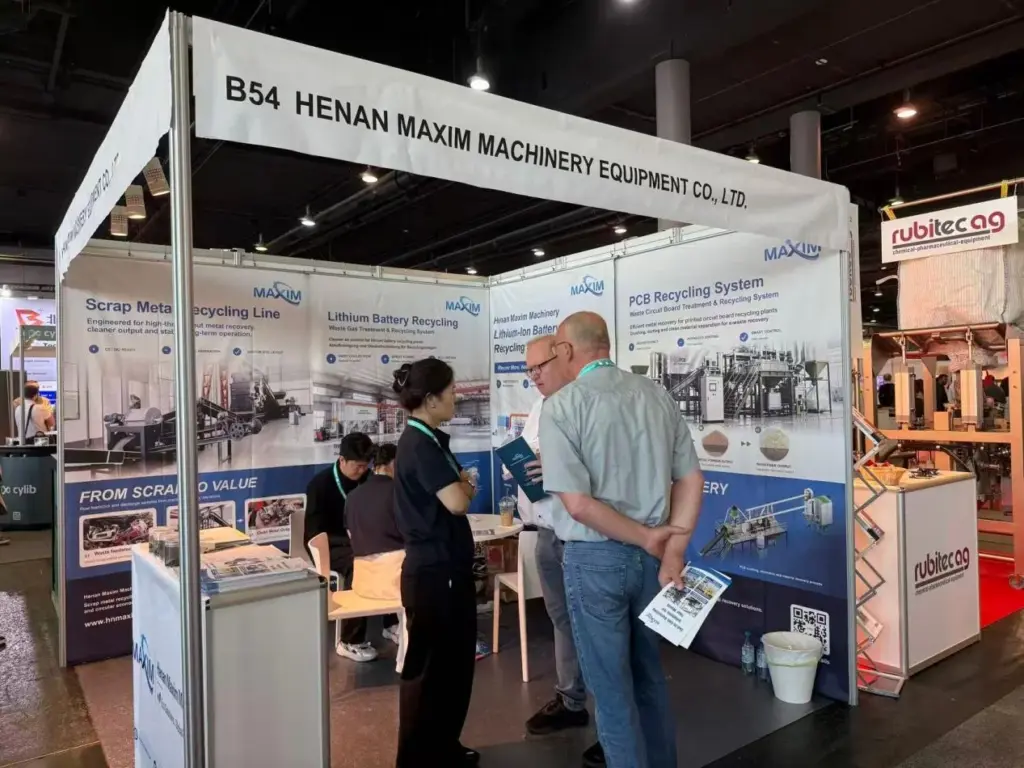
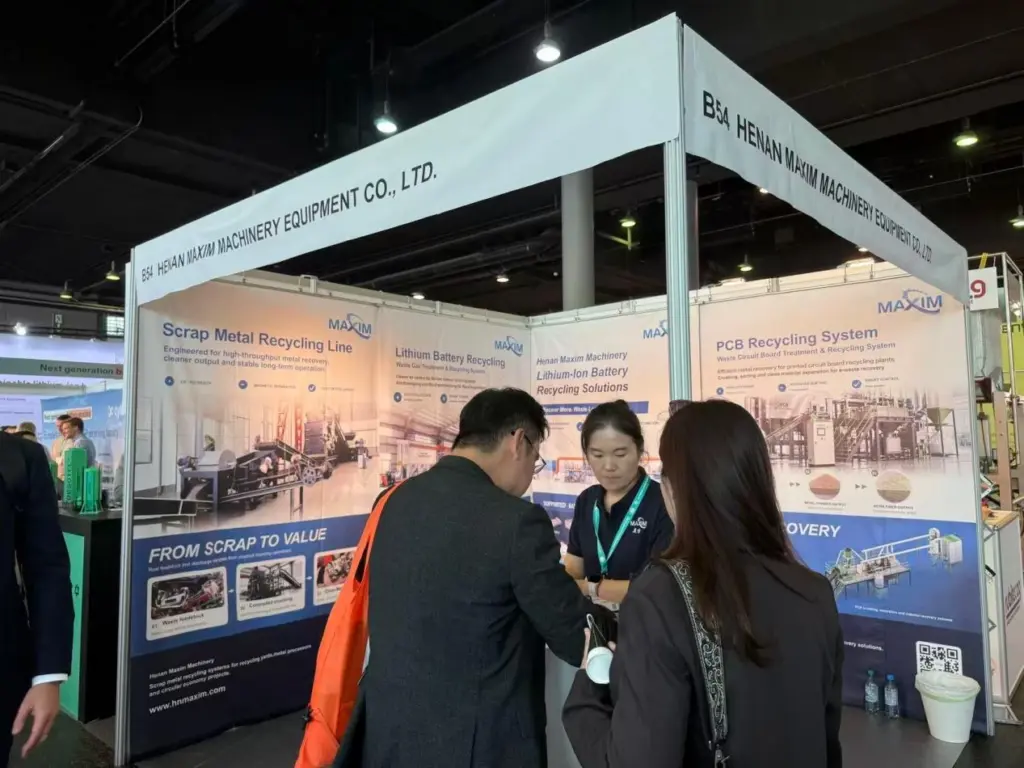
During the recent event at Messe Frankfurt, talks at Booth B54 showed the industry's need for high-yield, safe, and automated systems. MAXIM machinery presented several advanced solutions built to solve the exact challenges described earlier. The company focuses on innovation, design, and production of self-developed equipment with strong attention to resource recycling. The company offers custom recycling and processing solutions for different areas that include lithium batteries, metals, and solid waste. Production line layouts and equipment settings receive adjustment according to customer capacity needs. This approach avoids standard solutions that fail to fit real conditions.
One main point shown at the booth centered on the strong customization and service structure. Every production line receives engineering based on exact customer production capacity needs, raw material features, and real site conditions. This custom method stops the losses that come from fixed, standard machines. In addition, core parts such as heavy-duty shredder blades and special sorting systems receive independent development. These parts provide wear resistance and impact resistance that go well beyond normal industry levels. Every system operates through an advanced PLC control system that supports remote monitoring and early fault warnings. The system cuts total operation and maintenance costs in a sharp way. To ensure smooth work, the company supplies a full one-stop service program. The program covers initial consultation, solution design, equipment production, installation, commissioning, staff training, and a 24-hour quick after-sales maintenance response.
A: Commercial PCB recycling brings high profit when advanced separation techniques are in use. Modern PCB recycling production lines recover precious metals such as gold, silver, and palladium along with base metals like copper at efficiency levels above 97 percent. Because these metals, fibers, and resins hold strong value, electronic waste recycling equipment turns waste into useful resources and creates important economic gains.
A: The most efficient method uses a combination of heavy-duty shredding followed by several stages of automated sorting. The sorting includes magnetic, eddy current, and air separation. This process makes sure that non-ferrous and ferrous metals separate fully from plastics and other impurities. The output then meets the standards for front-end raw materials used in metal smelting.
A: Although both areas belong to e-waste, lithium batteries need special explosion-proof processing lines because of fire risks and chemical features. Dedicated production lines work best for PCB recycling and lithium battery recycling. These lines support safety, stop cross-contamination, and help reach the highest recovery yields.
A: Tighter global environmental rules and the increasing value of recovered raw materials make upgrades necessary. Modern equipment lowers energy use in a clear way, removes secondary pollution, and improves the quality of recovered metals by a large degree. For example, the full series of equipment from MAXIM machinery follows national rules. Emission results receive confirmation through third-party testing. These steps support sustainable and rule-following operations.
A request such as “quote a scrap metal recycling line” leaves many technical questions open. Similar scrap can still require different feeding, shredding, conveying, sorting, and discharge arrangements. A better RFQ defines the job before asking for a machine. Material, capacity, sorting goals, final product, and site conditions should all be clear. What Information Should a excerpt …
