
A layout drawing says little about the awkward scrap that arrives every week. A small metal shredder machine may fit the floor yet struggle with a full shift of that material. Feed, operating hours and the next process all affect the choice. A larger chamber is no automatic answer. Describe one feed mix and duty schedule to each supplier, and bring material from that mix to the trial. It is the difficult routine pieces that should decide the size.
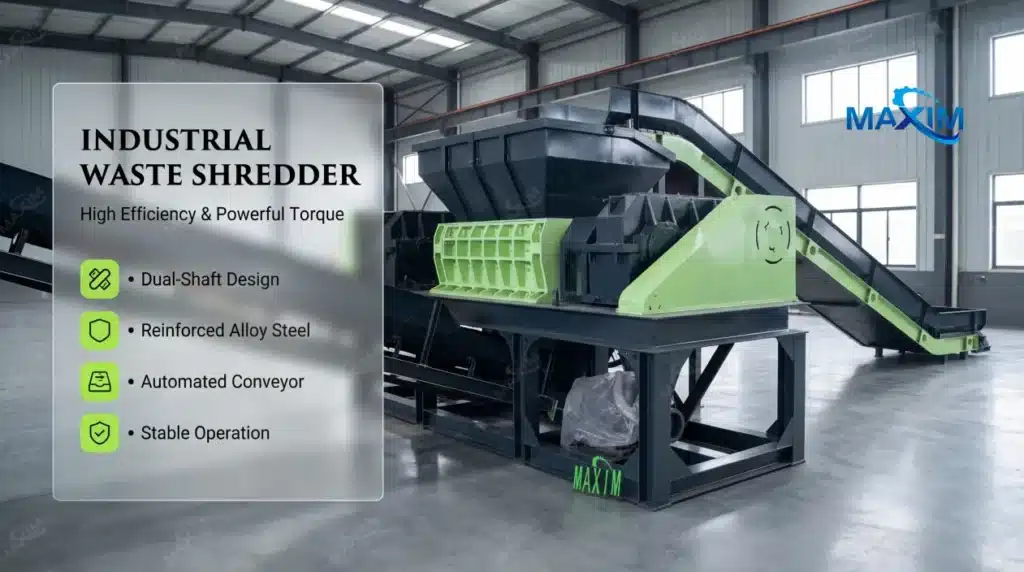
“Small” is a buying category, not a universal engineering rating. A small industrial metal shredder may suit compact, relatively light scrap, while irregular material may need another feed arrangement. Record the largest incoming pieces, their attachments and contamination, and the share of oversize material.
The biggest routine piece should be measured before quoting hourly capacity for a small metal shredder machine. Check the opening against that piece as delivered, then the cutter against its material and shape. A trial on cans or thin offcuts says little about a small scrap metal shredder facing dense castings, sealed containers or mixed assemblies. The written feed list should specify any preparation needed.
The next conveyor, separator or buyer may limit output size. Check that before treating smooth feeding as a success. A small metal shredder machine can take the scrap and still produce an unusable fraction. Inspect output from the same difficult samples on both options.
A daily tonnage target can hide the hours a small metal shredder machine must run. Give the supplier hourly output, shift length, planned stops and harder-scrap share. During the trial, time sustained output and log interruptions, reversals and cutter condition. A peak rate alone cannot describe the shift.
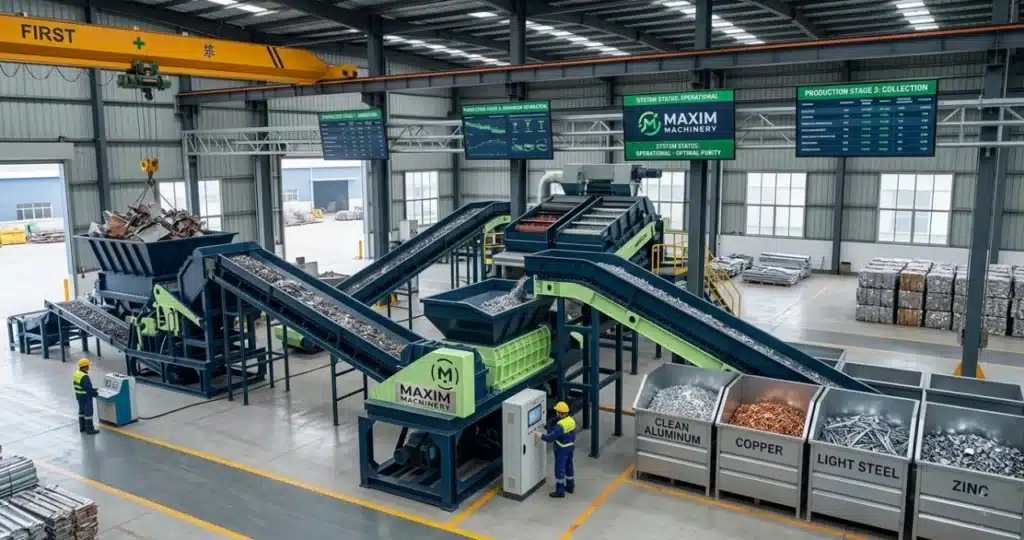
Compare operating limits, not a fixed model number. MAXIM machinery offers metal shredder configurations with different published hopper sizes and capacities. Those figures frame an inquiry; feed, throughput and duty still require confirmation. We can test configurations on one sample and schedule.
| Decision factor | Smaller configuration: check | Heavier configuration: check |
| Feed envelope | Can the full range of routine pieces enter without extra cutting? | Does the larger opening address the actual oversize share? |
| Sustained duty | Does tested hourly output hold across the planned shift? | Is added capacity useful at the expected utilization? |
| Site fit | Is there room for feed, access, removal, and maintenance? | Are foundations, lifting access, and line interfaces available? |
| Output | Does the trial product suit the next conveyor or separation stage? | Does the larger unit produce a usable fraction under the same test? |
| Growth | Can the present feed mix and planned increase stay within tested limits? | Is expansion credible enough to justify the space and system changes? |
Place one sample specification beside both quotations, with units that match. The names mini industrial shredder and heavy duty metal shredder do not reveal the feed or shift used to obtain a quoted rate. Ask for those conditions and the trial basis. A higher rated rate brings little value if feeding equipment or the next process limits the line.
Published small metal shredder machine configurations give a starting point, but the table’s several models do not define a universal size boundary. Ask for the configuration tested on comparable scrap.

A layout starts beyond the machine outline: mark feeding, discharge, guarding, access, electrical equipment and preprocessing. Check the drawing for clearance. A small metal shredder machine could need extra handling area when oversize scrap has to be cut or staged.
A small metal shredder machine should be checked against a defined future case. If growth is uncertain, oversizing offers no automatic protection. Check which infeed, discharge, sorting, power and access elements could expand. The scrap metal recycling production line gives context for these interfaces; confirm the actual layout separately.
A small metal shredder for sale may quote low, while cutting or conveyors add cost. Price installation, wear parts and upgrades separately in each offer.
A small metal shredder machine fits if it accepts difficult routine feed, sustains useful output, and suits the site. Upsize only when a feed, duty, or growth requirement defeats that configuration and the larger system can be installed.
Use ordinary scrap, difficult routine pieces and occasional oversize items. Record dimensions, mix, contamination, hourly input and output. Set the run length beforehand; log stops, interventions, product size and cutter condition. A clean batch can miss problems from a mixed week.
A heavy duty metal shredder may take oversize pieces while discharge restricts the line. If a small metal shredder machine handles routine scrap but rejects rare large pieces, price the cutting or sorting needed. Compare that cost with a larger installation, using the actual frequency of exceptions.
For both a small metal shredder machine and a heavier option, state the largest piece, sustained rate, shift hours, space and growth case. Have suppliers identify trial conditions and exclusions. The quotation should assign responsibility for preparing scrap and moving the discharge.
Buyers can send MAXIM machinery the feed description and layout through the project inquiry contact. Our starting package also includes the operating schedule. With those details, the discussion can address a configuration and a test, rather than rely on its catalogue category.
A: Cutter, opening, drive and material condition set the practical limit. Send the supplier the largest routine piece, mix, attachments and contamination. Request written feed acceptance and a trial. For dense or sealed items, ask for a specific answer instead of reading acceptance into a general description.
A: Consider a heavier option when the smaller one fails on routine feed, sustained output or a defined expansion case. Check room for its feeding and discharge systems. With irregular work, calculate how much of the added capacity would be used.
A: The machine body may be smaller, but the floor plan also has to hold feed and discharge paths, guards and service access. Allow an area to cut or stage oversize pieces when required. Look at cutter access and space to remove parts on the project drawing. A catalogue footprint gives only part of that picture.
A: Set the trial length and material mix first. Include ordinary scrap and difficult pieces, and record how much had to be cut or sorted before feeding. Measure input across the run, log stops and operator interventions, and inspect the discharged fraction. Keep the short, clean demonstration separate from the evidence of routine duty.
A: Start with the feed the site expects later, rather than a general promise of expandability. Check the drawings for power and foundation provisions, then identify equipment that would have to be replaced. Compare that work, including interruption to production, with installing the heavier system at the outset.
A layout drawing says little about the awkward scrap that arrives every week. A small metal shredder machine may fit the floor yet struggle with a full shift of that material. Feed, operating hours and the next process all affect the choice. A larger chamber is no automatic answer. Describe one feed mix and duty excerpt …
