
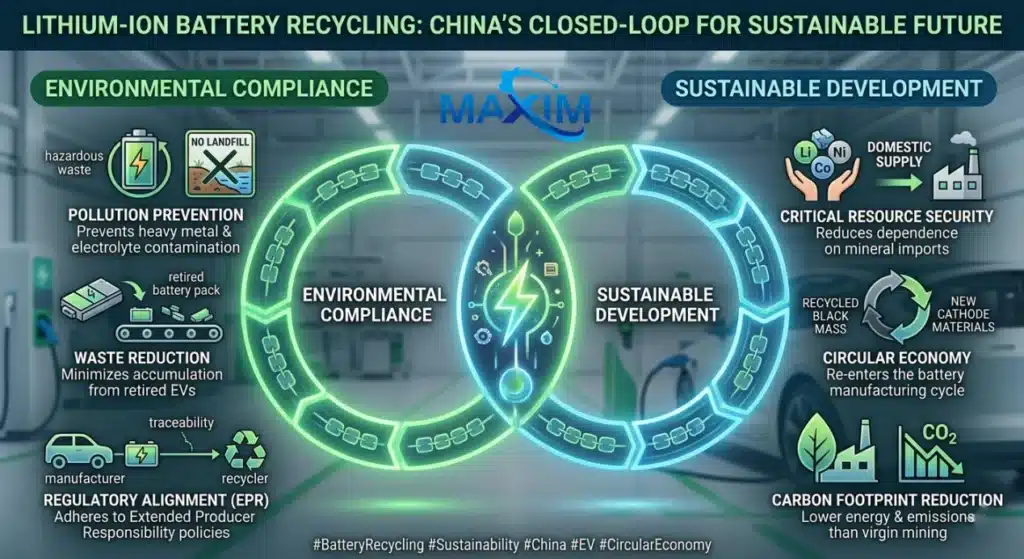
Lithium battery recycling plays an important role in China’s shift to sustainable industrial development. This recycling process prevents environmental dangers. Such dangers include toxic gas emissions, heavy metal contamination, and dust problems. These issues arise from unmanaged waste batteries. Recycling further enables the recovery of valuable metals. Examples of these metals include lithium, cobalt, and nickel. Recovering these metals decreases dependence on raw mining. At the same time, recovery lowers production costs. The Chinese government establishes strict regulations. These regulations promote circular economy practices. Therefore, businesses must follow green standards. Green standards form a crucial aspect of business operations.
China’s lithium battery recycling industry has expanded rapidly. Expansion occurs through advanced dry and wet processing techniques. Dry processes typically involve mechanical crushing and sorting. In contrast, wet methods use chemical leaching to retrieve metals. Government policies play a significant role. For instance, the “Law on the Prevention and Control of Environmental Pollution by Solid Waste” exists. This law enhances oversight of waste management. Oversight also covers emission control.
The complete recycling and treatment equipment for waste lithium batteries exhibits a strong degree of automation. This equipment proves easy to apply in industrial settings. Modern factories integrate automation features. Integration helps achieve improved recovery rates. These rates exceed 99% for valuable materials. Factories also maintain safe working environments. Safety comes from negative pressure systems. These systems prevent dust from escaping.
Challenges remain in several areas. Logistics management presents one difficulty. Technology upgrades pose another. Consistent compliance at different sites adds to the issues. Companies invest in intelligent control systems. Investments also go toward integrated purification lines. Such investments prepare companies to address these challenges effectively.
Major firms such as UJFWJ, DSAD, and others guide large-scale power battery recycling. Vertical integration supports this leadership. Integration extends from manufacturing to material reuse. Newer firms emerge in the field. These firms aim at specific sectors. Sectors cover consumer electronics. Sectors also include small-scale energy storage systems.
Henan MAXIM Machinery Equipment Co., Ltd. stands among progressive manufacturers. We emphasize research, development, and production of environmentally sound recycling machines. The customized Lithium Battery Recycling Production Line addresses key issues. Issues encompass “difficulty in recycling, high pollution levels, and resource waste”. This production line secures efficient separation of materials. Materials include aluminum, copper, electrode components, and other elements. Separation allows the reuse of these materials. Henan MAXIM Machinery Equipment Co., Ltd. supports flexible capacity adjustments. Adjustments fit various battery types. Types range from ternary lithium to lithium iron phosphate.
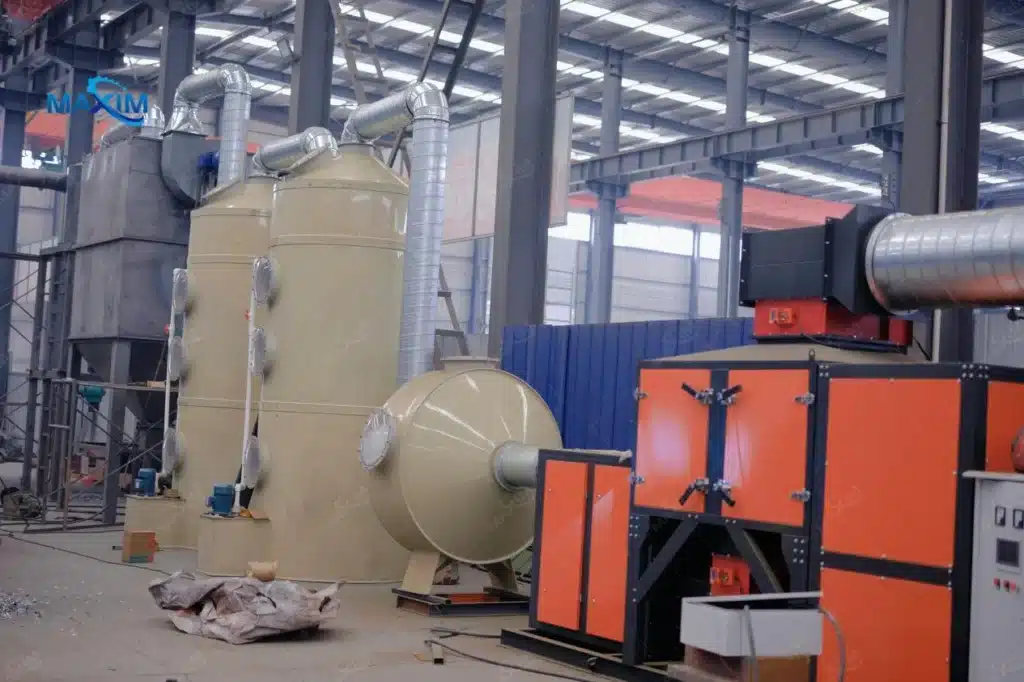
Lithium battery recycling generates pollutants. Pollutants consist of fine dust particles, volatile organic compounds (VOCs), and hydrogen fluoride (HF) gas. These pollutants appear during crushing steps. Pollutants also arise in chemical treatment procedures. Plants maintain emission compliance through various systems. Systems represent modern air cleaning technologies:
The production line incorporates a crushing system. The line also includes a sorting system, conveying system, air purification system, and automatic control system. Additional components exist as well. The production line equips a centralized dust removal system. This combination ensures proper matching. Matching occurs between pollutant sources and suitable filtration or scrubbing methods. As a result, the setup achieves peak efficiency in control.
Selecting a dependable supplier requires evaluation of multiple factors:
Customization Capabilities: Customized according to customer production capacity requirements, material characteristics, and site conditions. MAXIM machinery’s approach guarantees that each project attains optimal efficiency. This method prevents unnecessary resource expenditure.
Automation continues to transform recycling operations. Transformation happens through AI-based monitoring systems. These systems boost sorting accuracy. Systems also reduce manual labor needs. Stricter environmental regulations influence companies. Regulations push companies toward integrated emission control approaches. Approaches combine bag filters with scrubber towers. This combination delivers comprehensive treatment of pollutants.
Digital tools gain greater importance in the industry. Smart sensors monitor emission levels. Monitoring occurs in real time. Real-time monitoring ensures continuous compliance. We follow the mission of "Enabling Environmental Protection with Machinery, Creating Value with Recycling." Henan MAXIM Machinery Equipment Co., Ltd. deepens our involvement in the environmental recycling equipment areas. This commitment reflects our resolve to advance green technologies. Technologies align with China’s dual-carbon targets.
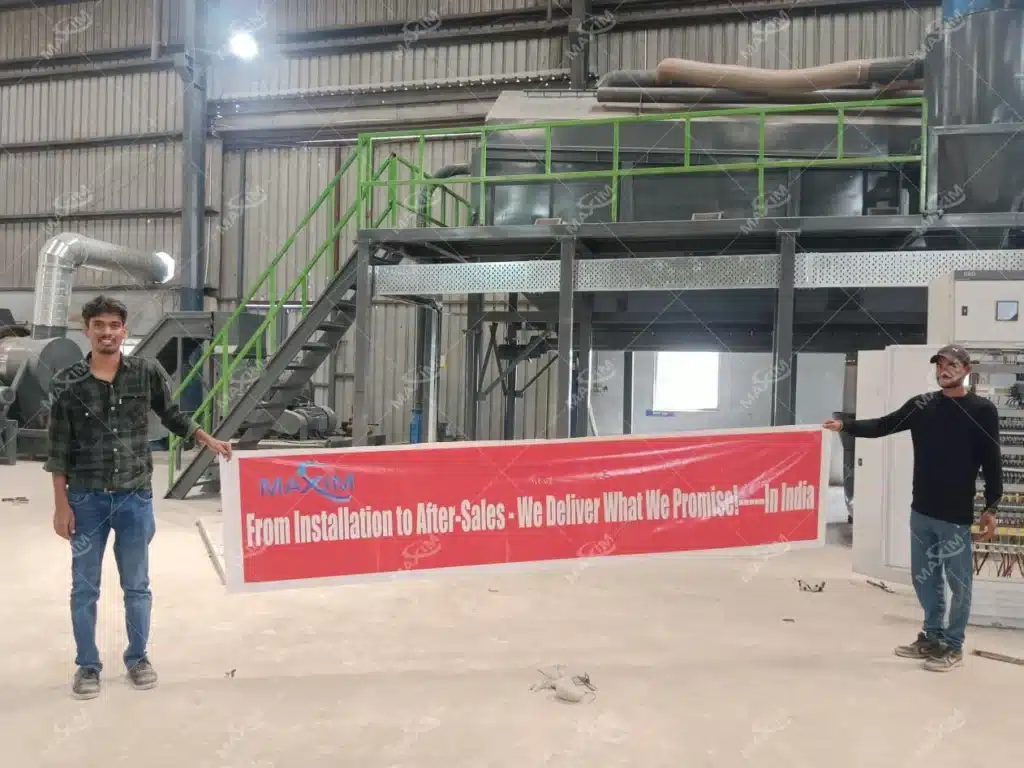
Businesses seek partners for sustainable initiatives. Selection involves careful review:
Full-Life Cycle Service: We provide a one-stop service program covering "preliminary consultation - solution design - equipment production - installation and commissioning - personnel training - after-sales maintenance." This program ensures reliable operations. The program also maintains compliance throughout the product life cycle.
A: The Lithium Battery Recycling Production Line serves as an automated system. This system crushes materials from used lithium batteries. The system sorts these materials. The system separates components. The system purifies elements for reuse. Integrated purification units control emissions during the process.
A: Customized solutions match particular material types. Solutions also fit specific capacities. Such adaptations enhance efficiency. At the same time, solutions satisfy environmental standards. Customization avoids excessive design. Customization prevents waste of resources.
A: Dust particles emerge from crushing processes. VOCs come from solvent use. HF gas results from electrolyte breakdown. These elements represent the main concerns. Advanced filtration systems address these pollutants effectively.
A: All equipment adheres to national regulations. Regulations include the “Law on the Prevention and Control of Environmental Pollution by Solid Waste.” Third-party certifications confirm compliance. Certifications cover dust emissions, noise levels, and wastewater discharges.
A: Yes. MAXIM machinery delivers full project assistance. Assistance ranges from design to installation. This support guarantees the smooth operation of every customized Lithium Battery Recycling Production Line. Operations comply with local regulatory requirements.
A request such as “quote a scrap metal recycling line” leaves many technical questions open. Similar scrap can still require different feeding, shredding, conveying, sorting, and discharge arrangements. A better RFQ defines the job before asking for a machine. Material, capacity, sorting goals, final product, and site conditions should all be clear. What Information Should a excerpt …
