
Aluminum recycling forms a key part of the global circular economy. Efficient processing impacts profitability and sustainability in direct ways. In this process, aluminum scrap crushing holds a central role in preparing material for smelting and refining. Selecting the proper aluminum recycling crusher involves more than just breaking metal into smaller pieces. The selection also focuses on maximizing recovery rates, minimizing energy use, and ensuring uniform output quality. A well-optimized aluminum scrap crushing system cuts operational costs in major ways. At the same time, the system boosts productivity and environmental performance.
Traditional metal crushing methods depend on manual dismantling or basic mechanical crushers. These systems often use hand tools or small-scale machines. The methods are labor-intensive and inconsistent in performance. The output size varies widely. Such variations cause inefficiencies during the melting and sorting stages. Traditional metal crushing methods remain common in small workshops or outdated facilities. Investment in automation remains limited in those places.
Manual scrap processing seems cost-effective at first. However, manual scrap processing leads to higher long-term costs due to low throughput and excessive labor requirements. Moreover, irregular crushed materials raise the risk of contamination during subsequent refining processes.
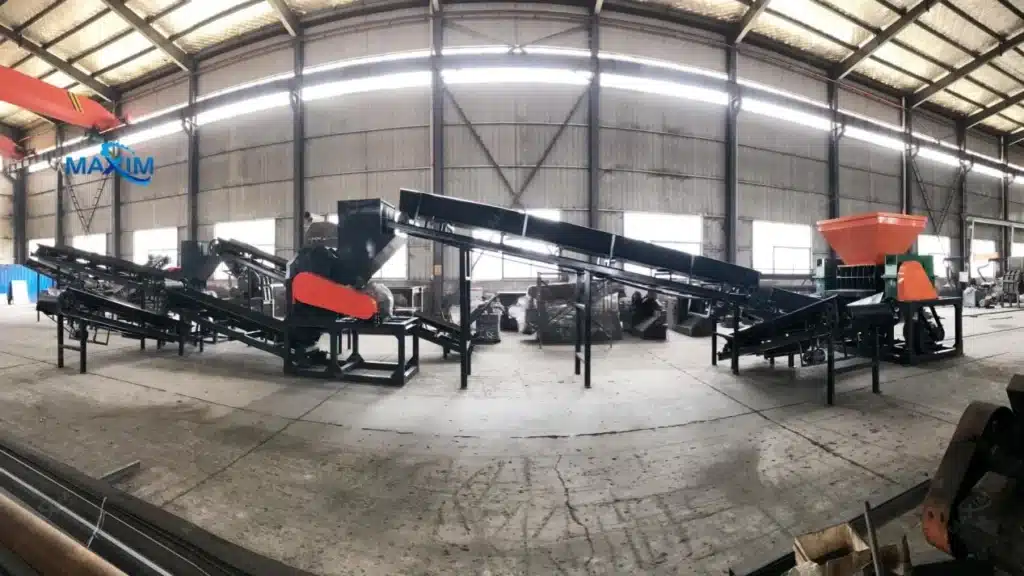
An industrial aluminum crusher marks a new generation of automated equipment. Engineers design the equipment specifically for high-volume operations. These machines support continuous feeding and stable operation. The features make the machines suitable for large-scale recycling facilities. The facilities handle tons of aluminum scrap daily.
A professional-grade scrap metal crusher machine ensures consistent particle size distribution. This consistency enhances smelting efficiency and reduces energy consumption per ton processed. The scrap metal recycling production line achieves “crushing - impurity removal - sorting - forming” for metal waste, including scrap steel, aluminum alloy, and copper. Integrated magnetic separation technology ensures that non-metallic impurities receive effective removal before the final output stage.
Industrial crushers include continuous feeding mechanisms. The mechanisms handle large volumes without interruption. Advanced designs enable throughput capacities ranging from 10 to 50 tons per hour, depending on configuration. Traditional manual methods rely on batch operations. The operations involve frequent pauses for reloading or maintenance. These pauses result in significantly lower productivity.
Automation defines a key advantage of industrial systems. Once operators install the systems, an automated metal recycling shredder requires minimal human intervention beyond supervision and maintenance checks. Traditional methods depend on manual labor for every step—from feeding to unloading. This dependence leads to higher wages and potential safety risks.
Modern high-efficiency crushers feature optimized drive systems. The systems minimize power consumption per ton processed. Older mechanical crushers lack energy optimization features. The older crushers often waste electricity through friction losses or uneven load distribution. An automated metal crushing system reduces both direct energy costs and indirect expenses such as downtime caused by mechanical failure.
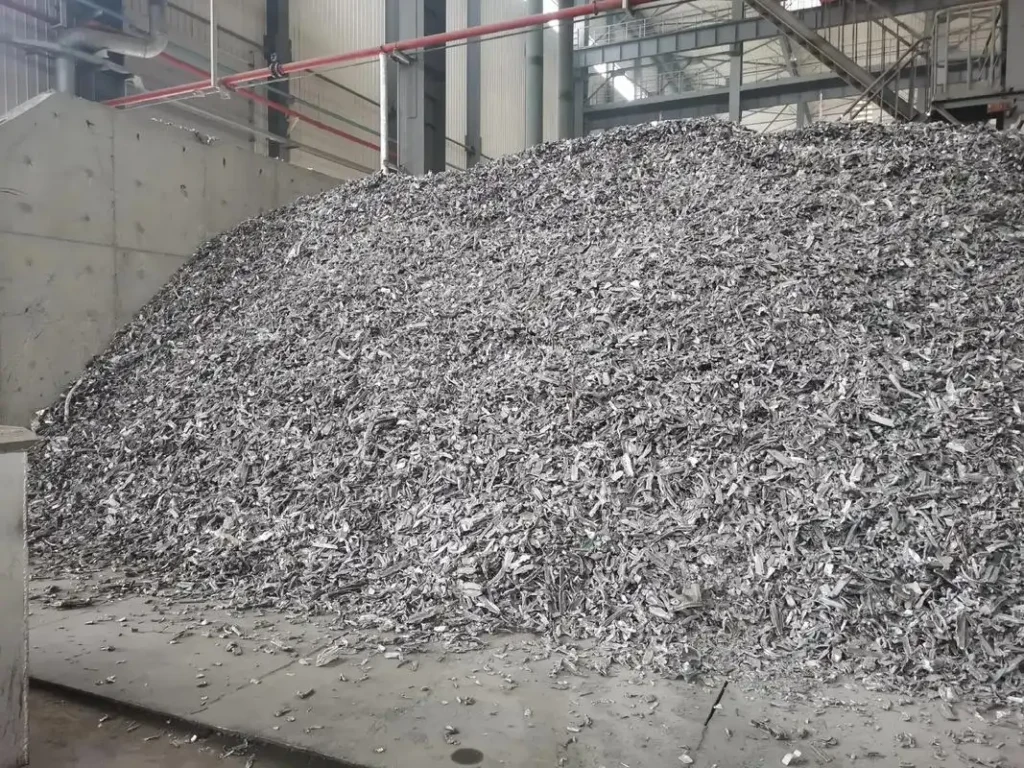
Uniformity of crushed material proves crucial for efficient melting during aluminum recycling. Industrial aluminum crushers produce consistent particle sizes. The sizes improve furnace loading efficiency and heat transfer uniformity. Traditional techniques yield irregular fragments. These fragments complicate downstream processing.
Advanced crushing systems integrate sorting modules. The modules separate metals from impurities immediately after crushing. This separation ensures high purity levels in the recovered material. Integrated magnetic separation and eddy current separation technologies effectively separate metals from non-metallic impurities. The production line remains highly automated. This design minimizes material loss while increasing the overall aluminum recovery rate. Manual processes cannot achieve this precision. Higher waste ratios often result from manual processes.
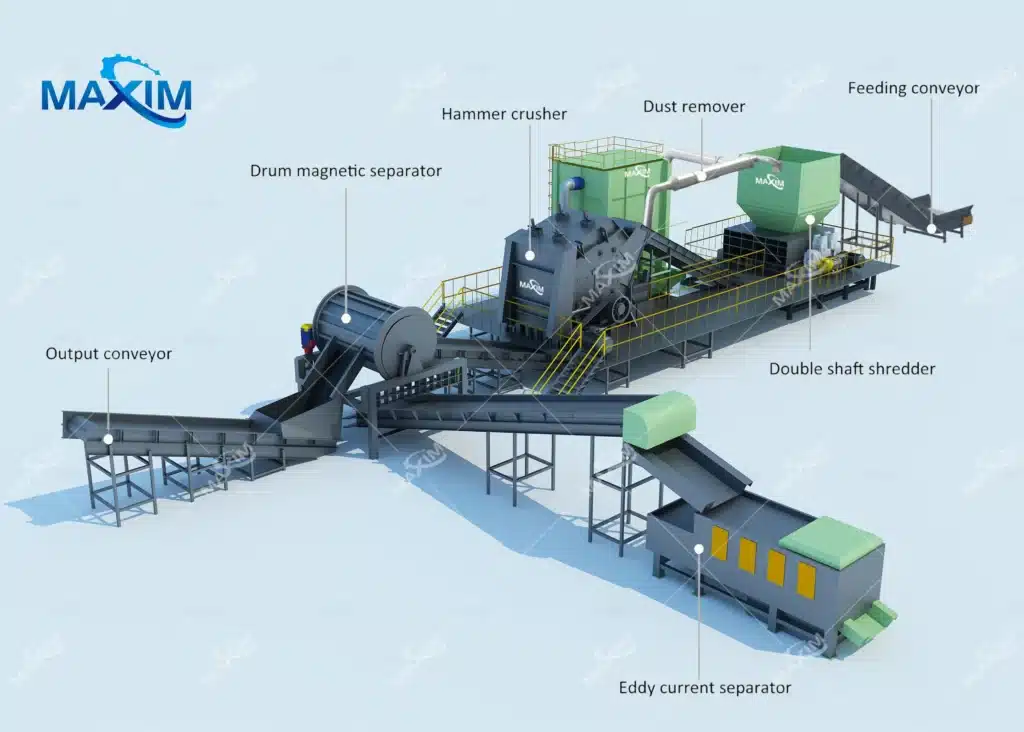
Henan MAXIM Machinery Equipment Co., Ltd. focuses on innovation, design, and production of independently designed and developed equipment. This commitment to innovation enables MAXIM machinery to provide customized metal recycling shredder solutions. The solutions meet modern recycling demands in effective ways.
MAXIM machinery designs customized aluminum crusher solutions tailored to specific capacity requirements and scrap types. Customers customize the solutions according to production capacity requirements, material characteristics, and site conditions. MAXIM machinery tailors production line layout and equipment parameters to avoid “one-size-fits-all” waste. This flexibility ensures optimal throughput across various operational scales.
MAXIM machinery’s industrial crushers utilize wear-resistant components. Engineers design the components for long service life under heavy-duty conditions. Core components (such as shredder blades and sorting systems) receive independent development. Wear and impact resistance exceed industry standards. The result includes reduced downtime, lower maintenance costs, and consistent performance even under continuous operation.
Automation plays a key role in maintaining stability during high-capacity runs. MAXIM machinery integrates PLC-based smart control systems with remote monitoring functions. The functions allow operators to adjust parameters or receive fault alerts instantly. The equipment includes a PLC control system. The system supports remote monitoring and fault warnings. These features reduce operation and maintenance costs.
Every type of aluminum scrap—whether beverage cans, extrusion profiles, or alloy castings—requires unique handling properties during crushing. MAXIM machinery focuses on “resource recycling.” MAXIM machinery specializes in the research, development, and manufacturing of environmentally friendly recycling machinery. MAXIM machinery provides customized recycling and processing solutions for various sectors. MAXIM machinery offers fully adaptable configurations designed around customer-specific feedstock characteristics.
The company’s commitment extends beyond product delivery. MAXIM machinery provides a one-stop service program covering “preliminary consultation – solution design – equipment production – installation and commissioning – personnel training – after-sales maintenance.” This full lifecycle support ensures sustained performance over time.
When comparing modern industrial aluminum crushers with traditional crushing methods, the advantages appear clear. The advantages include greater efficiency, lower operational cost, improved safety standards, superior output quality, and enhanced environmental compliance. MAXIM machinery offers efficient, intelligent, and environmentally friendly equipment. The equipment helps companies reduce costs and increase efficiency. The equipment promotes green and sustainable development. Businesses seeking better ROI should adopt advanced automated systems like those offered by MAXIM machinery. The adoption helps businesses stay competitive within the evolving circular economy framework.
A: Industrial crushers operate continuously with automated feeding systems. The systems increase throughput drastically. At the same time, the systems reduce manual labor needs.
A: Automation minimizes human intervention by using PLC control systems for monitoring performance parameters remotely. Automation lowers energy consumption per ton processed.
A: Yes, MAXIM machinery offers fully customized solutions based on production capacity, material characteristics, site layout, and desired output size.
A: Integrated magnetic separation combined with eddy current separation removes non-metallic contaminants effectively before final output formation.
A: Upgrading improves productivity up to several times over manual methods. Upgrading reduces operational costs through automation-driven consistency in quality output.
Enterprises can achieve sustainable growth by adopting advanced industrial aluminum recycling crusher systems from MAXIM machinery. The systems enable efficient resource utilization. The systems meet global environmental standards for modern manufacturing industries.
A request such as “quote a scrap metal recycling line” leaves many technical questions open. Similar scrap can still require different feeding, shredding, conveying, sorting, and discharge arrangements. A better RFQ defines the job before asking for a machine. Material, capacity, sorting goals, final product, and site conditions should all be clear. What Information Should a excerpt …
