
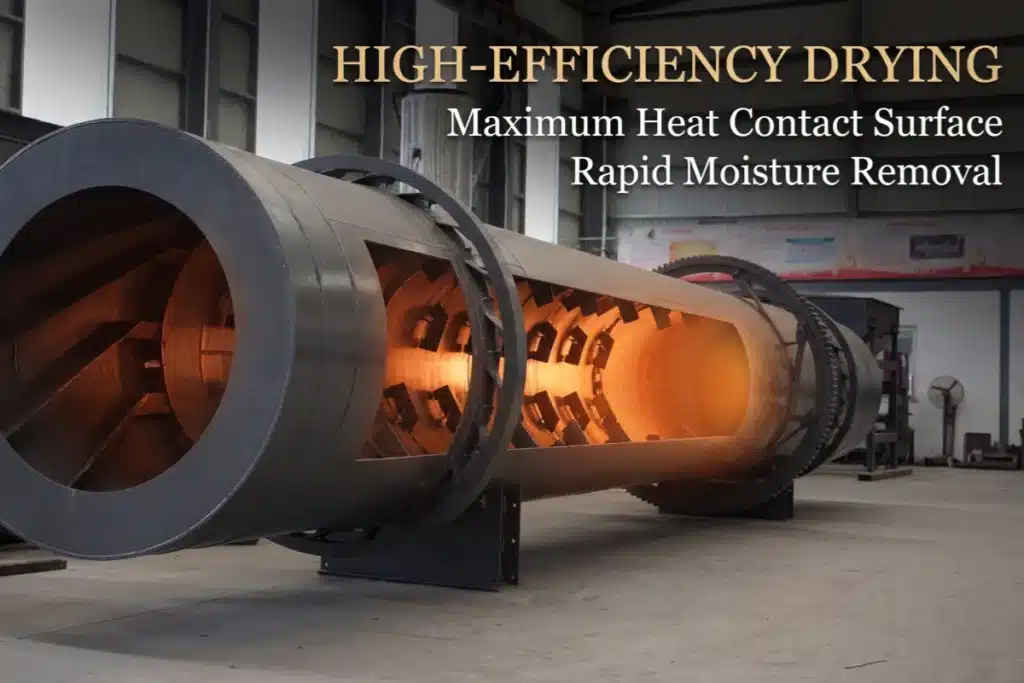
A single pass drying drum functions as a modern industrial dryer. The single pass drying drum handles materials in a single continuous flow through a rotating drum. Traditional multi-pass dryers require multiple cycles to remove all moisture. In contrast, the single-pass drying drum achieves uniform drying in a single pass. The design eases material handling and improves efficiency substantially. Modern industrial production benefits from the single-pass configuration. The single-pass configuration decreases fuel consumption, reduces maintenance needs, and delivers consistent product quality.
Industrial drum dryers constitute equipment that accomplishes material drying through the rotation of a drum. This principle establishes the base of single-pass technology. Single pass technology improves for greater throughput and superior thermal efficiency.
The single pass drying drum functions based on a continuous material flow principle. Wet materials enter one end of the rotating drum. Next, the wet materials move through the drum only once before leaving as dried output. Direct heat transfer removes moisture fast while keeping stable temperature control. Internal lifting flights raise and shower materials steadily through the hot air stream. This process guarantees every particle gets even heat exposure. The controlled airflow system preserves steady drying results across different material types and moisture levels.
The single pass drying drum employs a new type of material lifting plate device. The device possesses multiple functions such as guidance, flow sharing, and material lifting. The mechanism improves contact between materials and hot gases for optimal heat utilization.
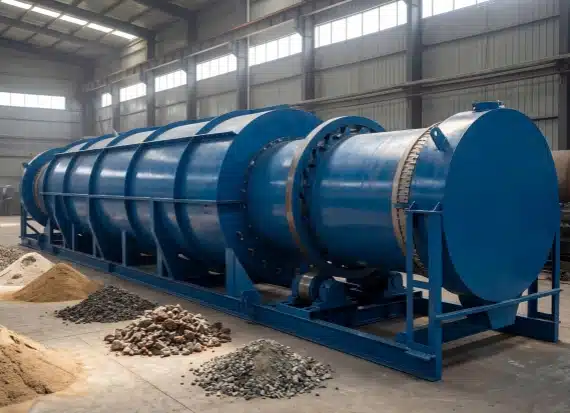
Modern single pass dryers incorporate high-efficiency burners or alternative fuel systems. The systems operate with biomass or natural gas. Stable temperature control permits the handling of diverse materials such as sand, sawdust, coal dust, or mineral powder with accuracy.
The internal configuration supports anti-sticking and anti-clogging performance to avoid buildup inside the drum. Adjustable rotation speed permits exact control over final moisture content. This control improves both energy use and output quality.
With the direct contact between the hot gas flow and the material, the output can meet the needs of different users from 10 tons to 100 tons per hour under the condition of sufficient heat exchange.
Energy efficiency counts among the main strengths of single-pass systems. Lower fuel consumption than multi-pass dryers cuts operational costs right away. The briefer drying time boosts throughput while cutting energy losses from reheating cycles. In standard industrial applications, energy savings fall between 15–30%. The savings deliver major cost cuts over time.
Advanced drying technology employs high-temperature rapid drying technology, a large heat transfer coefficient, high thermal efficiency, and high drying strength.
The simplified structure of single-pass drums lessens mechanical failures typical in complex multi-stage systems. Simpler maintenance access permits quicker servicing without stopping production lines for extended periods. Continuous operation backs high-capacity production environments where uptime matters greatly for profitability.
MAXIM machinery stresses reliability through customized engineering solutions. The solutions are built around customer-specific production needs.
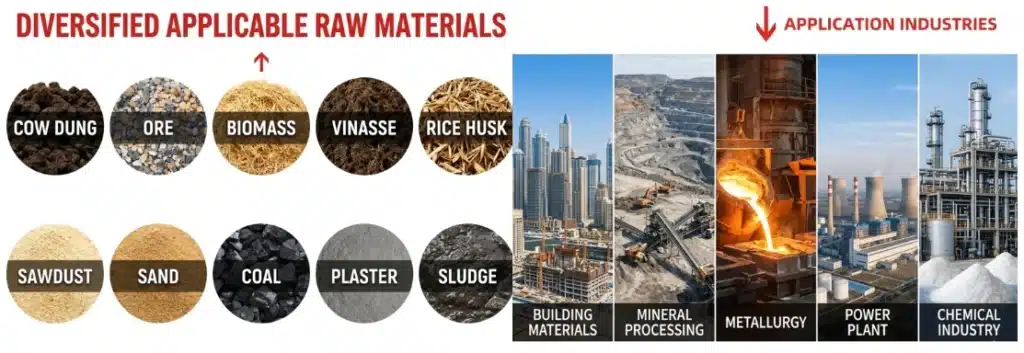
Single-pass dryers offer effective moisture removal for grains, starches, fruits, and food ingredients. The single-pass dryers preserve nutritional value through managed temperature exposure.
Single pass dryers receive broad application for drying sawdust, wood chips, agricultural residues, and other biomass materials. The biomass materials are applied in pellet or briquette manufacturing.
These systems handle the drying of ores, fertilizers, chemical powders, plaster, limestone, coal sludge, or similar raw materials with effectiveness. The raw materials find use in the metallurgy or construction industries.
Commonly dried materials encompass sand, mineral powder, coal dust, chicken manure, and cattle manure.
Single-pass drying drums help lower carbon emissions by decreasing overall fuel use per ton of dried product. Better moisture control lessens waste generation during downstream processing stages. Compatibility with renewable energy sources like biomass burners improves sustainability performance in eco-conscious industries.
MAXIM machinery concentrates on “resource recycling” by creating environmentally friendly equipment. The equipment assists companies in cutting costs while advancing green development.
Focusing on "resource recycling," MAXIM machinery specializes in the research, development, and manufacturing of environmentally friendly recycling machinery.
Selecting an appropriate dryer depends on several factors:
· Material type – Different raw materials, such as biomass or minerals, require specific temperature profiles.
· Moisture content – The initial water percentage determines the required residence time inside the drum.
· Production capacity – Equipment must match throughput goals without compromising efficiency.
· Fuel type – Compatibility with natural gas or renewable fuels affects operating cost optimization.
· Integration – Customized designs ensure seamless connection with existing conveyors or heating systems within an industrial line.
MAXIM machinery provides fully customized solutions. The solutions are tailored to site conditions and capacity requirements.
Customization occurs according to customer production capacity requirements, material characteristics, and site conditions.
Emerging innovations include smart automation systems. The smart automation systems track temperature uniformity and airflow balance in real time. Heat recovery units permit the reuse of exhaust gases to preheat incoming air streams for extra energy savings. Global industries place priority on sustainability goals aligned with carbon reduction policies. Consequently, demand for intelligent low-emission dryers keeps growing fast.
MAXIM machinery delivers established high-efficiency drying performance across multiple sectors. The sectors cover food processing, biomass energy production, minerals processing, and chemical manufacturing. Engineers craft each system with a customized design based on specific material characteristics to reach optimal results. The advanced energy-saving technology cuts operational costs notably while preserving consistent product quality over long-term use.
MAXIM machinery supplies a one-stop service program. The program covers "preliminary consultation - solution design - equipment production - installation and commissioning - personnel training - after-sales maintenance." Professional technical support guarantees smooth installation and dependable after-sales service throughout the equipment life cycle.
Upgrade the production line today with MAXIM machinery’s advanced single-pass drying technology. The advanced single-pass drying technology is built for superior efficiency and durability. Contact the team for customized industrial drying solutions that reduce costs while enhancing productivity across operations.
A: The single pass drying drum completes moisture removal in one continuous cycle. The single pass drying drum employs direct heat transfer and an optimized airflow design that minimizes energy loss.
A: Yes. Single pass dryers process diverse feedstocks such as sand, sawdust, coal dust, grains, or mineral powders, depending on configuration settings.
A: Typical savings range from 15–30% compared to conventional multi-pass systems due to shorter residence time and improved thermal efficiency.
A: MAXIM machinery provides fully customized designs based on capacity requirements, fuel preferences, site layout, and material properties.
A: Yes. Single pass dryers reduce carbon emissions through lower fuel consumption. Single pass dryers integrate renewable energy sources like biomass burners for sustainable operation.
A request such as “quote a scrap metal recycling line” leaves many technical questions open. Similar scrap can still require different feeding, shredding, conveying, sorting, and discharge arrangements. A better RFQ defines the job before asking for a machine. Material, capacity, sorting goals, final product, and site conditions should all be clear. What Information Should a excerpt …
