
Every facility manager aims to process more material efficiently. A common oversight in facility upgrades is focusing solely on the final output size while neglecting the physical state of the input material. Whether you are dealing with scattered metal sheets or highly compressed metallic blocks, the physical form of your feed material completely alters the mechanical demands placed on your equipment. Understanding these mechanical differences is critical to avoiding costly downtime and ensuring a profitable operation.
The physical properties of your input material dictate how internal mechanisms interact with the metal. A mismatch between material form and machine configuration leads to rapid wear, high energy consumption, and frequent operational interruptions.
Loose materials, such as offcuts, aluminum frames, and uncompressed body parts, present a high-volume but low-density challenge. The primary mechanical goal here is grabbing the material efficiently. Because these items take up significant physical space, the cutting chamber must be designed to pull bulky items down into the shafts without them bouncing on top of the rotors. The infeed rate is generally steady, which allows the equipment to maintain a continuous operational rhythm. With proper feeding, processing facilities can achieve a consistent scrap shredder throughput tons per hour, often ranging from 10 to 50 tons per hour depending on the exact material profile and overall layout.

Conversely, compressed bales are extremely dense. When a solid block of crushed steel enters the cutting chamber, the machine experiences an immediate and massive spike in resistance. The rotors are no longer just pulling and slicing thin metal; they are forced to tear apart a solid mass of interwoven steel, copper, and aluminum. This requires an immense amount of instantaneous biting force. If the equipment lacks the structural integrity or the rotational force to break the bale apart on the first bite, the rotors will stall. Dealing with this density requires specialized engineering focused entirely on peak load management.
Selecting the right machinery means looking at the internal engineering. The components must be tailored to the specific behavior of the metal as it enters the chamber.
For uncompressed materials, the cutting chamber needs a larger active grabbing area. The blades require a geometry that hooks onto irregular shapes and pulls them downward. However, for a baled scrap shredder, the rotor design must prioritize shear strength. The shafts are subjected to severe bending moments when a heavy bale drops onto them. Therefore, the shaft diameter must be thicker, and the blades need a highly aggressive hook profile to penetrate the flat, hardened exterior of the compressed block.
Throughput is a direct function of applied power, but how that power is delivered matters. A heavy-duty Double Shaft Shredder processing bales relies on low-speed, high-torque hydraulic or heavily geared electric drives. When the blade hits a dense pocket of compressed engine blocks, the motor must supply enough peak torque to power through the obstruction without tripping the electrical breakers. Loose feed operations can often run at slightly higher rotational speeds because the cutting resistance is distributed more evenly over time.
The friction and impact forces generated by solid bales accelerate the degradation of wear parts. The constant shock loading means bearings and blade edges face extreme fatigue. Facilities processing compressed blocks must adhere to stricter maintenance intervals and require equipment built with highly durable alloys. Uncompressed feeds generally cause steady, predictable wear, allowing for longer intervals between replacements.
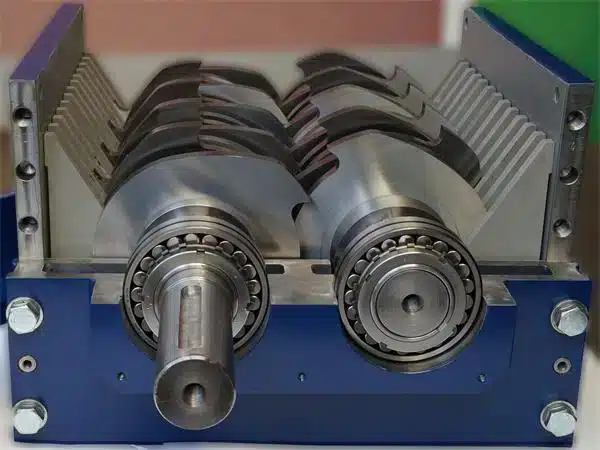
Achieving your target production capacity is not just about raw motor power; it requires a strategic approach to how the material is introduced to the cutting chamber.
To optimize a scrap processing line for bulky feeds, the secret lies in continuous, metered conveying. Dumping massive piles of loose frames directly into the hopper often causes bridging, where the metal forms an arch over the rotors and stops feeding entirely. Using variable speed conveyors ensures a uniform layer of metal constantly enters the chamber. This steady flow keeps the motors running at their optimal load capacity rather than fluctuating between idle and overload.
Jams are the biggest enemy of high yield. When processing heavy blocks, the equipment must be smart enough to protect itself.
Case Study Observation:
1. The Problem: A recycling facility previously struggled with motor burnouts because their operators continuously forced heavy steel bales into a standard machine.
2. The Solution: By upgrading the control logic, the system instantly detects the amperage draw when a density spike threatens to stall the shafts.
3. The Result: Before a mechanical failure occurs, the rotors automatically reverse, repositioning the heavy block, and then bite again at a different angle. This automated reversal prevents downtime and ensures a steady processing rhythm.
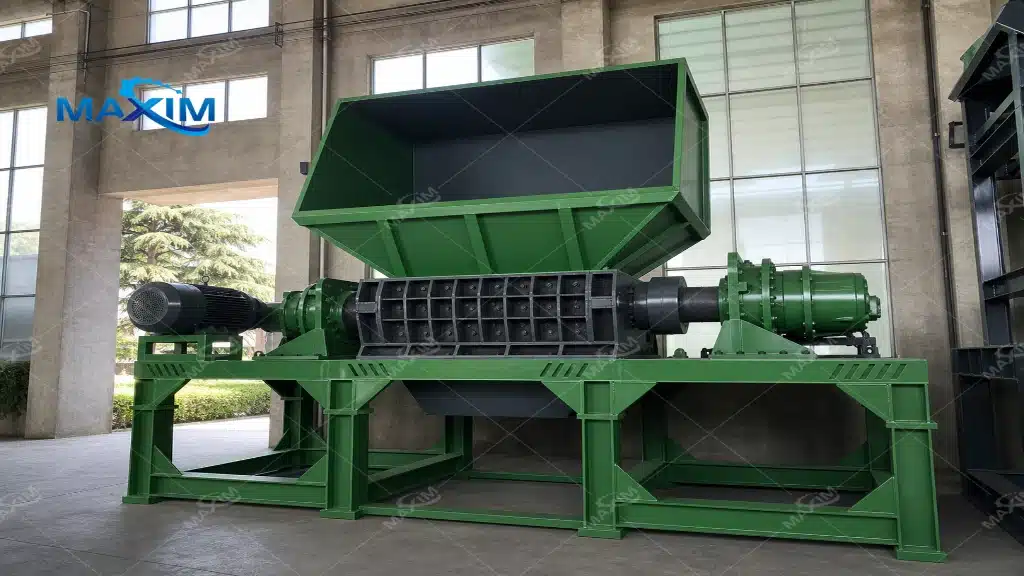
Because no two recycling yards are identical, a one-size-fits-all approach inevitably leads to inefficiencies. We focus on evaluating your specific capacity requirements, material characteristics, and site conditions to engineer a custom solution that delivers maximum value.
At MAXIM machinery, we tailor the internal cutting mechanics to match your exact feed profile. Our application engineers analyze the density and composition of your metals to determine the precise blade thickness, hook count, and shaft geometry required. Our core components are independently developed, ensuring that the wear and impact resistance exceeds standard industry benchmarks. This customized approach ensures that whether you are breaking down light aluminum sheets or dense steel bundles, the cutting action is optimized for longevity and efficiency.
Hardware must be paired with intelligent software. We equip our systems with advanced PLC control systems that monitor torque, temperature, and material flow in real-time. This setup supports remote monitoring and automated fault warnings, which drastically reduces manual intervention and lowers overall operation and maintenance costs. By integrating these smart controls with downstream magnetic separation and eddy current separation technologies, we help you achieve a highly automated process that produces clean, smelting-ready materials.
The success of your recycling operation hinges on acknowledging the physical realities of your input material. By aligning the mechanical design of your equipment with the specific demands of your feed form, you eliminate bottlenecks and protect your investment. With the right engineering partner, your facility can transition from merely breaking down waste to producing high-purity, high-value resources efficiently.
A: Throughput varies heavily based on the material’s physical state. Uncompressed, light materials generally allow for a steady, continuous infeed, offering highly consistent production rates. Compressed materials provide a much higher mass per bite but require a specialized baled scrap shredder with immense torque to maintain high throughput without stalling the rotors or tripping electrical breakers.
A: Generally, no. A standard machine engineered for bulky, light materials often lacks the peak torque and robust shaft structure required to shear through heavily compressed metal blocks. Processing high-density blocks in a standard machine frequently leads to jammed rotors, accelerated blade fatigue, and severe electrical overloads.
A: A high-quality heavy-duty twin-shaft shredder utilizes advanced PLC control systems and auto-reverse mechanisms. When the machine encounters a solid metal block that exceeds its immediate cutting threshold, it automatically reverses the shafts to tumble and reposition the block before pulling it back into the cutting chamber at a more favorable angle.
A: To maximize the efficiency of your reduction equipment, a complete setup requires automated heavy-duty conveyors and material metering systems. For light materials, continuous feeding conveyors prevent bridging. For heavy blocks, specialized grapple loaders or chain conveyors are necessary to safely manage the localized weight and feed the equipment at a controlled pace.
A: They are exceptionally versatile and excel at both when configured correctly. For light materials, the dual rotors offer an excellent grabbing area to pull bulky items down. For dense blocks, their low-speed, high-torque shearing action is absolutely essential to tear through compressed metals safely, avoiding the explosive impacts associated with high-speed processing methods.
A request such as “quote a scrap metal recycling line” leaves many technical questions open. Similar scrap can still require different feeding, shredding, conveying, sorting, and discharge arrangements. A better RFQ defines the job before asking for a machine. Material, capacity, sorting goals, final product, and site conditions should all be clear. What Information Should a excerpt …
