
Scrap metal rarely arrives as a clean, uniform feed. A yard may receive steel sheet, aluminum profiles, copper-bearing parts, appliances and mixed assemblies. The real question is how size reduction and separation should change with the feed.
For ferrous and non-ferrous materials, the shredder is only one part of the system. Feed preparation, liberation, screening, magnetic separation, eddy current separation and final product requirements all influence line design. At MAXIM machinery, we approach scrap processing as an integrated route from crushing and impurity removal to sorting and recovery. Our scrap metal recycling line combines magnetic and eddy current separation and is designed for capacities from 10 to 50 tons per hour.
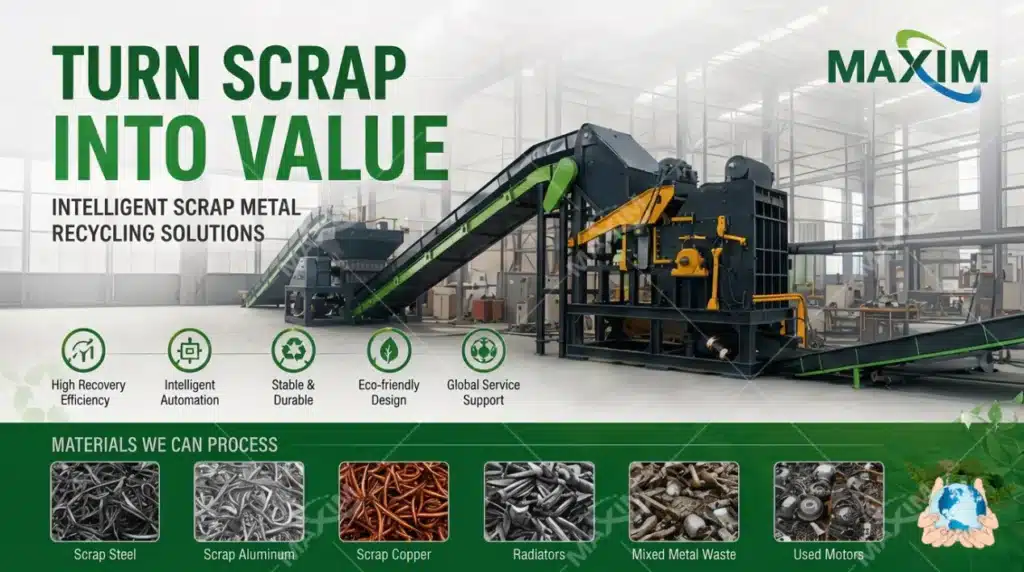
Ferrous scrap is mainly iron- and steel-based, while non-ferrous scrap includes aluminum, copper and brass. Density, toughness, ductility, thickness and shape affect how each material behaves under load.
Heavy steel may demand high torque and impact resistance. Thin aluminum can fold or wrap rather than fracture, while excessive reduction of copper-rich material may create unnecessary fines.
A practical shredding plan starts with three questions:
1.What is the hardest or thickest item in the feed?
2.What particle size is needed for separation?
3.Which recovered fraction carries the most value?
The best output size is not always the smallest one. The goal is sufficient liberation without avoidable loss.
Ferrous feedstocks normally feature scrap steel, metal drums, and appliance shells. They also include structural steel offcuts. Non-ferrous streams usually hold aluminum profiles, metal sheet, copper, and brass. Mixed feed presents a tougher challenge. This happens because appliances and industrial scrap blend metals with plastics and dirt.
| Feed type | Main processing concern | Recovery focus |
| Ferrous scrap | Toughness and bulk | Clean iron and steel |
| Non-ferrous scrap | Ductility and over-shredding | Aluminum, copper and other valuable metals |
| Mixed scrap | Liberation and contamination | Multiple separated fractions |
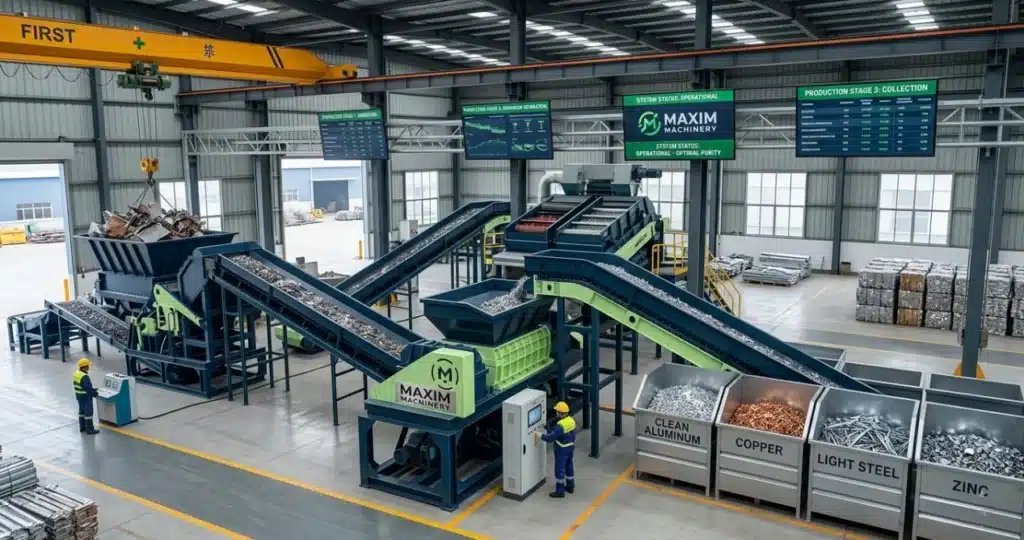
Ferrous scrap often needs robust primary size reduction because it can be bulky or structurally strong. Pre-shredding can reduce oversized material before a secondary crusher or hammer shredder and stabilize the feed.
Secondary reduction should match the required discharge size and the need to expose attached non-metallic material. For steel recycling, size reduction can also improve bulk density and prepare scrap for magnetic recovery or later smelting preparation.
Machine selection should be based on feed dimensions, wall thickness, throughput and contamination level rather than motor power alone.
Non-ferrous processing emphasizes controlled liberation. Aluminum and copper deform differently from steel, so the process should create a separable stream without producing excessive fines.
An aluminum-rich stream may need enough reduction to release steel fasteners or plastics, but not so much that thin metal is fragmented unnecessarily. Consistent particle size is also important before downstream sorting because clumps and overlapping pieces can reduce separator performance.
Mixed metal scrap often benefits from a sequence rather than one aggressive shredding step:
1.Pre-size bulky feed.
2.Reduce material further for liberation.
3.Screen or control particle size.
4.Remove ferrous metal magnetically.
5.Recover suitable non-ferrous fractions.
Consider mixed appliance scrap with steel casing, aluminum parts and copper-bearing pieces. Coarse tearing may leave components locked together; over-processing may push valuable metal into fines. A staged route gives better control.
After shredding, magnetic separation is usually the first recovery step when iron and steel are present. It removes ferrous pieces, reducing the load on later separators.
Recovery still depends on preparation. Poorly liberated material, irregular feeding or large composite pieces can limit separation quality. Shredding and magnetic separation therefore need to be designed as one process.
Our scrap metal recycling solution integrates magnetic separation with downstream non-ferrous separation to separate metals from non-metallic impurities in one processing route.
Once most ferrous material has been removed, eddy current separation can target conductive non-ferrous metals such as aluminum and copper-bearing fractions. A rapidly changing magnetic field induces currents in conductive particles, creating a repelling force that separates them from non-conductive material.
Particle size, belt loading, moisture, shape and residual ferrous contamination all affect performance, so eddy current separation must be considered with upstream preparation.
Screening helps control particle size, while conveyors regulate flow between machines. Stable presentation gives separators a better chance to act on individual particles rather than tangled clusters.
A typical process logic is:
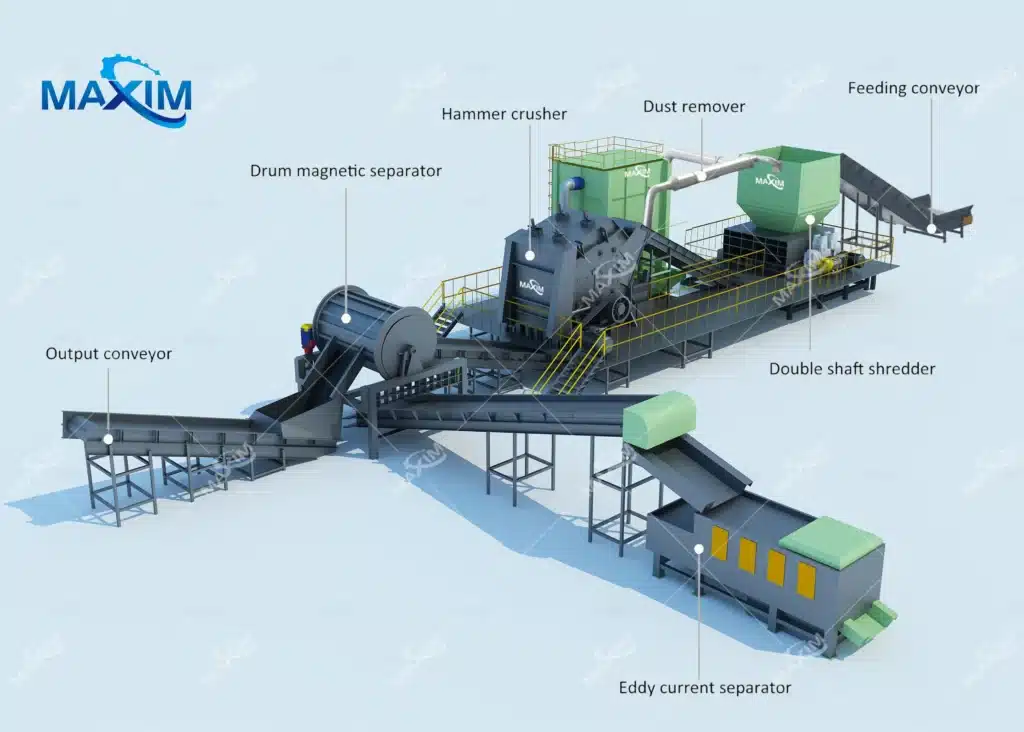
shredding → size control → controlled conveying → magnetic separation → non-ferrous separation → product collection
At MAXIM machinery, line configuration can be adjusted to production requirements, material characteristics and site conditions. We develop core components such as shredder blades and sorting systems for demanding recycling applications, while PLC-based control supports remote monitoring and fault warnings.
For ferrous scrap, recovery quality depends on a clean, consistent steel fraction. Removing plastics, rubber, aluminum and other contaminants improves downstream handling.
Three variables matter most: adequate liberation, stable magnetic separation and controlled particle size. If steel remains attached to non-metallic material, purity falls. If feeding is uneven, usable metal may pass into the reject stream.
The objective is a fraction that is easier to transport, sort again if needed and feed into downstream metal processing.
Non-ferrous recovery emphasizes value preservation. Aluminum, copper and brass often justify more precise sorting because even smaller quantities can matter economically.
There is usually a balance between recovery and purity. Maximum capture can introduce more contamination, while very strict separation may leave valuable material in residue. The right setting depends on the selling specification, downstream consumer and economic value of each fraction.
Before we recommend a line at MAXIM machinery, we need to understand the feed and desired product, not just hourly capacity. Useful project information includes:
1.Main scrap type and approximate composition
2.Maximum feed size and thickness
3.Required throughput
4.Target discharge size
5.Metals to be recovered
6.Required purity or downstream use
7.Available plant space and layout limits
We focus on customized recycling solutions for metals and solid waste, with support covering consultation, solution design, equipment production, installation, commissioning, training and after-sales service.
The best scrap metal shredding and separation system is built around the actual feedstock. A heavy-steel plant should not be configured like a line recovering aluminum and copper from mixed light scrap.
A: In some applications, the same primary shredder can process both. However, configuration, discharge size and downstream separation should match material thickness, toughness, composition and recovery target.
A: It depends on feed size and density. Bulky steel may require pre-shredding before secondary crushing or hammer shredding, followed by magnetic separation to recover the ferrous fraction.
A: Ferrous metals are typically removed by magnetic separation. Suitable conductive non-ferrous metals can then be recovered with eddy current separation, while screening and controlled feeding support both stages.
A: Removing iron and steel first reduces interference and allows the eddy current separator to focus on conductive non-ferrous material. This sequence improves process control and product collection.
A: Start with material composition, largest feed item, thickness, throughput, target output size and required recovered fractions. These factors determine the shredding stages, screening arrangement and separation equipment needed.
A request such as “quote a scrap metal recycling line” leaves many technical questions open. Similar scrap can still require different feeding, shredding, conveying, sorting, and discharge arrangements. A better RFQ defines the job before asking for a machine. Material, capacity, sorting goals, final product, and site conditions should all be clear. What Information Should a excerpt …
