
The rapid expansion of electric vehicle manufacturing brings an often overlooked operational challenge to the forefront of the industrial sector. Long before a vehicle reaches the consumer or the end of its operational life, gigafactories generate a massive volume of physical waste directly on the factory floor. Effectively managing this material requires a highly strategic approach to Lithium-Ion Battery Recycling. When production facilities discard off-spec components, they are essentially throwing away highly valuable critical metals that could otherwise be reused. Recovering these materials efficiently not only drastically reduces procurement costs for fresh raw materials but also ensures strict compliance with tightening global environmental regulations. We will explore the exact methods and mechanical equipment necessary to transform factory floor waste into high-purity, reusable resources.
During the intensive daily manufacturing process, different streams of physical waste are generated, each requiring highly specific handling protocols. Electrode trimmings are essentially raw, coated metal foils leftover from the high-speed cutting and stamping phases. These metallic trimmings have not yet been assembled into full energy cells and do not contain liquid electrolytes, making them somewhat easier and safer to process mechanically. On the other hand, defective EV batteries are fully assembled units that have simply failed final quality assurance tests. These intact units contain active electrolytes and carry a residual electrical charge, posing significant thermal runaway and fire risks. Facilities must accurately differentiate between these two streams to optimize their internal processing workflows. Handling damaged EV batteries directly from the assembly line demands rigorous safety interventions before any physical destruction or shredding can safely begin.
Standard industrial waste processing machinery is entirely inadequate for handling sensitive energy storage components. Applying generic metal shredders to active cells will inevitably lead to fires, toxic gas emissions, and severe mechanical equipment damage. Advanced battery recycling technology is specifically engineered to mitigate these exact industrial hazards. A fully closed-loop processing environment is required to meet environmental emission standards. Intelligent control systems effectively reduce the need for manual intervention, thereby protecting operators from hazardous exposure on the factory floor. By utilizing specialized environmental machinery, manufacturers ensure that valuable components such as cell casings, electrode materials, and active metals are safely separated without degrading their inherent chemical integrity.
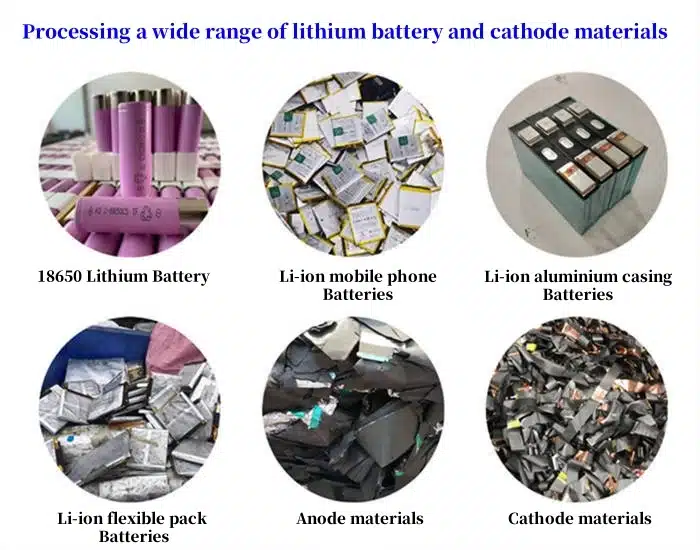
The absolute first crucial step in processing production-scrap EV batteries is neutralizing the internal electrical threat. Fully assembled but rejected energy cells must undergo a comprehensive discharge treatment before any physical processing occurs. This stabilization is typically achieved through professional discharge equipment or controlled saltwater immersion techniques. Removing the electrical potential entirely eliminates the safety hazards associated with spontaneous combustion during the subsequent heavy mechanical phases. Only after the cell units are completely stabilized and verified safe can they be introduced into the primary reduction equipment on the floor.
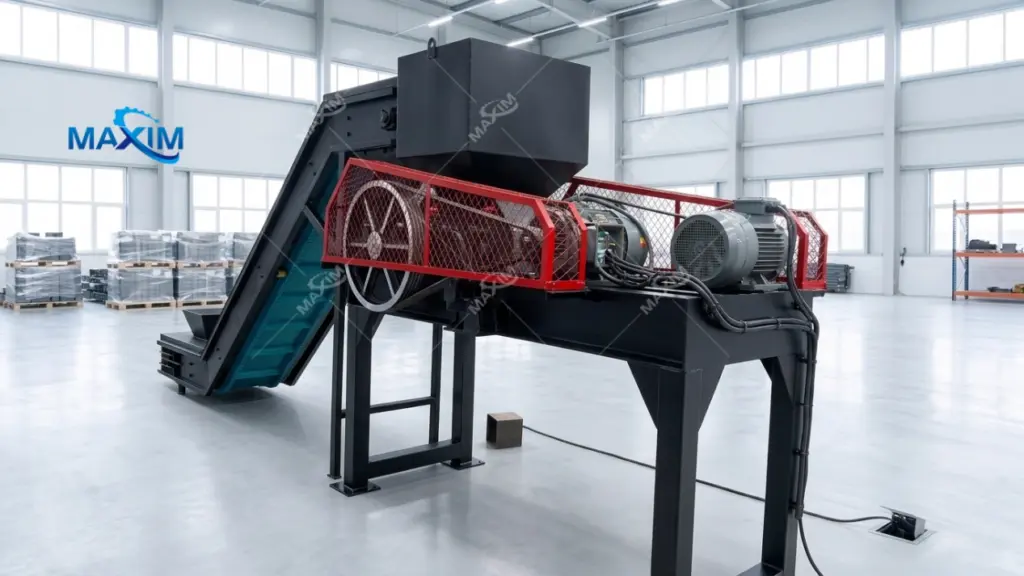
Once neutralized, the prepared materials enter the aggressive mechanical reduction phase. A heavy-duty metal recycling shredder serves as the primary instrument for breaking down the tough outer steel or aluminum casings. Based on the structural characteristics of the anodes and cathodes, a combined mechanical approach utilizing a tearing machine and hammer crushing is highly effective for breaking apart the layers. The entire crushing operation must take place strictly under negative pressure. This specific engineering choice ensures that there is no dust overflow during the active production process, keeping the working environment physically clean and ensuring that hazardous dust emission concentrations meet strict environmental requirements.
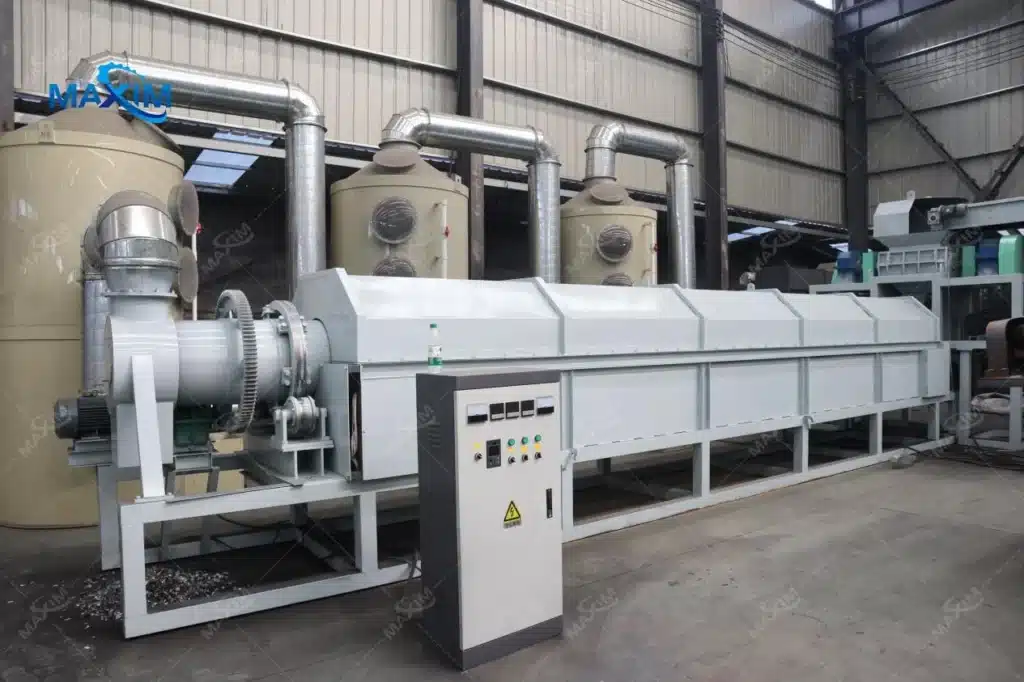
After the physical size of the factory waste has been successfully reduced, the mixed metallic output must be precisely sorted into separate streams. A synchronized combination of wind separators, vibrating screens, and air separation units work dynamically together to isolate the different material fractions based on weight and density. The most valuable output generated from this separation process is black mass. This highly sought-after powdered material represents about 40 to 50 percent of the total physical weight of an electric vehicle power unit. It contains high concentrations of critical elements including lithium, cobalt, nickel, and manganese. Through MAXIM machinery’s specialized air purification and central dust removal systems, the mechanical separation process maintains exceptional cleanliness, directly impacting the final purity of the extracted powder.
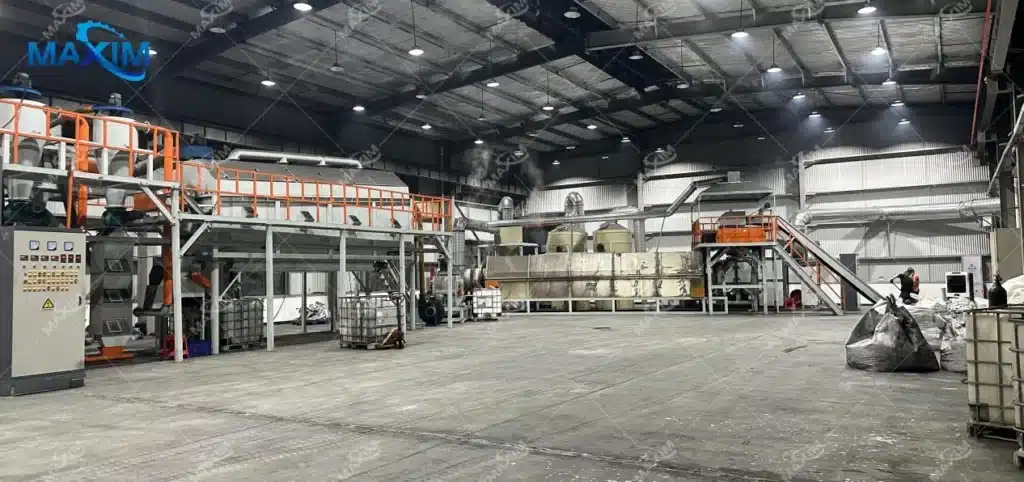
Modern automotive gigafactories typically produce multiple cell chemistries simultaneously, and the internal processing infrastructure must be highly versatile to handle the variance. The two dominant market chemistries dictate entirely different economic recovery models. Nickel Manganese Cobalt chemistries are highly prized for their expensive cobalt and nickel content, driving high revenue per ton. Conversely, battery recycling for lithium-ion LFP focuses heavily on recovering high volumes of lithium, copper, and aluminum, as Lithium Iron Phosphate cells completely lack cobalt and nickel. MAXIM machinery’s lithium battery recycling production line adapts seamlessly to various types, including ternary lithium and lithium iron phosphate, allowing facilities flexible capacity adjustments without requiring entirely different mechanical setups.
The ultimate operational goal of EV battery metal recovery is to produce materials pure enough to be sold directly back into the closed-loop supply chain. High contamination levels render the recovered fractions useless for manufacturing new electrodes. Our automated mechanical processing systems achieve remarkable separation efficiencies that meet global manufacturing standards.
| Output Material Stream | Required Purity and Recovery Rate |
| Black Powder | Greater than or equal to 99% recovery |
| Aluminum Powder | Greater than or equal to 99% recovery |
| Copper | Greater than or equal to 99% recovery |
| Aluminum in Black Powder | Less than or equal to 1% |
| Copper in Black Powder | Less than or equal to 1% |
| Industrial Dust Content | Less than or equal to 5 milligrams per cubic meter |
| Operational Machine Noise | Less than or equal to 90 decibels |
By maintaining the aluminum and copper physical content within the black powder to strictly under one percent, the resulting separated material is perfectly primed for immediate hydrometallurgical processing.
When evaluating heavy infrastructure for a busy factory floor, procurement decision-makers must look far beyond basic crushing capabilities. The best scrap metal shredder for recycling in this specific sector must integrate flawlessly with downstream separation and sorting modules to create a continuous feed. It should feature independently developed core components with wear and impact resistance exceeding general industry standards to handle tough casings continuously. Furthermore, integrating a Programmable Logic Controller system is absolutely essential for supporting remote monitoring and live fault warnings. This intelligent digital automation reduces manual operation requirements, lowers long-term maintenance costs, and prevents catastrophic physical jams when processing tough cell modules.
Scaling up factory recovery operations requires heavy machinery that can match continuous factory output without bottlenecks. We provide highly customized physical solutions tailored precisely to specific production capacity requirements, material characteristics, and unique site conditions. Our complete battery recycling line offerings range from the compact MX-500 model, which processes 500 kilograms per hour, up to the high-capacity industrial MX-2500 model capable of aggressively handling 2500 kilograms per hour. By partnering with MAXIM machinery, industrial facilities benefit from a comprehensive one-stop service program that covers preliminary consultation, complete solution design, equipment production, physical installation, and personnel training.
A: Facilities first address the severe electrical and chemical hazards by subjecting the rejected units to complete physical discharge treatments, utilizing either professional discharging stations or salt water immersion methods. Once the stored energy is fully depleted, the units are mechanically dismantled using heavy tearing machines and hammer crushers operating strictly under negative pressure to prevent any hazardous dust from escaping into the open workspace.
A: It is a highly valuable powdered physical mixture extracted mechanically from energy storage cells, getting its dark color from high concentrations of graphite originally contained in the anodes. This residual powder contains critical chemical elements such as lithium, cobalt, nickel, and manganese. It represents approximately forty to fifty percent of the total cell weight and serves as the primary feedstock for chemical purification processes that recover battery-grade metals.
A: The physical mechanical preparation and separation stages are very similar, but the core economic drivers and subsequent chemical refinement differ greatly. LFP units do not contain valuable cobalt or nickel, meaning the facility's profitability relies heavily on the efficient, high-volume extraction of lithium, aluminum, and copper. Advanced mechanical systems are designed to adapt flexibly to both chemistries without needing completely different shredding infrastructure.
A: The most effective heavy equipment features independent engineering with extremely high wear and impact resistance specifically designed to cut through tough metallic cell casings. It must operate within a fully closed-loop system under strict negative pressure to completely contain toxic internal dust. Additionally, integration with intelligent Programmable Logic Controller systems allows for continuous remote monitoring, ensuring stable operation and protecting workers from unnecessary manual interventions.
A: An integrated industrial system seamlessly connects the pre-shredding, crushing, and sorting mechanisms like air separators and vibrating screens into one continuous workflow. This automated process prevents physical material loss between stages and minimizes cross-contamination. As a result, facilities can consistently achieve recovery rates exceeding ninety-nine percent for black powder, aluminum, and copper, ensuring the outputs meet the strict purity standards required for reuse.
A request such as “quote a scrap metal recycling line” leaves many technical questions open. Similar scrap can still require different feeding, shredding, conveying, sorting, and discharge arrangements. A better RFQ defines the job before asking for a machine. Material, capacity, sorting goals, final product, and site conditions should all be clear. What Information Should a excerpt …
