
Choosing a metal shredder by motor power or headline capacity alone can cause unstable feeding, wear, poor separation, and a higher cost per ton. The right system must match the scrap, required output, recovery process, and site.
The best industrial metal shredder is the machine, or machine combination, that processes a defined scrap stream continuously and improves its value for the next stage.
Thin steel sheet, compressed bales, aluminum profiles, drums, appliance shells, and mixed industrial scrap create different loads. Before selecting equipment, identify:
1.Ferrous and non-ferrous content
2.Maximum feed dimensions and wall thickness
3.Whether the material is loose, tangled, hollow, or baled
4.Contamination such as plastic, rubber, wood, or dirt
5.Expected changes in the feed mix
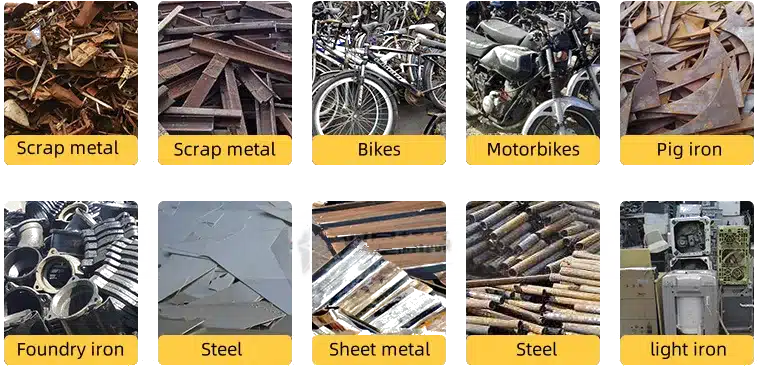
These factors influence cutter configuration, rotor load, feeding, wear, and separation. Bulky scrap may need controlled tearing before impact crushing.
Nominal and sustainable capacity are not always equal. Real output depends on bulk density, feed consistency, contamination, and maintenance.
The target product also matters. Simple volume reduction may require only coarse shredding. A smelting supplier may need a denser, more uniform fraction. A mixed-metal recycler may need better liberation so magnetic and eddy current separators can work effectively.
Specifications should define both tons per hour and output purpose: transport, sorting, furnace charging, or resale.
Different machines solve different processing problems. In many projects, they work best in sequence.
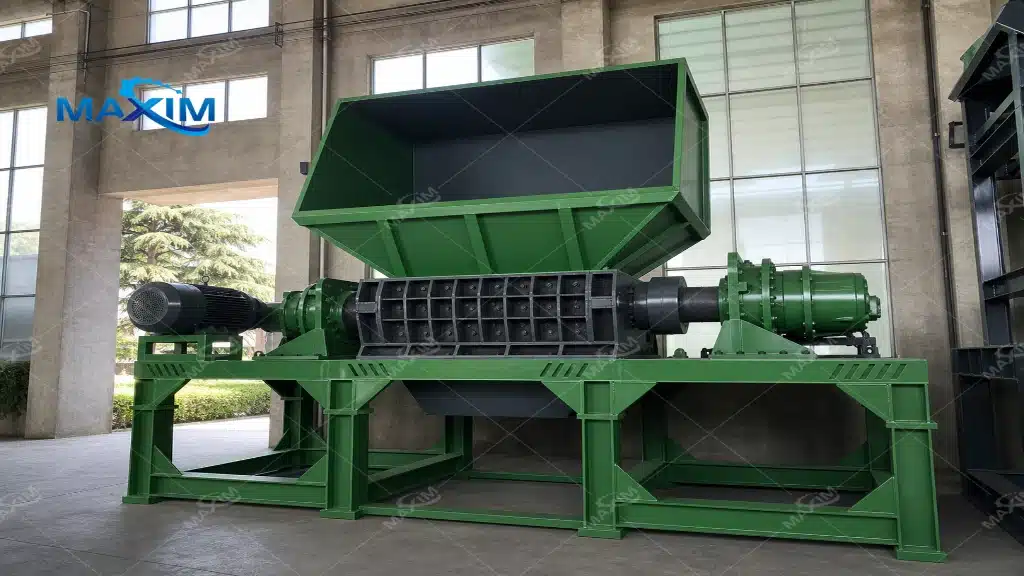
A dual-shaft unit uses two counter-rotating shafts to grip, shear, and tear material at relatively low speed. It is suitable for irregular feed that is difficult to control in a high-speed crusher.
Typical applications include steel drums, light sheet metal, aluminum frames, appliance housings, and mixed bulky scrap. Its main role is primary reduction: decreasing dimensions, opening hollow objects, and creating a more consistent feed.
Selection points include chamber size, cutter geometry, shaft torque, overload protection, and maintenance access.
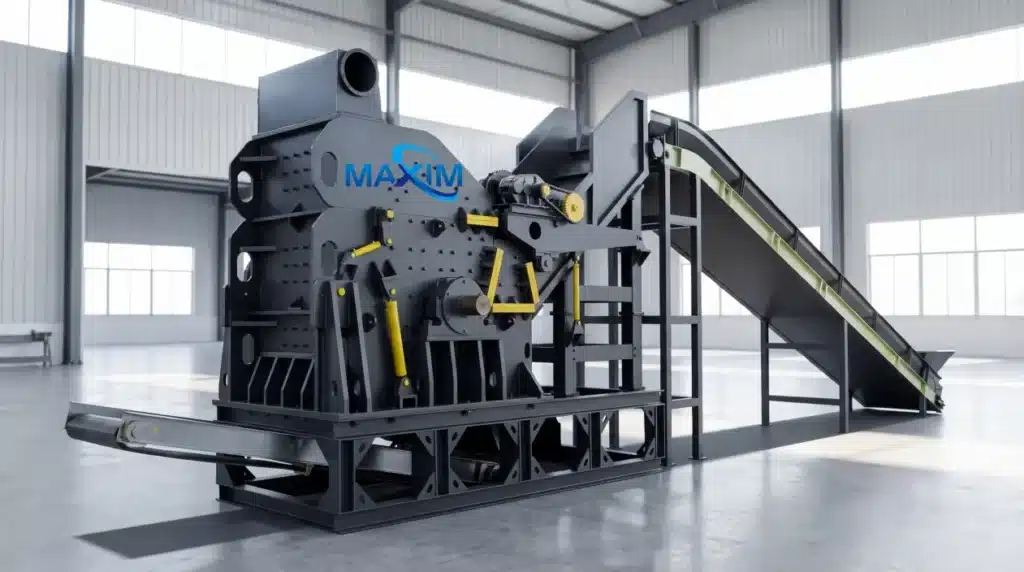
A hammer shredder uses high-speed impact. It is commonly installed after pre-shredding when the process requires stronger size reduction, higher bulk density, or improved liberation of metal from attached impurities.
Impact processing creates a more uniform product for screening and separation. It suits light steel and pre-sized fractions, but oversized objects can increase load and wear.
The choice is therefore not always dual-shaft versus hammer. The first prepares the feed; the second refines it.
A standalone machine reduces size; a complete line manages flow and recovery.
An integrated system may include feeding conveyors, pre-shredding, hammer crushing, screening, magnetic separation, eddy current separation, dust collection, discharge conveyors, and PLC control. MAXIM machinery configures lines around crushing, impurity removal, sorting, and forming. Designs integrate magnetic and eddy current separation and can be configured for 10 to 50 tons per hour.
Case study: a mixed light-metal project
Consider a yard receiving steel drums, aluminum profiles, and appliance shells. Sending everything directly into one high-speed machine could create irregular loading. A more practical flow is:
1.Pre-shred bulky items with a dual-shaft machine.
2.Meter material into a hammer shredder.
3.Remove ferrous metal magnetically.
4.Recover non-ferrous fractions with eddy current separation.
5.Collect dust and discharge products separately.
This arrangement converts an unstable mixed feed into controlled stages.
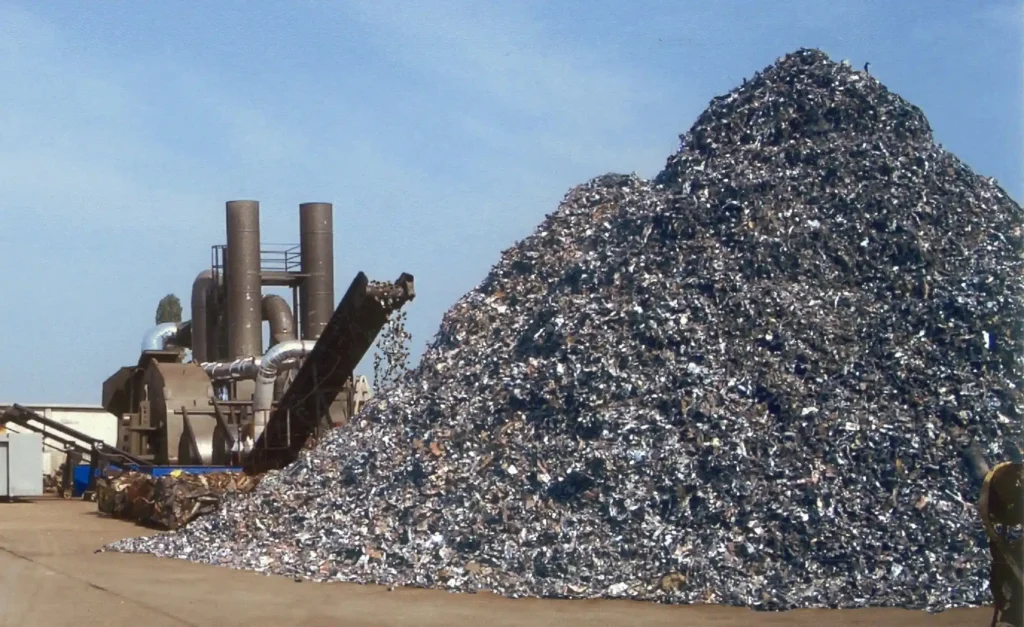
Equipment selection should begin with a process definition, not a model number.
| Scrap stream | Recommended configuration | Main objective |
| Steel drums and light sheet | Dual-shaft shredder | Controlled primary reduction |
| Bulky appliances and mixed shells | Pre-shredder plus sorting | Stable feed and impurity removal |
| Pre-sized light steel | Hammer shredder | Density and uniform sizing |
| Aluminum and mixed non-ferrous scrap | Shredding plus eddy current separation | Non-ferrous recovery |
| Mixed industrial metal waste | Integrated recycling line | Automated multi-stage processing |
When feed varies, photos, videos, dimensions, composition estimates, and output requirements help reduce selection risk.
Before requesting a quotation, prepare seven data points:
1.Material types and approximate percentages
2.Largest piece dimensions
3.Loose or baled density
4.Average and peak hourly feed
5.Required discharge size
6.Daily operating hours
7.Expected expansion
Capacity needs practical margin, but oversizing raises capital and energy costs, while undersizing causes queues and overloads.
Review floor space, foundations, feed access, discharge height, voltage, power, dust control, noise, and maintenance clearance. Safety planning should cover overload protection, emergency stops, guarding, and fire risk.
At MAXIM machinery, we tailor layouts and parameters to material characteristics, capacity, and site conditions. Our service scope includes consultation, recycling solution design, manufacturing, installation and commissioning, personnel training, and after-sales maintenance. PLC-based systems can support coordinated control, remote monitoring, and fault warnings.
The purchase quotation is only one part of the investment decision.
Total cost of ownership should include:
*Power consumption per processed ton
*Cutter, hammer, liner, and screen wear
*Planned maintenance and unplanned downtime
*Feeding, discharge, and dust-control equipment
*Spare-parts inventory
*Product loss caused by poor sorting
A lower-priced machine can become expensive through frequent stops or extra handling. Compare cost per saleable ton, not purchase price alone.
Effective size reduction boosts bulk density. This process cuts down the required storage volume. At the same time, it makes transportation much easier. Furthermore, it ensures a more consistent feed for downstream equipment. This method also uncovers attached materials. As a result, facilities achieve better separation of ferrous, non-ferrous, and non-metallic fractions.
Measure throughput stability, labor, transport efficiency, material purity, and availability using your own scrap value, electricity rate, labor cost, and schedule.
A customized line aligns each stage with the material and final product. This is especially important when feed varies or output purity affects selling price.
At MAXIM machinery, we review scrap photos, feed dimensions, composition, capacity, target output, factory space, and local electrical requirements. We then determine whether the project needs primary shredding only or a sequence involving crushing, screening, magnetic separation, eddy current separation, conveying, dust control, and PLC coordination.
A modular layout can simplify expansion by allowing later additions to separation, screening, or conveying.
For a suitable proposal, send us your material details, maximum feed size, hourly capacity, target discharge size, and available installation area.
A: A dual-shaft shredder is better for gripping bulky or irregular scrap. A hammer mill is better for refining pre-sized material into a denser, more uniform fraction. Many plants use both in sequence.
A: Base capacity on bulk density, maximum feed dimensions, contamination, operating hours, and peak volume. Representative material information is more reliable than a nominal tons-per-hour figure alone.
A: Cost varies with machine size, drive system, cutter or rotor design, automation, wear protection, and downstream equipment. A correct comparison also includes energy, maintenance, downtime, and recovery performance.
A request such as “quote a scrap metal recycling line” leaves many technical questions open. Similar scrap can still require different feeding, shredding, conveying, sorting, and discharge arrangements. A better RFQ defines the job before asking for a machine. Material, capacity, sorting goals, final product, and site conditions should all be clear. What Information Should a excerpt …
