
Scrap metal recycling goes beyond a single machine. A reliable facility needs to manage several tasks. These include material intake, size reduction, and separation. Dust control, quality checks, and final discharge are also vital.
Large processing plants often take in light scrap steel and old car bodies. They also handle household appliances, thick structural steel, and aluminum profiles. Copper-bearing items and mixed metal waste are common too. These incoming materials vary greatly. They have different thicknesses, shapes, and dirt levels. Their density and exact metal makeup also change from batch to batch.
For instance, a junked car body might need careful dismantling. After that, it goes through a pre-shredding phase. On the other hand, long steel beams usually require shearing. This happens before they reach the main size-reduction step. Mixed batches of aluminum and steel demand special care. They need both ferrous and non-ferrous sorting techniques. Since raw feed conditions change so much, a single equipment setup will not work for every single project.
Therefore, managers must figure out a few details before buying machinery. They need to know the largest feed size and the hourly production rate, and also define the final piece size and the allowed impurity limit.
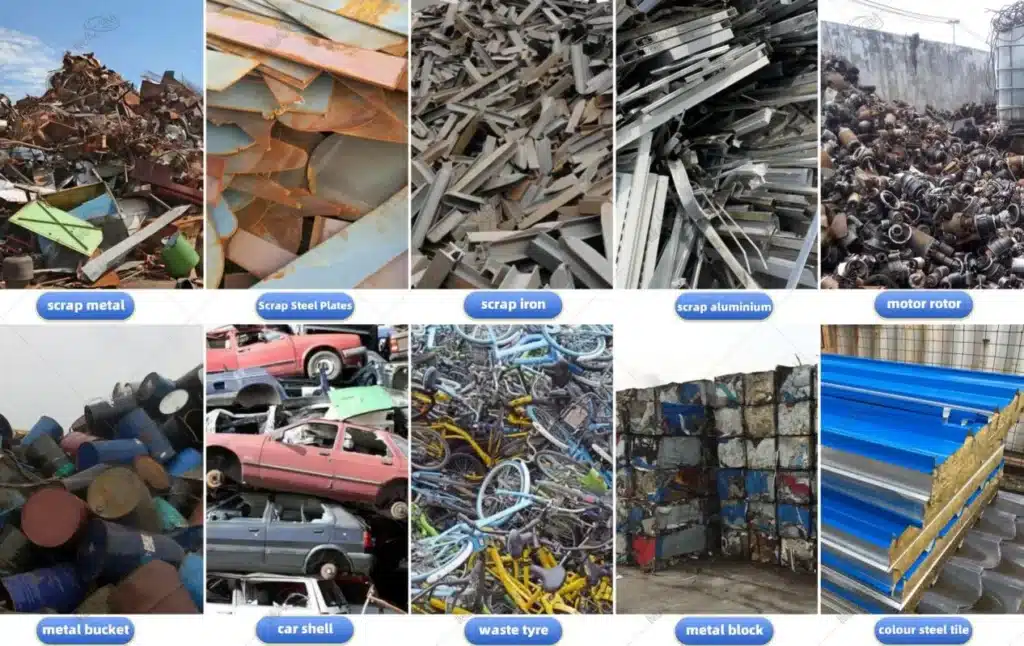
First, workers weigh and log the incoming scrap and check it visually. Staff members must spot sealed containers and batteries. They also need to find fuel tanks, pressurized parts, and heavy dirt. Removing these unsafe items is crucial. This early check safely protects the downstream machines. It also lowers the chance of fires, dangerous explosions, or sudden plant stops.
Next, manual or mechanical pre-sorting takes place. This step separates clear pieces of steel, aluminum, and copper. It also pulls out non-metallic trash. Workers must take out batteries, thick rubber blocks, and big plastic chunks. Hazardous parts must leave the line before the shredding starts. Good pre-sorting cuts down on machine wear. Furthermore, it stops valuable metal parts from mixing with useless dirt.
Huge or oddly shaped scrap usually needs some prep work. A strong hydraulic shear can cut long metal sections. It also breaks down very heavy chunks. Manual dismantling takes away reusable or dangerous parts. Meanwhile, a pre-shredder uses a slow tearing action. This converts bulky waste into a much more uniform size. As a result, it builds a steady material flow for the next machine.
The main shredder shrinks the total material volume and also breaks apart joined parts. A low-speed shredder works well for the careful breakdown of large scrap. In contrast, a hammer shredder uses strong, repeated impacts. This action frees trapped metals and creates a much higher bulk density.
Picking the right machine depends on several factors. These include feed thickness, dirt levels, and the desired particle size. Downstream sorting needs also play a role. Making pieces that are too big can hurt the separation process. On the flip side, over-processing wastes power. It also creates too much fine dust and wears out the tools faster.
After the shredding phase, the broken material enters a staged sorting area. Magnetic tools pull out the iron and steel pieces. Then, an eddy current separator steps in. It pushes conductive non-ferrous metals away from the non-metallic waste. This is especially true for aluminum. Next, vibrating screens sort the particles by their size. Finally, air or density systems blow away light garbage. This includes foam, old fabric, and light plastics.
MAXIM machinery smoothly adds magnetic and eddy current separators into scrap metal lines. This setup greatly boosts metal purity. It also increases the overall recycling value.
Workers then check the sorted fractions and look at particle size, leftover dirt, and total metal purity. Any oversized bits can go back into the crusher. Meanwhile, very fine dust might need special handling. The final steps depend on your sales plan. Clean scrap might just pour out loosely. Alternatively, a baler might crush it into tight blocks. Sometimes, it is prepped to meet a specific smelter's strict rules.
A lot of recycling plants finish their job right after making sorted, furnace-ready scrap. They then sell these goods to large steel mills or local foundries and non-ferrous smelters. These downstream buyers melt and clean the rescued metal, and cast it into fresh billets, heavy ingots, or flat sheets.
Because of this, managers should plan the whole process backward. They must start with the downstream buyer's exact needs. Many details matter here. Particle size, copper levels, and stuck plastics are huge factors. Moisture and bulk density also play big roles. All these traits decide if the rescued metal is ready for a quick sale. If not, it will need extra cleaning.
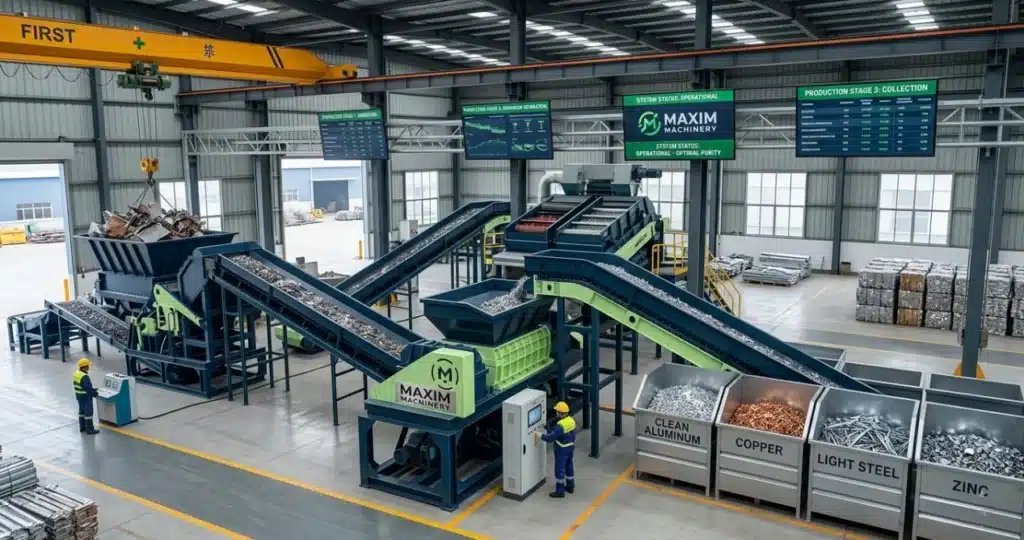
Moving the scrap around requires specific gear. This group normally includes grabs, deep hoppers, strong feeders, and long conveyors. These parts control the material flow carefully. They stop sudden, heavy surges from hitting the shredder. The pre-processing phase might use basic dismantling tools. It could also use a scrap shear or a tough pre-shredder. The choice depends entirely on the size and toughness of the raw input.
Keeping a steady feed rate is highly important. It keeps the production speed stable and smooth. It also cuts down on bad overload events. Furthermore, a steady feed helps every separator get a nice, even layer of metal.
Every single machine does a unique job inside the processing line.
| Equipment | Main Function | Typical Role in the Processing Line |
| Scrap shear | Cuts long, thick, or oversized metal into shorter sections | Prepares structural steel, steel plates, pipes, and other large scrap for feeding |
| Pre-shredder | Tears bulky and irregular scrap at low speed and high torque | Performs coarse size reduction and creates a more stable feed for the main shredder |
| Double-shaft shredder | Uses two rotating shafts to shear and tear mixed metal waste | Reduces the volume of appliances, light scrap, aluminum profiles, and mixed metal feedstock |
| Hammer shredder | Uses repeated impact to break, liberate, and densify metal | Produces smaller particles and exposes attached impurities for downstream separation |
| Magnetic separator | Removes iron and steel from the processed material | Recovers ferrous metals after shredding or crushing |
| Eddy current separator | Separates conductive non-ferrous metals from non-metallic materials | Recovers aluminum and other non-ferrous fractions after magnetic separation |
| Vibrating screen | Classifies processed material by particle size | Sends oversized pieces back for further crushing and prepares uniform fractions for sorting |
| Air separator | Separates materials according to weight and aerodynamic properties | Removes light contaminants such as foam, fabric, and certain plastics |
| Scrap metal baler | Compresses loose metal into dense bales | Reduces storage space and improves handling and transportation efficiency |
You cannot just swap these machines out for one another. A simple project might use just one size-reduction tool. However, a tough job might combine shearing, pre-shredding, and heavy impact crushing. This happens when the raw feed is very hard to break. It also happens when the final product rules are extremely strict.
A fully built line merges several important tools. It uses vibrating screens and strong magnetic separators. It also includes eddy current machines, air sorting, and discharge conveyors. Dust collection units and automated controls wrap it all up. The PLC system manages the feeding pace and the machine actions. At the same time, it watches for errors and gives helpful fault warnings. These alerts make maintenance planning much easier.
MAXIM machinery scrap metal production line follows a clear path. It handles crushing, dirt removal, sorting, and final forming. The processing speed ranges from 10 to 50 tons per hour. We tailor the layout and equipment parameters to the material characteristics, required output, and available site conditions rather than applying one standard arrangement to every project.
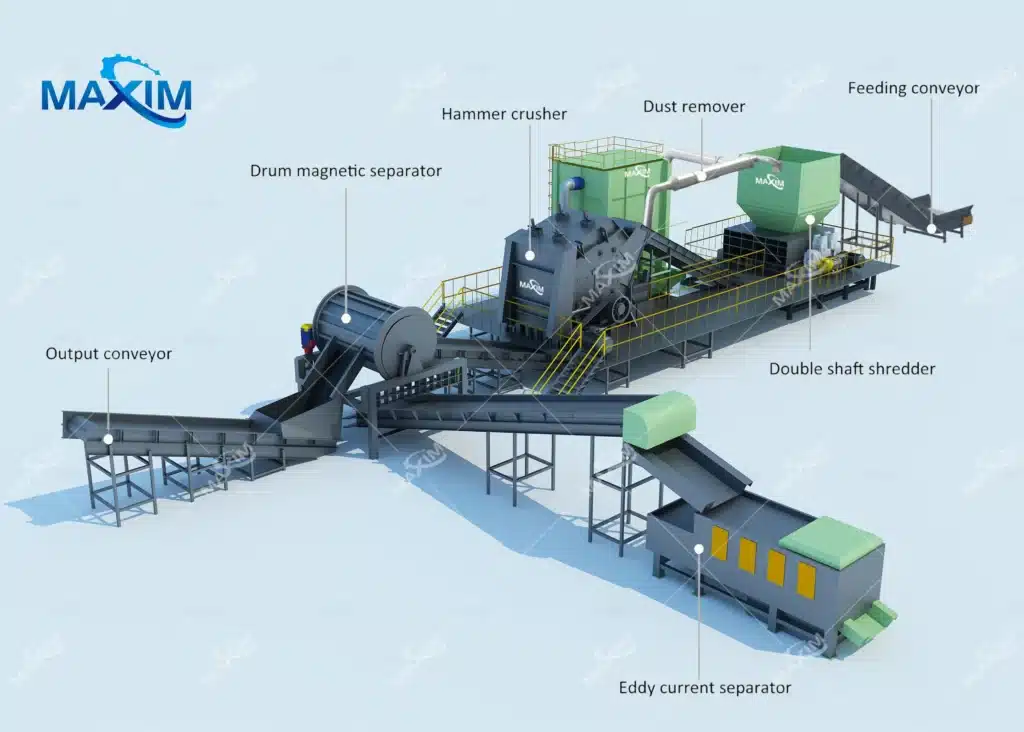
Designing a good line must start with a real feed sample. It also needs a very clear output goal. Two plants might want the exact same hourly tonnage. However, they will need totally different machines. This happens if one handles thin sheet steel while the other crushes mixed appliances or thick structural beams.
A smart and useful planning sequence goes like this:
1.Figure out the feed makeup, overall dimensions, metal thickness, and dirt levels.
2.Decide on the needed average speed and the peak hourly throughput.
3.Lock in the final piece size, target purity, and desired bulk density.
4.Pick out the right pre-treatment steps and the main crushing stages.
5.Place the screening tools and the separation units in the proper order.
6.Review the available plant space and the local power supply. Also, check the dust control plans and the daily maintenance access.
Let us look at a helpful planning example. Imagine a mixed stream of steel and aluminum. It holds thin sheet metal and light plastic bits. A smart process for this would start with controlled feeding. Next, it would use pre-shredding and main crushing. After that, the line needs screening and magnetic recovery. Finally, it uses eddy current sorting and separate discharge belts.
In contrast, mostly clean steel scrap needs a much simpler path. It might only require basic shearing or shredding. A quick magnetic cleaning step follows that. Putting in useless equipment is a bad idea. It just drives up the daily power use. It also causes extra wear and tough maintenance chores. Worst of all, it does not add any real recovery value.
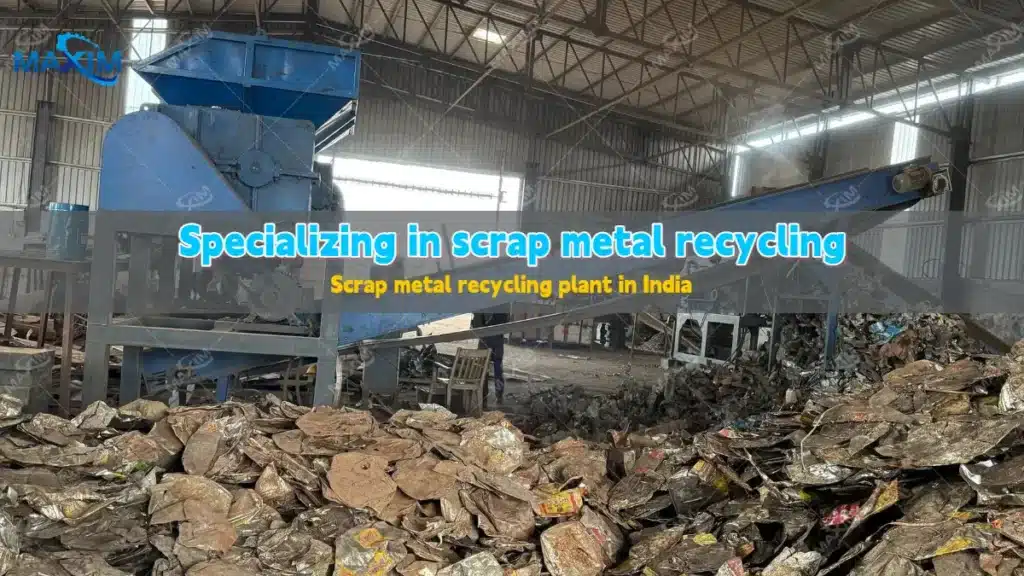
The final output only matters if the quality stays high. The machine uptime must remain stable too. Facilities can boost their overall results easily. They just need to focus on steady feeding and early hazard removal. Strict wear control and the smart looping of oversized pieces help a lot.
Staff should check the dirt levels in every single output pile. They should not just look at the total daily tonnage. Cleaner ferrous and non-ferrous goods win better approval from downstream buyers. Furthermore, this focus stops valuable metals from hiding inside the waste residue.
Workers must inspect the blade sharpness and the hammer wear often. They also need to check the screen holes, the belt tracking, and the separator settings. Too much machine wear changes the final particle size. It also stops the metals from breaking apart cleanly and directly hurts the final sorting success.
Scheduled maintenance and easy-to-reach conveyors are very useful. Strong dust collection and smart PLC warnings help too. Together, they cut down on sudden, costly shutdowns. At MAXIM machinery, we support projects through initial consultation, solution design, equipment production, installation, commissioning, operator training, and after-sales maintenance.
A: A standard facility usually features strong feeders and long conveyors. It might use a tough shear or a pre-shredder. A main shredder or a heavy hammer crusher sits in the middle. The line also needs vibrating screens and magnetic sorting tools. Eddy current units, dust catchers, discharge belts, and PLC systems finish the setup. The exact layout relies heavily on your raw material and the needed product quality.
A: First, strong magnets pull out the iron and steel parts. After that, the leftover stream moves into an eddy current separator. This machine grabs conductive non-ferrous metals, like bright aluminum. Operators might also add screening tools and air blowers. These extra steps clear out light trash and boost the final purity.
A: A lone shredder does a great job at shrinking the volume. However, it cannot make clean, sorted metal all by itself. Facilities wanting furnace-ready or high-value goods need more tools. They must add steady feeding, screening, and separation units. Conveyors, dust management, and smart computer controls are also necessary.
A: A pre-shredder relies on a slow tearing and shearing motion. It easily breaks bulky scrap into easier-to-handle chunks. On the other hand, a hammer shredder uses fast, heavy impacts. This action makes much smaller and heavier particles. It also rips apart joined materials for better downstream sorting.
A: You must base your capacity choice on the actual raw feedstock and think about the largest piece size and your daily working hours. Target goals, available floor space, and downstream demand matter greatly. Buyers need to look at the expected average speed. They should not just focus on the highest possible tons per hour. Finally, always leave room for sorting delays, routine maintenance, and sudden feed changes.
A request such as “quote a scrap metal recycling line” leaves many technical questions open. Similar scrap can still require different feeding, shredding, conveying, sorting, and discharge arrangements. A better RFQ defines the job before asking for a machine. Material, capacity, sorting goals, final product, and site conditions should all be clear. What Information Should a excerpt …
