
Choosing a Chinese metal crushing wholesaler forms the first step for recycling companies, scrap yards, and metal processing plants that seek better material handling and higher recovery value. However, buying metal crushing equipment requires more than price comparison. A practical decision considers scrap material type, required capacity, impurity level, sorting method, automation level, site layout, and long-term service support.
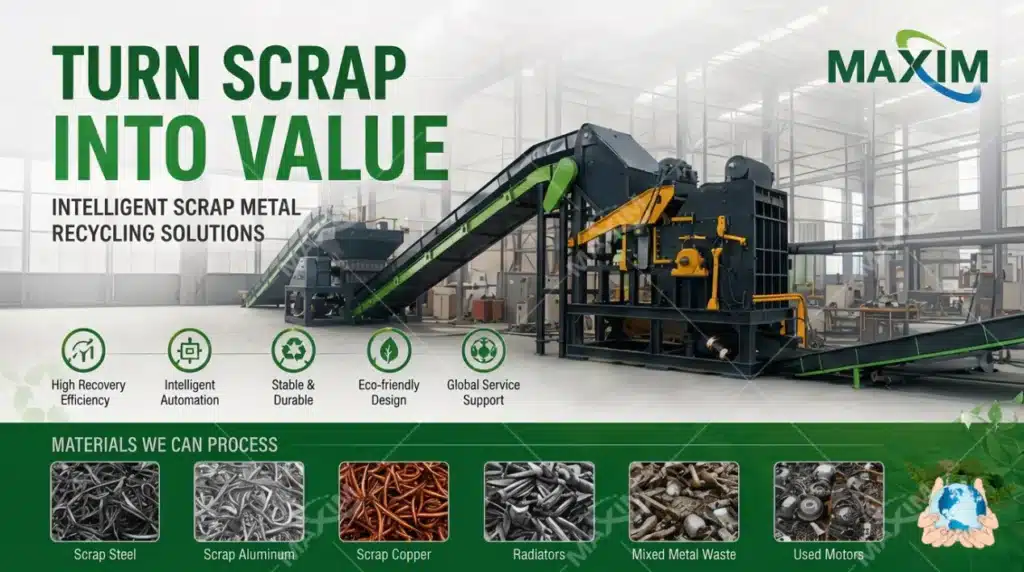
Metal waste stays bulky, uneven, and hard to transport directly. Scrap steel, aluminum alloy, copper materials, and mixed metal waste may contain non-metallic impurities, coatings, dust, and different particle sizes. Without proper crushing and sorting, the material may show low recycling value and poor downstream acceptance.
Metal crushing equipment helps solve several common problems:
For a recycling yard, this approach cuts manual sorting pressure and improves material flow. For a metal recycling plant, the approach creates more consistent output. For a downstream smelting project, cleaner and better-prepared material supports stable production.
A metal crushing wholesaler or supplier offers different levels of support. Some companies mainly sell single machines, while others supply complete recycling production lines. Buyers find it useful to distinguish between simple equipment supply and integrated project support.
| Supply Type | Typical Content | Suitable Buyer |
| Single machine supply | Crusher, shredder, conveyor, or auxiliary machine | Buyers replacing one machine or expanding a small process |
| Equipment combination | Crushing machine with feeding, conveying, or sorting units | Buyers with clearer material and output needs |
| Complete production line | Crushing, impurity removal, sorting, forming, control, and service | Recycling plants that need stable processing and higher recovery value |
| Customized solution | Layout and equipment parameters adjusted by material, capacity, and site | Buyers with mixed materials or special site conditions |
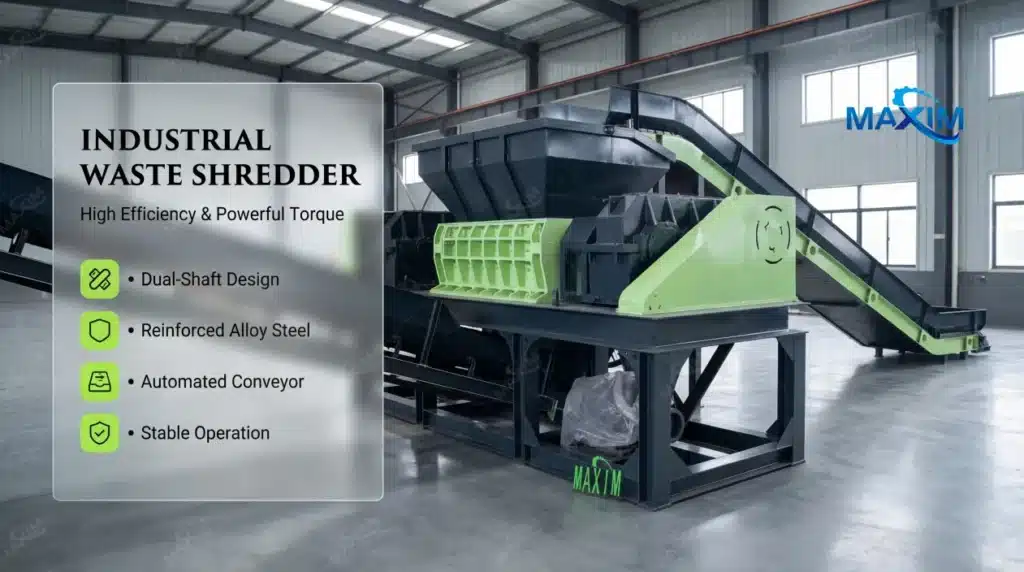
A metal shredder machine serves at the front end of a recycling process. The machine reduces large or irregular scrap into smaller pieces. In many projects, shredding improves feeding consistency before the material enters further crushing or separation steps.
For buyers handling mixed scrap, a shredder makes the material easier to transport and process. The equipment also reduces the burden on later equipment by creating a more manageable material size.
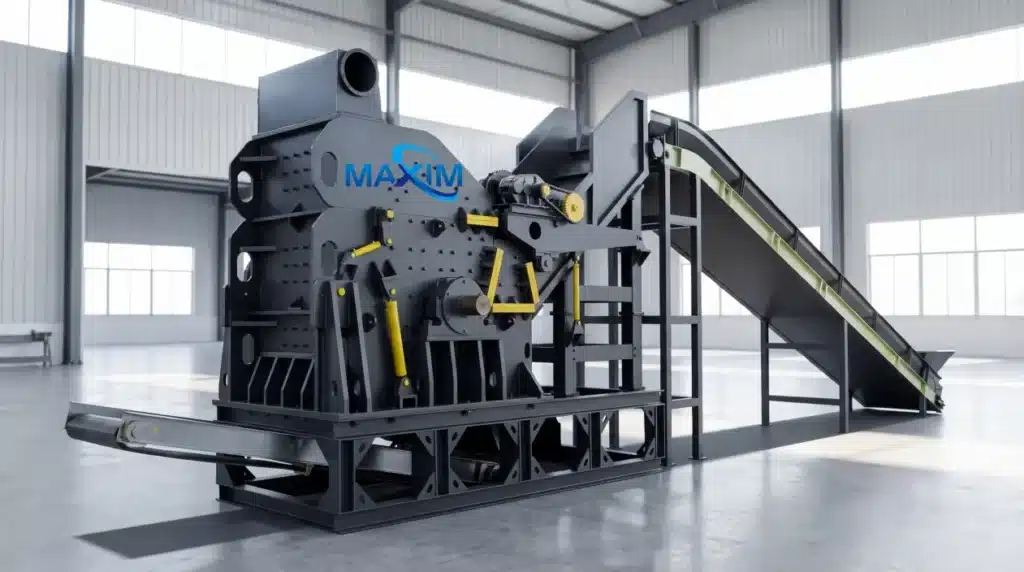
A scrap metal crusher requires stronger material reduction. The equipment breaks metal waste into smaller pieces for further impurity removal, sorting, or forming. The right crusher selection depends on material type, feeding size, required output size, and production capacity.
When comparing suppliers, buyers should consider how the crusher fits into the full production line. A crusher that works well as a single machine may still need proper feeding, conveying, dust control, and sorting systems to achieve stable industrial operation.
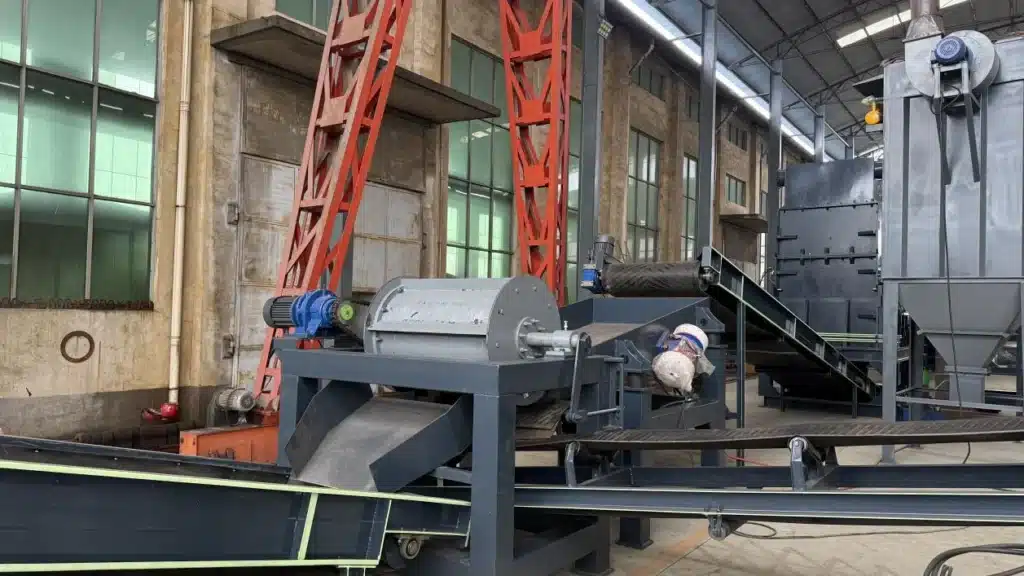
Sorting forms one of the most important steps in metal recycling. Crushing reduces material size, but sorting determines the value of the final output. Advanced scrap metal recycling production lines integrate magnetic separation and eddy current separation technologies. These technologies help separate metals from non-metallic impurities and support cleaner recovered materials.
Magnetic separation processes ferrous materials in common use. Eddy current separation separates non-ferrous metals from non-metallic materials in useful ways. When these systems combine with crushing equipment, the production line supports downstream recycling and smelting requirements in a better way.
After crushing and sorting, some materials may need forming or further handling before entering downstream use. Conveying systems, control systems, and auxiliary equipment help connect each stage. A well-designed production line should consider not only the main machine but also material transfer, maintenance access, control logic, and operation safety.
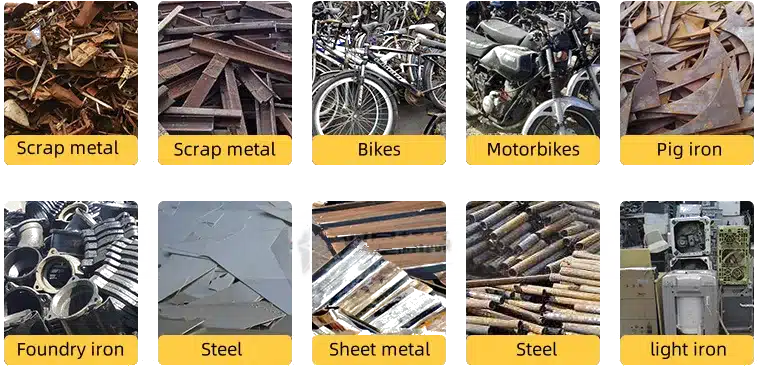
Metal recycling equipment applies to different types of metal waste. The equipment configuration should match the raw material. MAXIM machinery’s scrap metal recycling production line is used for metal waste, including scrap steel, aluminum alloy, and copper.
The following table gives a practical reference for material evaluation:
| Material Type | Common Challenge | Processing Focus |
| Scrap steel | Large size, heavy structure, mixed impurities | Crushing and magnetic separation |
| Aluminum alloy | Mixed forms and non-metallic attachments | Crushing and eddy current separation |
| Copper-containing waste | Need to retain metal value | Careful separation and impurity control |
| Mixed metal waste | Uneven material size and composition | Integrated crushing, sorting, and forming |
Before choosing equipment, buyers may prepare photos, videos, material size information, and impurity details. These details help the supplier recommend a more suitable configuration.
Many buyers use the term “wholesaler” when searching for suppliers because they want competitive pricing and available equipment options. However, industrial recycling projects often require deeper technical support. A manufacturer or solution provider may provide more value when the project involves multiple processes.
A general wholesaler may be able to provide standard equipment. A manufacturer with design and production capability can usually support material analysis, process planning, equipment matching, layout design, installation, and maintenance guidance.
A metal recycling line should be designed according to material type, capacity target, site conditions, and output requirement. Buyers may ask the supplier to explain the complete process flow. A clear process usually includes feeding, crushing, impurity removal, sorting, forming, and final material handling.
If a supplier only recommends one machine without asking about the material or production goal, the solution may not be accurate enough for long-term operation.
Capacity is a key concern for recycling plants. However, actual project selection should still depend on material characteristics, feeding size, impurity level, and required output.
A practical discussion should include questions such as:
These questions can help the buyer and supplier avoid unsuitable equipment matching.
Heavy-duty recycling equipment works in a demanding environment. Wear parts, blades, sorting systems, and structural strength can affect maintenance frequency and operating cost.
Buyers may ask about spare parts supply, maintenance points, and expected service support before confirming an order.
Automation reduces manual intervention and helps stabilize production. MAXIM machinery’s equipment can be equipped with a PLC control system that supports remote monitoring and fault warnings. For recycling plants with continuous operation needs, this setup helps operators identify issues earlier and reduces unnecessary downtime.
A control system proves especially valuable when the line includes multiple connected machines. Feeding, crushing, sorting, and conveying should work together smoothly to avoid material blockage or process interruption.
Metal recycling may involve dust, noise, wastewater, and other environmental concerns. MAXIM machinery emphasizes environmental compliance, and its equipment series considers emission indicators such as dust, noise, and wastewater. Buyers should compare these points with local environmental requirements before finalizing a project.
Service forms another important factor. We provide a one-stop service program covering preliminary consultation, solution design, equipment production, installation and commissioning, personnel training, and after-sales maintenance. The after-sales response arrives within 24 hours to support stable production line operation.
To experience our latest technologies firsthand, welcome to visit us at the Metal;E-Waste;Battery Recycling Expo 2026 (June 17–18, 2026) at Messe Frankfurt Halle 3, Germany (Booth No. B54).
Before contacting a supplier, buyers may prepare the following information:
| Information | Why It Helps |
| Material type | Determines crushing and sorting method |
| Feeding size | Helps select suitable equipment structure |
| Required capacity | Supports production line configuration |
| Impurity level | Affects separation system design |
| Final output use | Clarifies whether forming or smelting preparation is needed |
| Site layout | Helps design equipment arrangement |
| Local environmental requirements | Supports dust, noise, and compliance planning |
| Automation expectations | Helps decide control system configuration |
Clear information shortens communication time and helps the supplier provide a more accurate solution.
A: A metal shredder is usually used to reduce large or irregular scrap into smaller pieces at the front end of a recycling process. A metal crusher is often used for stronger crushing and further size reduction. The final choice depends on material type, feeding size, and output requirements.
A: A single machine may be enough for simple size reduction, but mixed scrap materials often need a complete process. Crushing, impurity removal, sorting, and forming can work together to improve material quality and recycling value.
A: Crushing only changes material size. Magnetic separation and eddy current separation help separate metals from non-metallic impurities, improving the purity and value of recovered materials.
A request such as “quote a scrap metal recycling line” leaves many technical questions open. Similar scrap can still require different feeding, shredding, conveying, sorting, and discharge arrangements. A better RFQ defines the job before asking for a machine. Material, capacity, sorting goals, final product, and site conditions should all be clear. What Information Should a excerpt …
