
Fast growth in global industrial manufacturing and stronger rules for sustainable development have made resource recycling a main economic force. Handling heavy industrial waste, old electronics, and retired energy storage units needs reliable and highly automated machines, which can achieve precise size reduction while maintaining high raw material purity. Turning mixed scrap into high-value raw material needs specific crushing and separation features. Export-oriented companies and professional processing plants must pick the right machinery layout. This choice affects daily throughput, long-term repair costs, and supply chain fit.
This guide gives a clear technical review of the main industrial metal shredder setups, which helps with buying decisions and daily operations.
Recycling plants that deal with industrial waste often face problems with uneven materials, fast wear on parts, and strict rules on emissions. Old size-reduction methods struggle with strong structural metals or multi-layer items such as circuit boards and lithium battery packs. Without sufficient torque and high-strength alloy cutting tools, facilities experience frequent downtime, which inflates operational costs and reduces overall throughput.
Modern scrap metal shredding lines fix these issues. The lines run the full material change process in one flow. The flow covers pre-shredding, impact crushing, exact sorting, and final compacting. High-intensity separation equipment, such as magnetic drums and eddy current sorters, extracts non-metallic contaminants from ferrous and non-ferrous fractions with high precision. The whole setup runs under steady negative pressure. This stops dust from spreading, meets current environmental rules, and keeps workers safe.
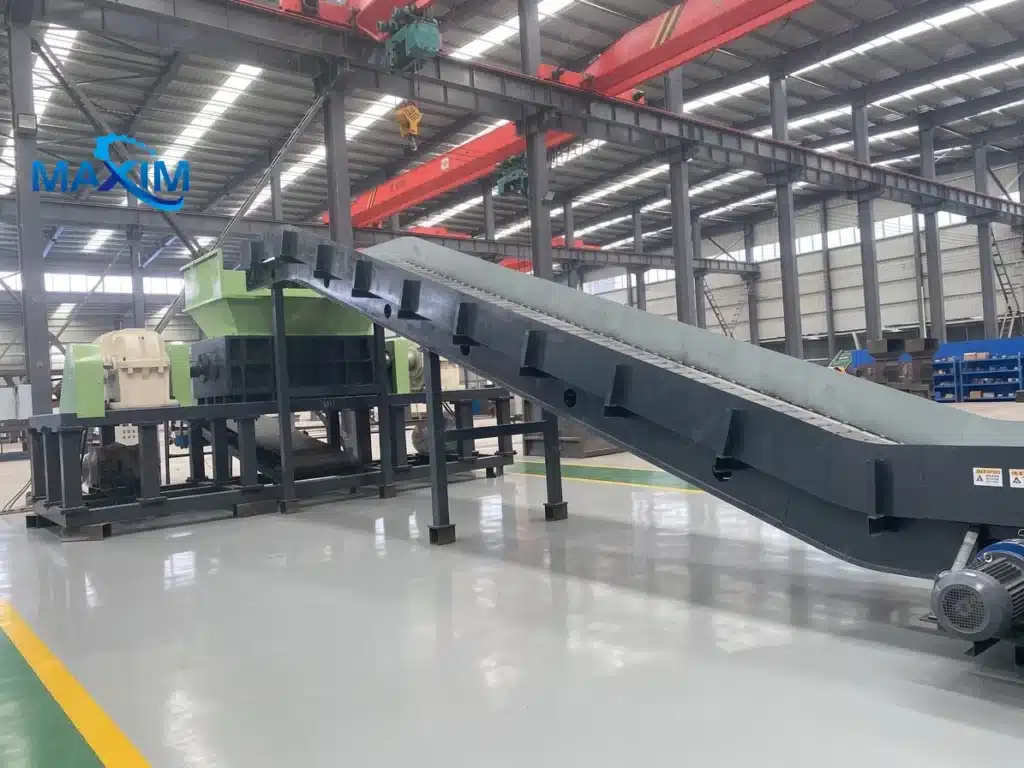
Heavy-duty dual-shaft metal shredders form the first step for large-volume and high-strength recycling jobs. Two low-speed, high-torque shafts carry alloy blades. The blades grip and cut large, rigid metal pieces. Low-speed action gives strong cutting force. This force works well on structural steel sections, empty industrial drums, and mixed aluminum frames. Blade shape can change in hook style and tooth number to fit local scrap types, which improves first-stage sizing and keeps power use steady.
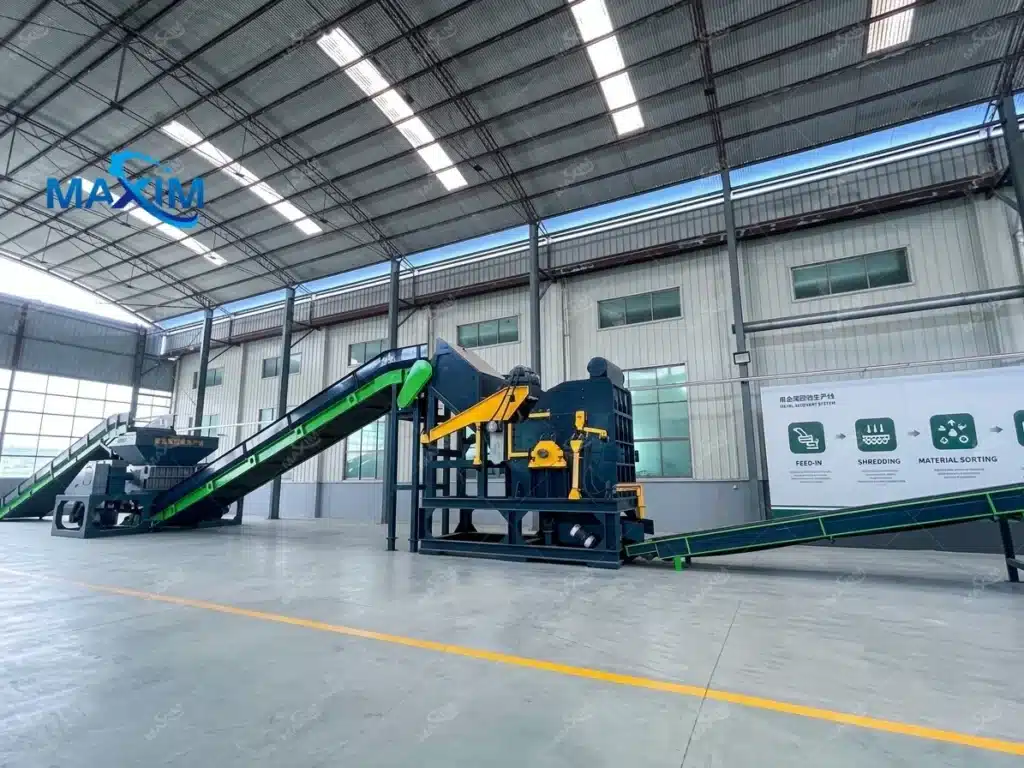
High-capacity scrap metal hammer shredders suit later stages that need even size and high density. A fast rotor holds heavy pivoting hammers. The hammers hit pre-shredded material against internal anvils and grate bars. The high-velocity impact liberates composite materials, strips surface coatings, and removes embedded non-metallic fractions. The fast cycle turns loose sheet and light scrap into dense, clean metal pieces that move easily through sorters and meet foundry standards.
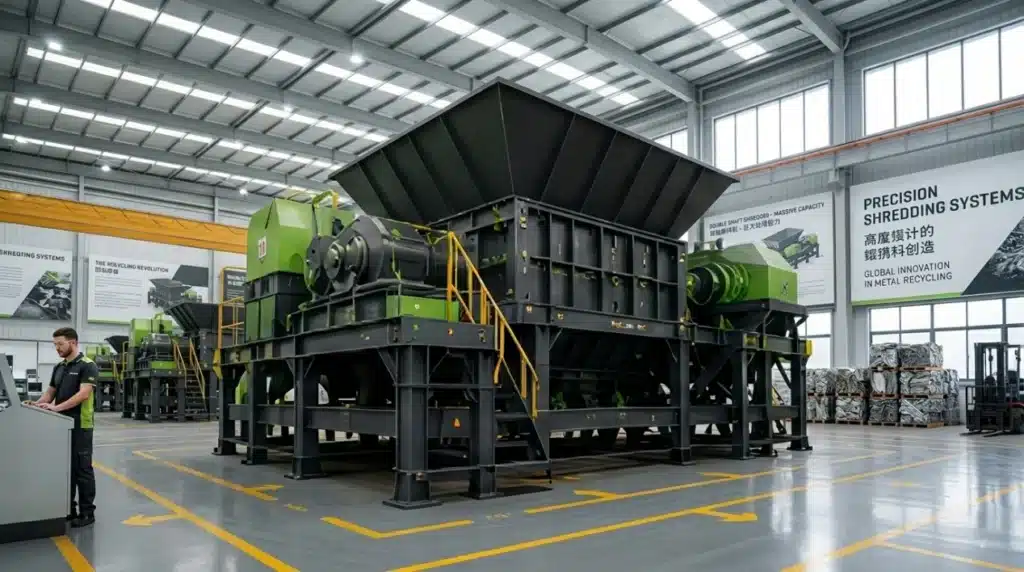
Large recycling plants often receive irregular and oversized waste such as full car body panels, baled scrap, and big household appliances. Feeding these items straight into standard shredders causes heavy stress and jam risks. Industrial metal pre-shredders serve as the first rough stage. They use strong, open-tearing parts to break bulky items into smaller pieces. This step smooths material flow and lowers size variation. The result protects later fine-sorting parts and extends their life.
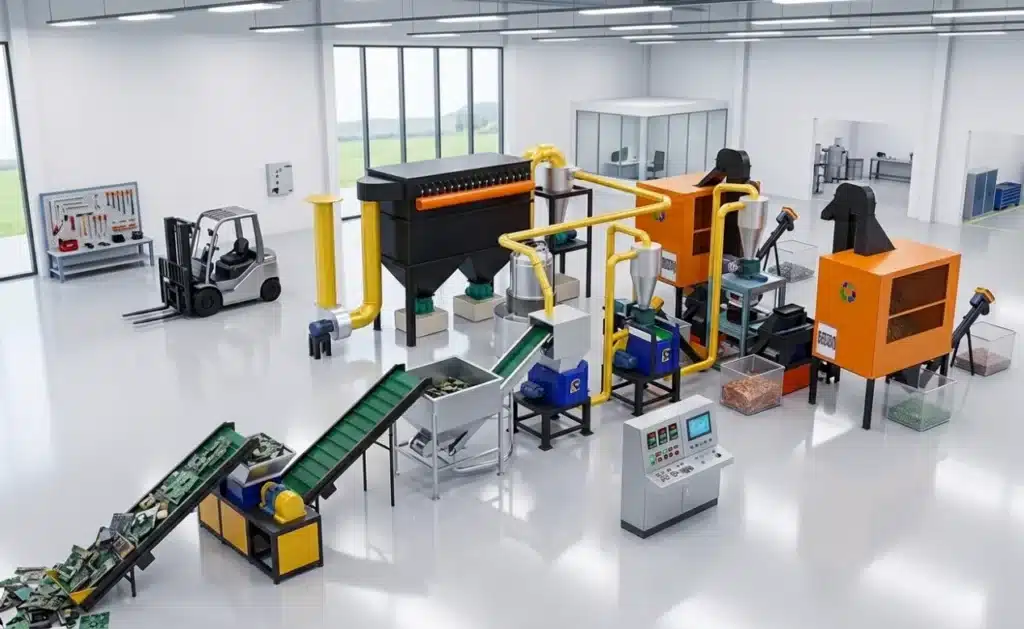
Old electronics such as computer boards, phone circuits, and appliance control panels mix valuable metals with non-metals. Specialized electronic waste shredders use a precise multi-stage crush process. The process reduces circuit boards without extra heat or material loss. Units such as the MX-PCB 800 cut complex fractions into fine particles. Air classifiers and high-voltage electrostatic separators then reach separation rates above 97%. Facilities recover clean mixed metal fractions and high-purity resin powder. The process turns hazardous electronic waste into a steady profit source.
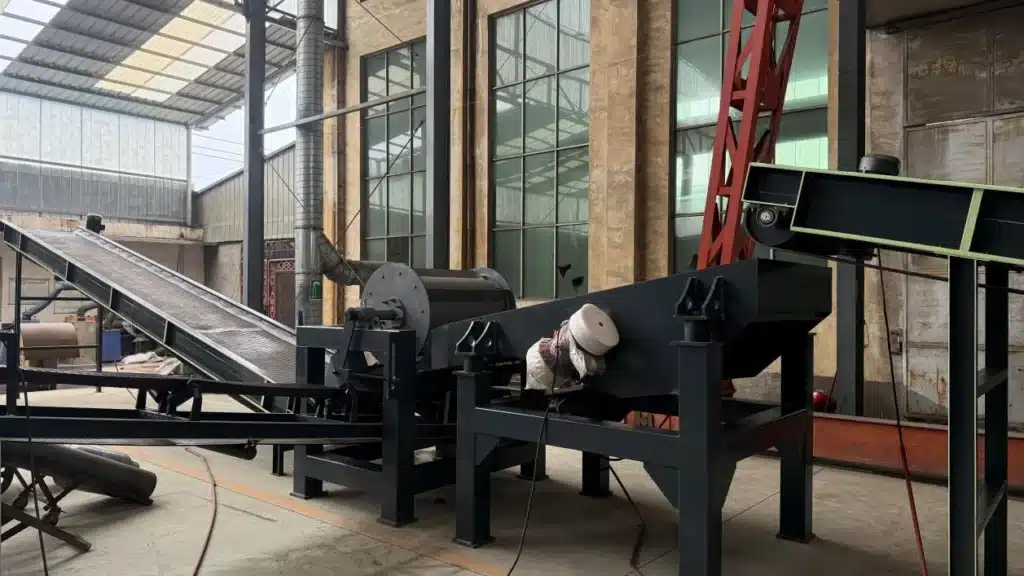
Mixed commercial scrap contains many ferrous and non-ferrous items. An integrated multi-purpose shredding and sorting system gives the best recovery rate. The system joins heavy mechanical size reduction with automated sorting modules. After primary crushing, the material passes magnetic drums that pull ferrous metals from non-metal bits. Eddy current modules then separate aluminum alloys and copper pieces. The full automated line runs under one PLC network, which keeps feed balanced and output purity steady for later supply chain steps.
Recycling facilities vary significantly based on their regional material access, specialized processing targets, and physical floor layouts. A standard, rigid machinery design often results in under-utilized power or structural processing bottlenecks. To avoid these limitations, engineering teams at MAXIM machinery provide complete customization capabilities for their industrial pre-shredder systems and comprehensive recycling lines.
Choosing the right equipment means balancing purchase cost against output goals and material type. Plants that focus on large volumes of scrap steel or aluminum need big systems that hold steady output between 10 and 50 tons per hour. Plants that handle complex electronics or battery materials need precise multi-stage crush setups with fine-sorting tools.
The table below lists key operating parameters for different recycling and material prep setups. The list supports plant planning.
| System Type | Processing Capacity | Core Technologies Involved | Primary Output Material |
| Heavy-Duty Metal Shredding Line | 10 to 50 Tons/Hour | Magnetic separation and eddy current technology | High-purity ferrous and non-ferrous scrap |
| Electronic Waste PCB System | 200 to 1000 Kg/Hour | Three-stage crushing with electrostatic sorting | Precious metal mix and clean resin powder |
| Lithium Battery Recycling Setup | 500 to 2500 Kg/Hour | Negative pressure crushing and wind separation | Concentrated copper, aluminum, and black mass |
| Industrial Rotary Drying Unit | 10 to 100 Tons/Hour | High-temperature rapid heat transfer technology | Uniformly dried mineral or industrial materials |
Modern recycling lines show real value when they process high-utility industrial scrap such as old computer boards and retired electric vehicle battery parts. Standard industry tests show that one ton of computer circuit boards holds up to 130 kg of copper, 10 kg of iron, and small amounts of gold, silver, and palladium. Recovering these elements needs careful mechanical handling to limit fine material loss. A closed-loop mechanical separation path under automated PLC control lets processing centers reach steady separation results without extra chemical pollution.
The same approach works for high-grade black mass from spent lithium-ion battery packs. Fine powder from expired cells holds high levels of lithium, cobalt, nickel, and manganese. The production line integrates automated mechanical shearing and hammer crushing within a sealed negative-pressure enclosure, ensuring ambient dust emissions remain well below 5 mg/m³. The setup safely contains volatile particles and recovers over 99 percent of the valuable black powder, copper, and aluminum fractions. These fractions return directly to the battery precursor chemical supply chain.
We warmly welcome customers, engineering partners, and supply chain managers to visit our booth and discuss tailored equipment layouts with our senior technical team.
A: Operating cost per ton depends on power setup, regular blade wear, and labor needs. High-efficiency automated control systems adjust power use based on real-time loads. This lowers electricity use. Core parts made from high-wear alloys reduce blade change frequency and cut maintenance costs per ton.
A: Continuous operation needs a planned preventive maintenance routine. Daily checks cover blade clearance, lubrication paths, and PLC data to spot issues early. Weekly checks review internal screen wear, sorting belt alignment, and air filter seals. These steps keep dust control systems at full performance.
A: Yes, multi-purpose industrial recycling systems are configured to process mixed streams containing various metallic materials. The integrated shredding and crushing stages reduce the incoming mix of scrap steel, aluminum profiles, and copper components simultaneously. Downstream from the crushing chamber, high-intensity magnetic separators isolate ferrous fractions, while advanced eddy current separation modules split the non-ferrous metals from non-metallic materials, enabling high recovery values.
A: Shredder blade durability depends on raw feed consistency, alloy hardness, and proper material preparation. Independently developed cutting components engineered with specialized impact-resistant alloys provide substantially longer wear cycles than standard options. Additionally, implementing a primary pre-shredding stage to handle oversized or bulky items reduces high-stress mechanical shock loads on secondary fine-crushing blades, significantly extending their operational lifespan.
A: Final particle size is set by blade thickness, rotor speed, and internal sizing screens under the shredding chamber. In specialized electronic scrap systems, a three-stage crush path works with air classification units. The combination keeps particle size uniform. Uniform size improves later electrostatic sorting results.
A request such as “quote a scrap metal recycling line” leaves many technical questions open. Similar scrap can still require different feeding, shredding, conveying, sorting, and discharge arrangements. A better RFQ defines the job before asking for a machine. Material, capacity, sorting goals, final product, and site conditions should all be clear. What Information Should a excerpt …
