
Setting up an efficient resource recycling facility needs careful planning. This holds true especially for complex materials such as lithium batteries, electronic waste, and scrap metal. Specialized facilities focus on resource recycling. Specialized facilities carry out research and development and the manufacturing of eco-friendly recycling machinery. These facilities deliver custom recycling and processing solutions for various sectors. Facility managers often need to select a suitable industrial waste shredder or grinder for a given production line. Understanding mechanical differences and material uses of machines marks the initial step. The step supports creation of an integrated processing system, which improves metal purity and recycling value.
While industrial grinders and shredders are often used interchangeably in the recycling industry, these machines carry out distinct functions inside a material recovery facility. Picking the correct equipment rests entirely on material characteristics and the needed output size.
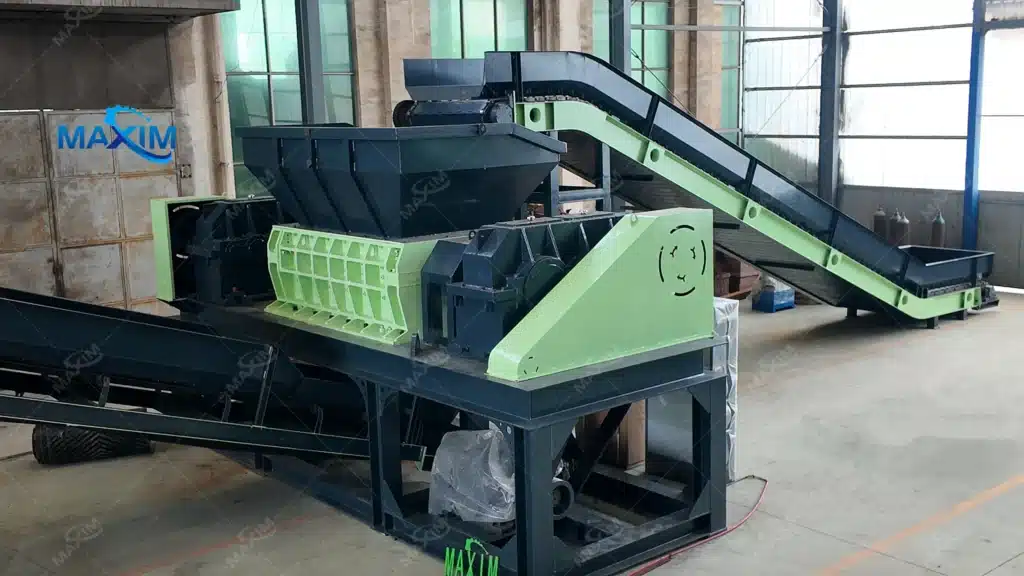
The industrial shredder usually starts at the front of a recycling line. This machine works with high torque and low-speed operation. The design lets the unit tear, shear, and pierce bulky items. In a full closed-loop processing system, this equipment manages the pre-shredding and initial crushing phases. Shredders play a key role in breaking down large casings, thick metals, and bundled solid waste into manageable strips or chunks. The step prepares the material for downstream sorting.
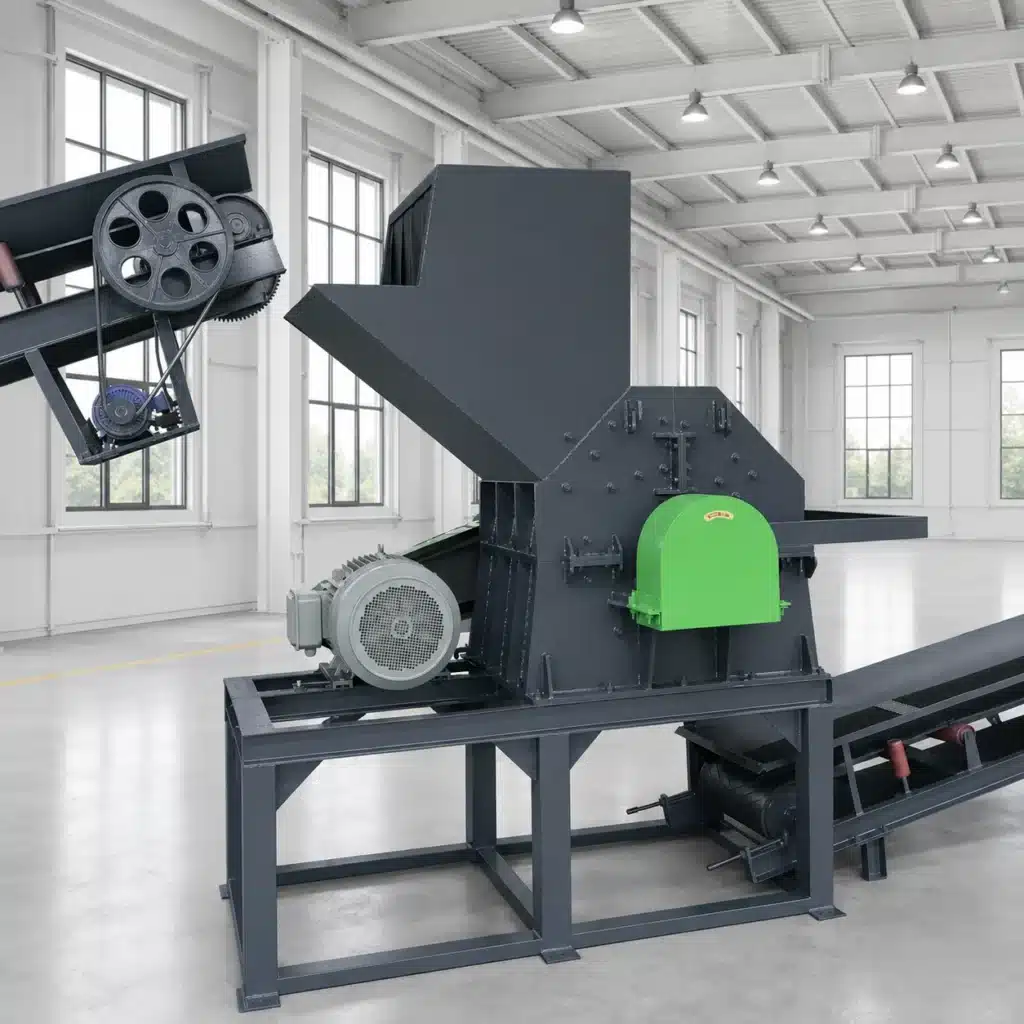
Conversely, an industrial grinder or hammer crusher runs at higher speeds to carry out secondary or tertiary size reduction. Once a battery or electronic device reaches the end of its service, the batteries can be gathered, fully discharged, then shredded and base metals separated to prepare the materials for recycling. The grinder receives these pre-shredded pieces and uses high-speed impact to break them into uniform granules or fine powders. This step plays a key role in freeing dissimilar materials bonded together, such as copper and plastics in circuit boards.
To assist in choosing the right industrial waste shredder or grinder, it is helpful to evaluate their operational parameters side by side.
| Feature | Industrial Shredder Equipment | Industrial Grinder Equipment |
| Primary Stage | First stage processing and volume reduction | Secondary or tertiary refining |
| Operating Mechanism | Low speed tearing and shearing | High speed impact and hammer crushing |
| Material Suitability | Large casings, solid waste, and bulky scrap metal | Pre-shredded metals, circuit boards, and battery cells |
| Typical Output Size | Coarse chunks and long strips | Fine powders and uniform granules |
| System Integration | Precedes magnetic and eddy current separation | Operates alongside air classification and vibrating screens |

Selecting the best heavy-duty industrial shredder requires a deep understanding of the target material. Different production lines demand unique configurations of tearing machines, hammer crushers, and sorting systems to achieve optimal recovery rates.
The recovery process begins with the collection of spent lithium-ion batteries, also known as end-of-life batteries. Once collected, these batteries undergo mechanical processes such as shredding or crushing to break them down into smaller pieces. Based on the structure of the anode and cathode of the lithium battery and the material characteristics of copper and carbon powder, a combined process of a tearing machine, a wind separator, hammer crushing, a vibrating screen, and air separation is used to separate and recover the cathode material.
For facilities aiming to produce high-purity materials, the integration of these machines is critical. Through customized engineering, MAXIM machinery provides custom production line layouts and equipment parameters to avoid one-size-fits-all waste. The primary goal of this combined shredding and grinding process is to extract black mass. Black mass refers to the powdered material extracted from end-of-life lithium-ion batteries or production scrap. Black mass typically contains high concentrations of lithium, cobalt, nickel, and manganese. It serves as a critical feedstock for battery material recovery. By effectively utilizing shredders for the outer casing and grinders for the internal cells, the recovery rate of valuable components of waste lithium batteries has reached more than 99%. The aluminum content of positive and negative electrode materials drops to less than 3 per thousand. The grade of copper and aluminum reaches 96% or higher.
Electronic waste presents a different set of challenges due to the dense integration of precious metals and toxic substances. Electronic waste recycling equipment is used to recover circuit boards from the interiors of electrical appliances such as televisions and computers. Research into standard printed circuit boards indicates that electronic components account for 58% of the composition, the substrate for 37%, and solder for 5%.
To effectively process these materials, a single scrap metal grinder is rarely sufficient. Instead, a three-stage crushing process enables a processing capacity of 800 kg per hour. For example, equipment models like the MX-PCB 500 offer a capacity of 400 to 500 kg per hour using a 134 kW power system, while the MX-PCB 1000 can process 800 to 1000 kg per hour with a 238 kW motor. Following this multi-stage size reduction, the air classification equipment achieves a separation efficiency of over 97 percent. The high-voltage electrostatic separator then ensures finer and more efficient sorting. The separator effectively controls the loss of non-ferrous metals.
When dealing with heavy industrial applications, the mechanical demands on the equipment increase significantly. The scrap metal recycling production line achieves crushing, impurity removal, sorting, and forming for metal waste, including scrap steel, aluminum alloy, and copper. Because of the extreme density of these materials, heavy-duty industrial shredders are deployed to perform the initial breakdown.
The production line is highly automated, with a processing capacity of 10 to 50 tons per hour. To ensure longevity and continuous value, MAXIM machinery ensures that core components such as shredder blades and sorting systems are independently developed, with wear and impact resistance exceeding industry standards. After the metal is sufficiently reduced in size, integrated magnetic separation and eddy current separation technologies effectively separate metals from non-metallic impurities. This rigorous process ensures the final output meets the standards for front-end raw materials for metal smelting and directly connects to the downstream supply chain.
Beyond the primary shredders and grinders, a comprehensive processing plant often requires auxiliary systems to manage material handling and environmental controls.
Material conditioning is sometimes necessary before or after the crushing phases. In various industrial sectors, industrial drum dryers are equipment that achieves material drying through the rotation of a drum. Drum dryers are employed to process substantial quantities of raw materials and find extensive use across industries, including metallurgy, building materials, chemicals, coal, pharmaceuticals, and mining. Drum dryers utilize advanced drying technology, using high-temperature rapid drying technology, a large heat transfer coefficient, high thermal efficiency, and high drying strength.
Furthermore, environmental compliance is non-negotiable in modern waste processing. The entire series of equipment complies with national regulations such as the Law on the Prevention and Control of Environmental Pollution by Solid Waste. Whether operating a grinder or a shredder, dust emission must be avoided during operation. Industrial dust collection systems and confined big bag emptying stations are recommended. Modern production lines utilize negative pressure feeding to effectively reduce dust spillage. The pulse dust collector operates at an efficiency of over 99%. The collector effectively suppresses dust emissions and fully complies with national environmental protection requirements, with no secondary pollution.
To maintain these complex systems, facility managers should prioritize intelligent controls. Modern equipment is equipped with a PLC control system, supporting remote monitoring and fault warnings, reducing operation and maintenance costs. PLC control ensures uniform feeding and coordinated operation across the entire production line.
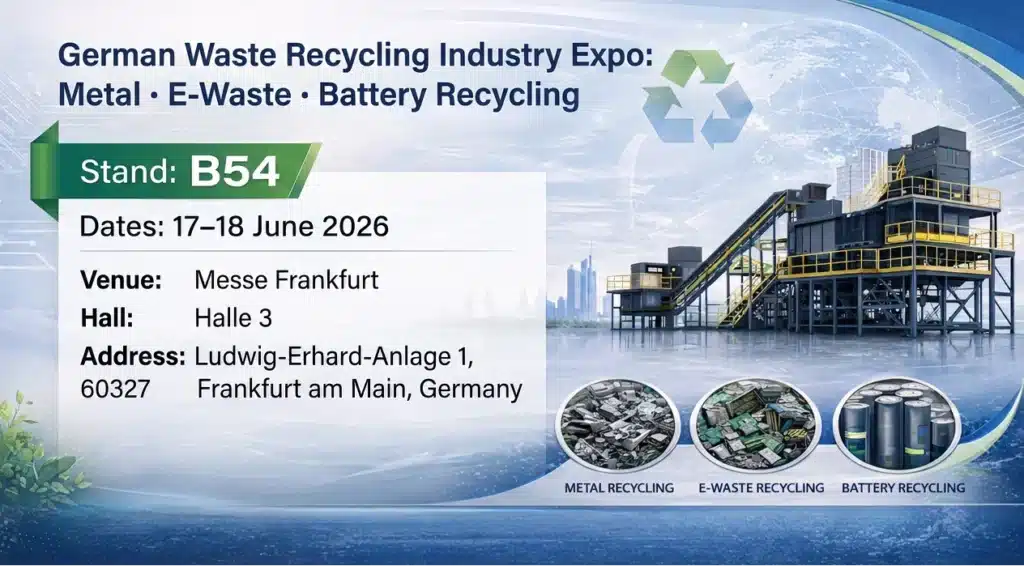
Join MAXIM machinery at the upcoming Metal, E-Waste & Battery Recycling Expo 2026 in Germany! Discover our latest industrial waste processing solutions and discuss your custom production line needs with our experts.
A: In the pre-treatment stage of battery recycling, batteries undergo discharge treatment to eliminate potential safety hazards. The batteries are then crushed mechanically into components such as black mass, metals, and plastics. A shredder is utilized first to safely break the outer casing and reduce the overall volume of the cells. A grinder, or hammer crusher, is subsequently used to pulverize the internal components into fine powders. This step allows for the efficient extraction of black mass.
A: Environmental compliance is achieved by integrating advanced dust collection and containment systems. The whole production line operates under negative pressure, and no dust overflow occurs during the production process. Additionally, utilizing equipment where emission indicators for dust, noise, and wastewater are certified by third-party testing guarantees adherence to environmental standards.
A: It is generally not recommended to process highly dissimilar materials through a single machine without modifying the cutting chamber and sorting line. Production lines are customized according to customer production capacity requirements, material characteristics, and site conditions. While electronic waste recycling equipment is suitable for recycling various types of circuit boards, heavy scrap steel requires a dedicated production line with a processing capacity of 10 to 50 tons per hour, designed specifically for high-impact metal forming.
A request such as “quote a scrap metal recycling line” leaves many technical questions open. Similar scrap can still require different feeding, shredding, conveying, sorting, and discharge arrangements. A better RFQ defines the job before asking for a machine. Material, capacity, sorting goals, final product, and site conditions should all be clear. What Information Should a excerpt …
