
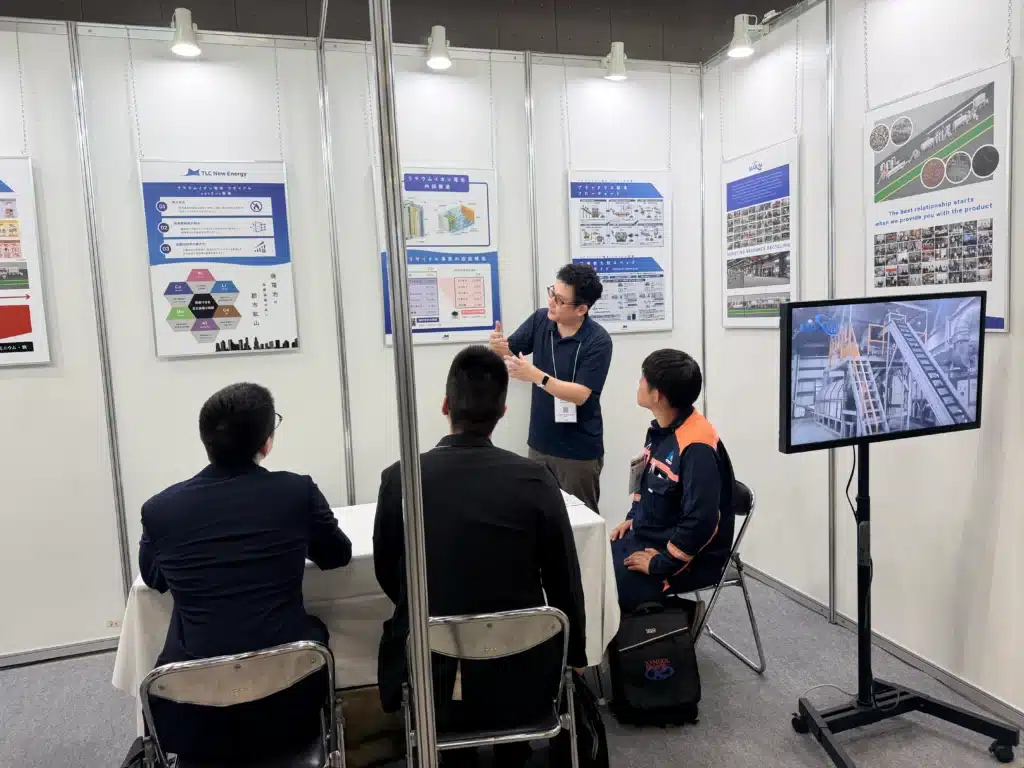
The move toward sustainable energy heavily relies on solid management of energy storage systems that reach the end of their service life. Handling this worldwide issue calls for steady progress in lithium battery recycling. The New Environmental Exposition & Global Warming Prevention Exhibition 2026 was held from May 20 to 22 at Chuo-ku, Tokyo, Japan. The gathering gave industry leaders a key platform to address increasing worries over electronic waste.
A closed-loop supply chain for batteries now forms a core industrial need. Companies have joined these international forums to share new technology advances. Such meetings help build partnerships that move the global lithium battery recycling industry ahead.
Fast growth in the electric vehicle market brings more retired batteries. Post-decommission lithium battery recycling brings real challenges, such as tough processing steps, high pollution levels, and heavy resource loss when handled poorly. Strong EV battery recycling solutions help fix these problems. The growing demand for zero-emission vehicles and the need to build a circular economy are the driving factors for the rapid growth of the battery recycling industry.
Clear knowledge of the market value chain helps stakeholders who plan to enter this sector. The value chain of lithium battery recycling and regeneration solutions includes upstream suppliers, midstream providers, and downstream applications. Upstream suppliers cover battery makers and electric vehicle producers. These groups handle the collection and first sorting of retired lithium-ion batteries. Midstream providers apply advanced methods to break down batteries, separate hazardous parts safely, and recover useful materials. Downstream applications cover industries that turn regenerated materials into ternary precursors, cathode materials, and recycled anode products. Proper processing of these materials cuts the environmental load from virgin metal mining. On average, every ton of processed lithium-ion batteries offsets approximately one ton of carbon dioxide equivalent in lifecycle carbon emissions.
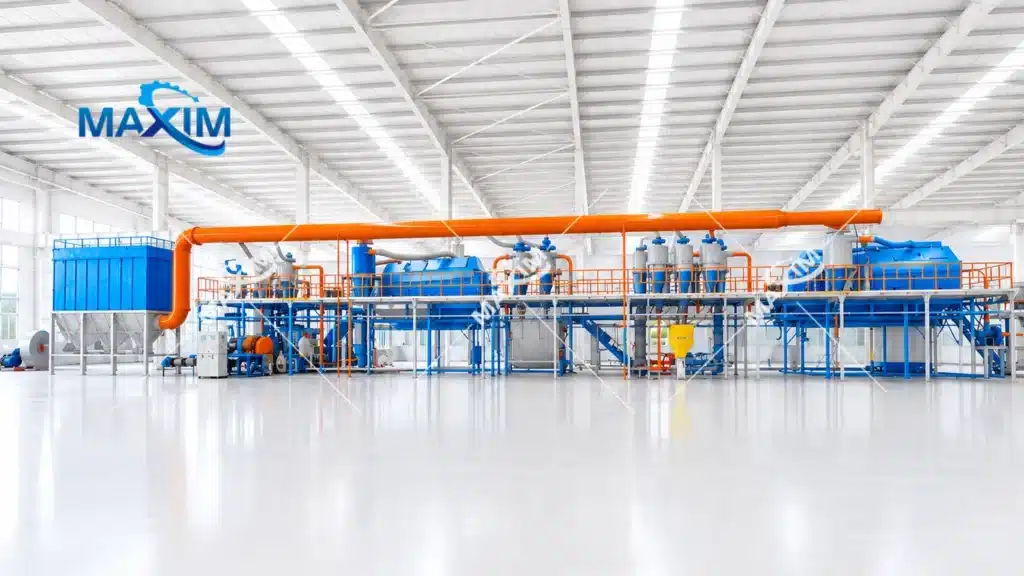
Operators need a full electric vehicle battery recycling and disposal process to gain full value from retired energy storage units. The main industrial method combines crushing, sorting, and hydrometallurgy. The steps below show the standard industrial flow.
1. Collection and Pre-treatment: Used lithium-ion batteries go through safe discharge and dismantling to remove safety risks. Workers take off the casing materials and prepare the cells for later separation.
2. Mechanical Separation: Workers crush the batteries into parts such as metals, plastics, and active powder. Further separation uses several methods, including magnetic separation, air separation, and eddy current separation.
3. Chemical Processing: Operators pick the right method to pull out valuable elements.
Comparison of chemical extraction methods follows.
The hydrometallurgical process dissolves the sorted powder with acid leaching, then separates valuable metals such as cobalt and nickel through solvent extraction. Workers obtain lithium carbonate by precipitation. This process gives zero wastewater discharge and a high recovery rate. Hydrometallurgy gains favor because it uses less energy, reaches higher recovery rates, and lowers environmental impact.
The pyrometallurgical process pulls metals out through high-temperature smelting. This method gives strong recovery results for nickel and cobalt, yet the recovery rate for lithium stays lower. Direct regeneration cuts energy use by 30 percent, but it works only on electrode materials that keep intact structures.
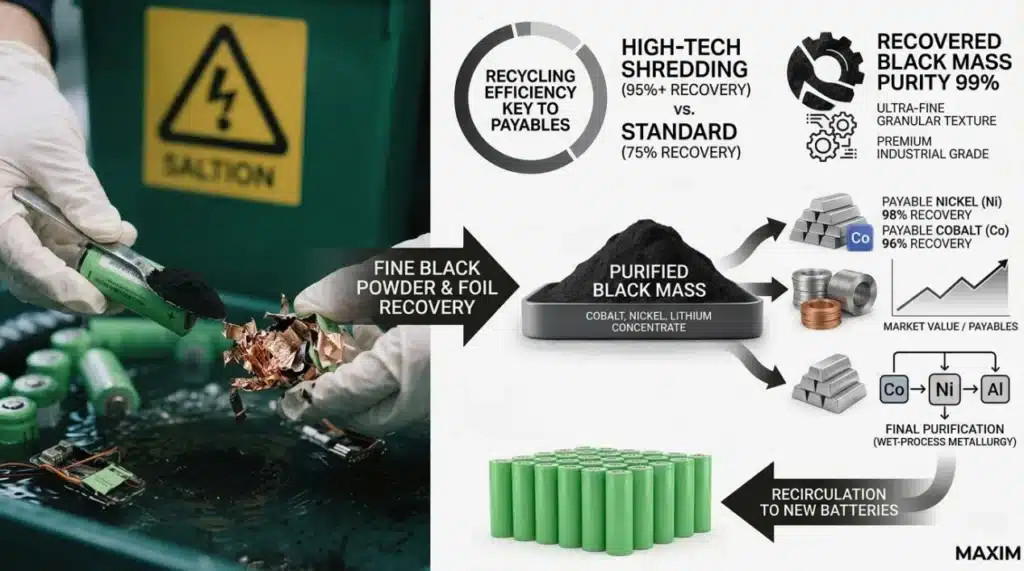
The main economic driver in the lithium battery recycling industry comes from pulling out high-value materials. Black mass battery recycling powder refers to the powdered material taken from end-of-life lithium-ion batteries or production scrap. This powder mainly holds a mix of cathode materials and anode materials. It earns its name from the dark black color caused by high graphite levels in the anodes. This residual waste forms 40% to 50% of the total weight of an EV battery.
Facilities focus on recycling battery metals to improve operations. Typical composition of black mass battery recycling powder by weight shows lithium compounds at 2% to 6%, cobalt at 5% to 20%, nickel at 5% to 15%, copper at 3% to 10%, and aluminum at 1% to 5%. These materials hold high market value because the levels of strategic metals such as nickel, cobalt, and lithium in the powder exceed those found in primary ores. The extracted metals return to new battery cathode materials and cut reliance on primary mineral resources such as lithium ore. The cross-contamination of copper and aluminum foils in the sorted powder must be controlled below 8% before it moves to the metal extraction stage. Closed-loop recycling of this material creates a true circular economy and achieves full recovery of battery materials.
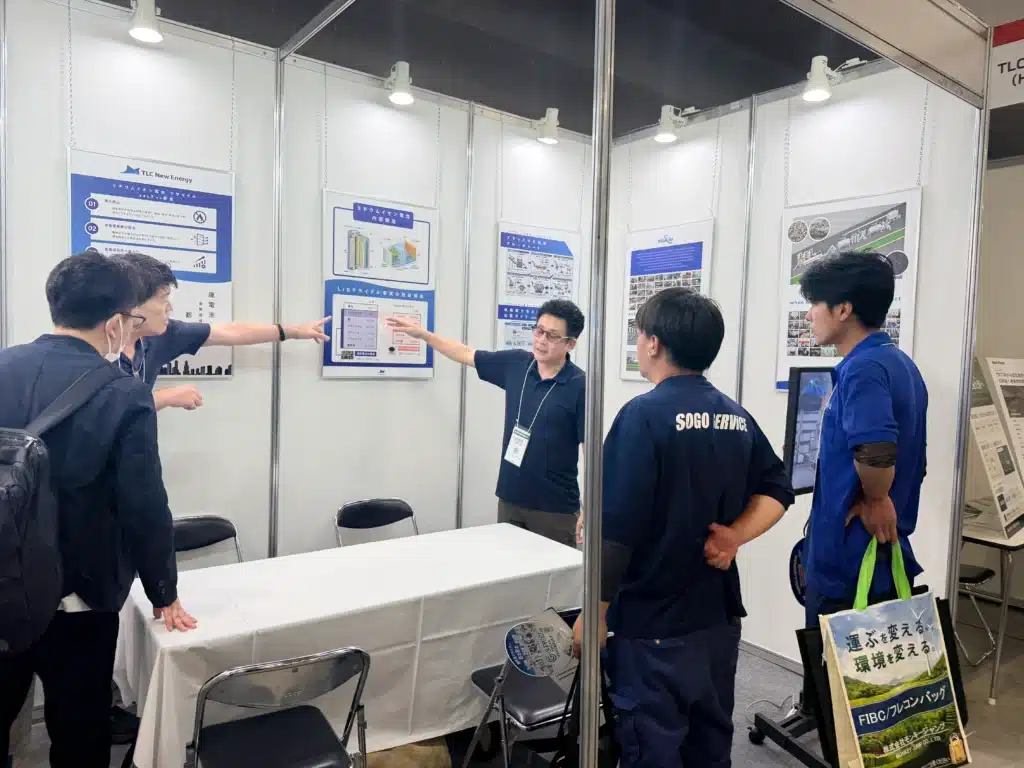
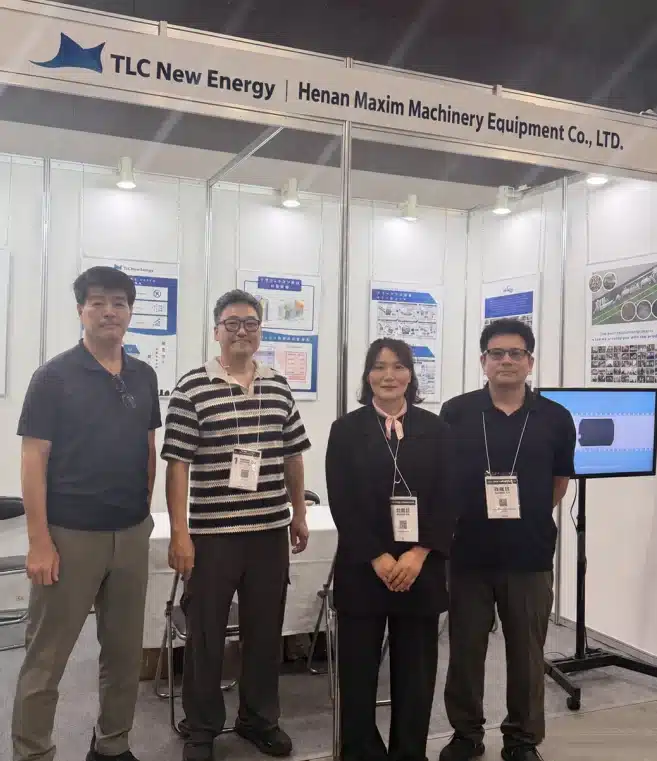
During international industry gatherings, observing actual equipment applications helps procurement teams make informed decisions. Relying on the communication opportunity at the Japanese environmental exhibition, MAXIM machinery jointly forces with our local Japanese partner, who serves as the exclusive regional distributor for our manufacturing lines, to present these systems together. This deep partnership guarantees that local clients receive immediate technical deployment and specialized commercial support. Through this collaborative exhibition presence, a broad strategic consensus has been achieved with multiple regional environmental protection enterprises, steadily establishing a solid operational foundation in the Japanese market.
MAXIM machinery focuses on research, development, and production of environmentally friendly recycling machinery. The systems designed by us provide a full closed-loop processing structure of pre-shredding, crushing, and sorting that meets environmental emission standards. Intelligent control reduces manual intervention, while the equipment adapts to various battery types, including ternary lithium and lithium iron phosphate. The design also allows for flexible capacity adjustments to suit different production line layouts. By implementing these efficient, intelligent, and environmentally friendly systems, companies can reduce costs and increase efficiency, promoting green and sustainable development across the global supply chain.
A: The industry now uses a combined process of crushing, sorting, and hydrometallurgy. This method reaches a full metal recovery rate above 95 percent. Batteries first go through mechanical shredding that separates plastics and foils and leaves a concentrated powder. The hydrometallurgical stage then dissolves the powder in an inorganic acid solution accompanied by reducing agents to free valuable metal ions. Solvent extraction, ion exchange, or precipitation separates each element by its chemical traits. The steps deliver high purity and low environmental impact.
A: Safety matters because this material forms a highly toxic powder with fine and easily airborne particles. During the mechanical separation stage, dust release must stay at zero. Production lines need a central dust removal system and negative pressure operation so no dust escapes. Furthermore, industrial dust collection systems and confined big bag emptying stations are recommended during the handling and storage phases. The dust emission concentration should strictly meet environmental requirements.
A: An industrial-scale line needs a full set of machinery. Based on the anode and cathode structure, key items include a tearing machine, wind separator, hammer crushing unit, vibrating screen, and air separation systems.
A: Continued electric vehicle production needs large amounts of raw materials. Retired batteries still hold valuable metals that form the most costly battery parts. Recovery turns these elements back into saleable commodity metals and closes the supply loop.
A: A dependable equipment supplier should give one-stop service that covers early consultation, solution design, equipment production, installation and commissioning, staff training, and after-sales maintenance. Buyers should check the provider’s technical strength. Core parts such as shredder blades and sorting systems should come from in-house development and show wear and impact resistance above industry norms. MAXIM machinery meets these standards and keeps production lines stable with a PLC control system that supports remote monitoring and fault warnings, plus 24-hour after-sales response.
A request such as “quote a scrap metal recycling line” leaves many technical questions open. Similar scrap can still require different feeding, shredding, conveying, sorting, and discharge arrangements. A better RFQ defines the job before asking for a machine. Material, capacity, sorting goals, final product, and site conditions should all be clear. What Information Should a excerpt …
