
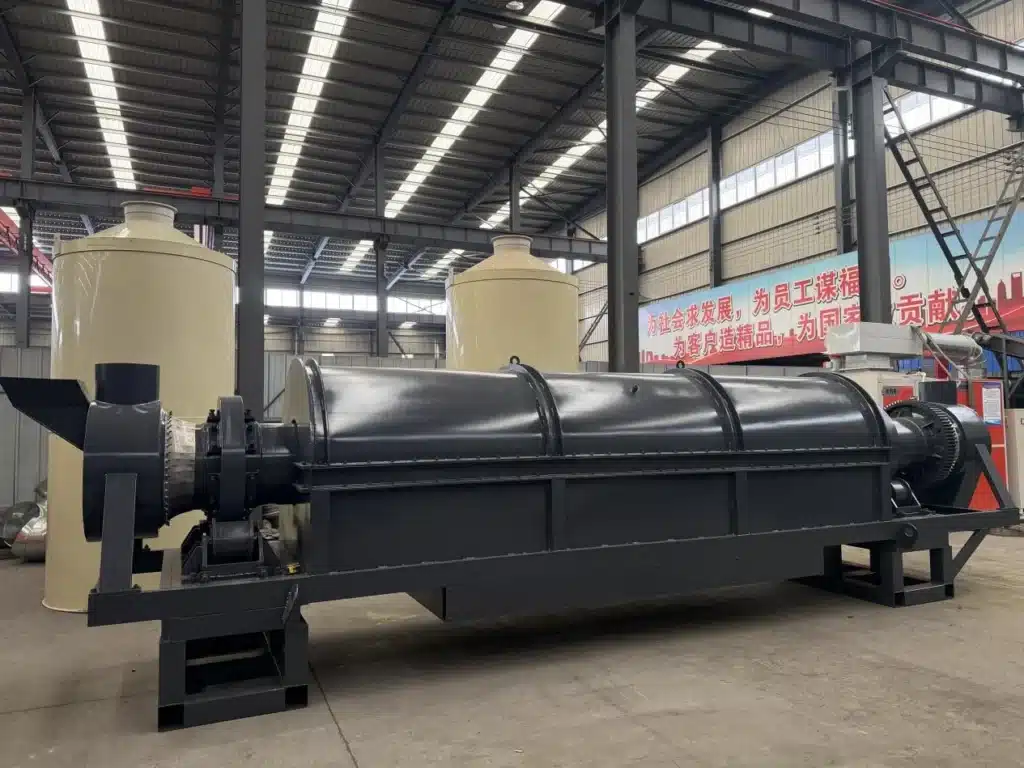
High-moisture waste streams pose one of the toughest challenges in industrial recycling. Materials like sludge, lithium battery residues, and e-waste contain too much water. This extra water raises logistics costs sharply. A large industrial dryer helps cut this problem by shrinking material weight and volume. Such action boosts transportation efficiency. It also eases downstream processing. Companies now view high-efficiency drying technology as vital for clear ROI gains in waste management operations.
High-moisture waste hikes transport costs. It also makes later treatment stages harder, such as separation or smelting. Recyclers can lower operational complexity by adding drying early on. Efficient drying stops agglomeration in metal recovery. It keeps feedstock moisture levels steady. These steps raise purity and yield in extraction. For instance, pre-drying lithium battery residues boosts the recovery rates of key metals such as copper and aluminum. The reason lies in fewer contaminants before physical separation.
MAXIM machinery offers a closed-loop “crushing–separation–purification” system. This system includes drying as a key step. Moisture gets removed before materials reach the purification phase. As a result, metal or lithium extraction efficiency improves. The dryer raises material purity. It also steadies production flow in recycling lines for metals, solid waste, or batteries. We focus on "resource recycling." We develop and build eco-friendly recycling machinery. It supplies custom recycling and processing solutions for sectors like lithium batteries, metals, and solid waste. This overall method increases throughput. It upholds environmental compliance at the same time.
The tech base of a large industrial dryer sets its operational reliability and long-run cost savings. MAXIM machinery’s drum dryers blend automation with solid engineering design. They deliver steady performance in tough conditions.
The equipment features a PLC control system. This system allows remote monitoring and fault warnings. Such features lower operation and maintenance costs. Operators track temperature and humidity parameters in real time. Automatic fault detection cuts downtime. It warns maintenance teams before problems grow. Intelligent airflow and heat exchange regulation keep continuous operation going. Even varying input moisture levels pose no issue. This capability suits facilities handling mixed waste streams or materials that change with seasons.
Core components, including shredder blades and sorting systems, come from in-house development. Wear and impact resistance beat industry standards. The structure employs high-strength materials. These materials handle abrasive particles in industrial sludge or metallic dust. Reinforced connections between shredders and dryers boost mechanical reliability under heavy loads. This engineering emphasis lengthens equipment life. It also drops unplanned maintenance needs. Both points affect the total cost of ownership strongly.
Each waste type needs unique handling traits. MAXIM machinery customizes based on customer production capacity needs, material traits, and site conditions. The company adjusts production line layout and equipment settings to skip "one-size-fits-all" approaches for waste. For example:
| Material Type | Recommended Capacity | Key Configuration |
| Kitchen Waste | 1–5 T/h | Low-temp rotary dryer |
| Metal Scrap | 10–50 T/h | High-temp drum with magnetic separator |
| Lithium Electrodes | 5–30 T/h | Closed-loop air purification system |
Adjustable temperature zones secure the best evaporation rates. Energy efficiency holds across various materials.
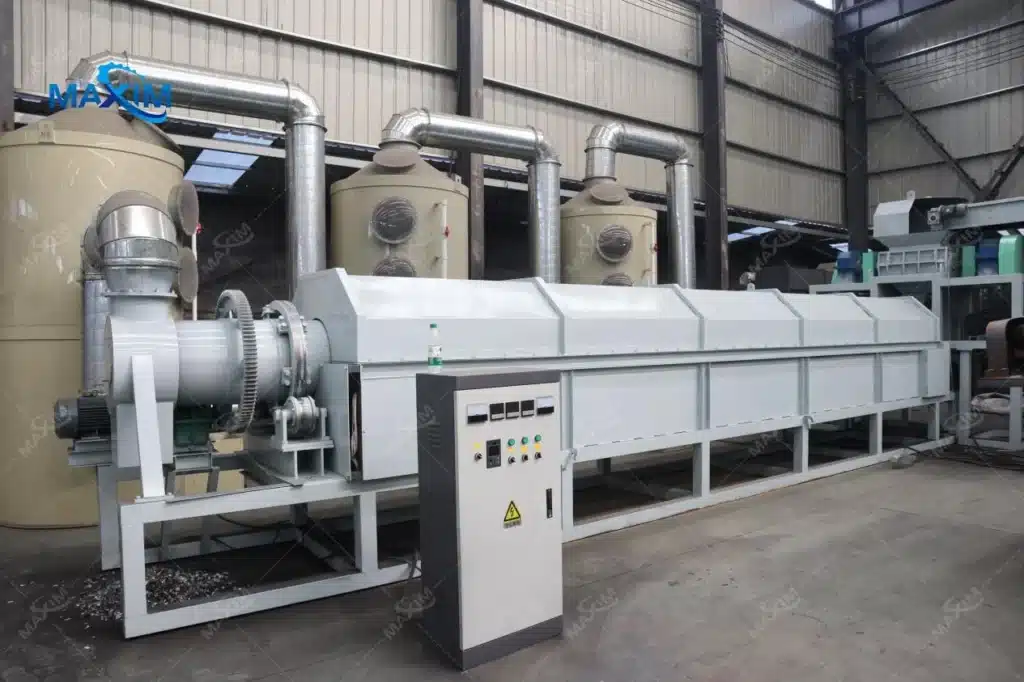
Environmental Compliance and Sustainable Development
Today’s recycling facilities face strict environmental rules. They must aid wider sustainability aims too. MAXIM machinery builds emission control tech right into large industrial dryer systems. This setup matches global environmental standards.
The full equipment line follows national rules like the "Law on the Prevention and Control of Environmental Pollution by Solid Waste" and the "Regulations on the Management of Renewable Resources Recycling." Third-party testing certifies emission levels for dust, noise, and wastewater. Advanced filtration modules trap airborne particulates from drying work. Soundproof enclosures drop noise below urban limits. These steps foster cleaner plant settings. Production speed and capacity stay unaffected.
We follow the mission of "Enabling Environmental Protection with Machinery, Creating Value with Recycling." The company pushes deeper into environmental recycling equipment. By cutting secondary pollution in thermal processing, our dryers aid carbon reduction efforts directly. Smart heat use lowers fuel needs per ton of material. This fits the circular economy aims. It turns discarded resources into usable raw materials. Such progress supports sustainable industrial growth.
MAXIM machinery goes beyond equipment supply. We offer full-cycle technical support from concept design to operational maintenance. This service boosts investment safety for clients, adding new large industrial dryer systems.
MAXIM machinery delivers a one-stop service program. It covers "preliminary consultation - solution design - equipment production - installation and commissioning - personnel training - after-sales maintenance." Projects start with a feasibility analysis on customer feedstock properties. Tailored process flow design follows. On-site engineers oversee installation. They ensure a match with planned throughput goals. Turnkey delivery shortens commissioning time. Operations begin soon after setup ends.
After-sales response arrives within 24 hours. This keeps the production line operation steady. Maintenance teams use remote diagnostics via PLC links for fast issue fixes. No physical checks delay progress. Predictive maintenance reviews performance trends. It spots potential component wear before breakdowns happen. This cuts downtime risk a lot in continuous production setups.
A: ROI hinges on factors like feedstock moisture content, energy source efficiency, labor savings from automation, and material value recovery rate. Most users see payback periods between one and three years. Reduced logistics costs and better product purity drive these results.
A: Removing excess moisture before separation or smelting processes stops oxidation or contamination. Without these issues, the metal grade quality stays high during recycling operations.
A: Yes. MAXIM machinery designs modular setups for the simultaneous processing of mixed wastes like plastics with organic residues. Adjustable air temperature zones work within one integrated system.
A: Our dryers meet national dust emission standards. Third-party laboratory testing verifies compliance under solid waste pollution control laws in major industrial areas.
A: Remote PLC monitoring sets predictive maintenance schedules from real-time sensor data. This cuts the manual inspection needs. It also prevents expensive unplanned shutdowns in multi-shift operations.
A request such as “quote a scrap metal recycling line” leaves many technical questions open. Similar scrap can still require different feeding, shredding, conveying, sorting, and discharge arrangements. A better RFQ defines the job before asking for a machine. Material, capacity, sorting goals, final product, and site conditions should all be clear. What Information Should a excerpt …
