
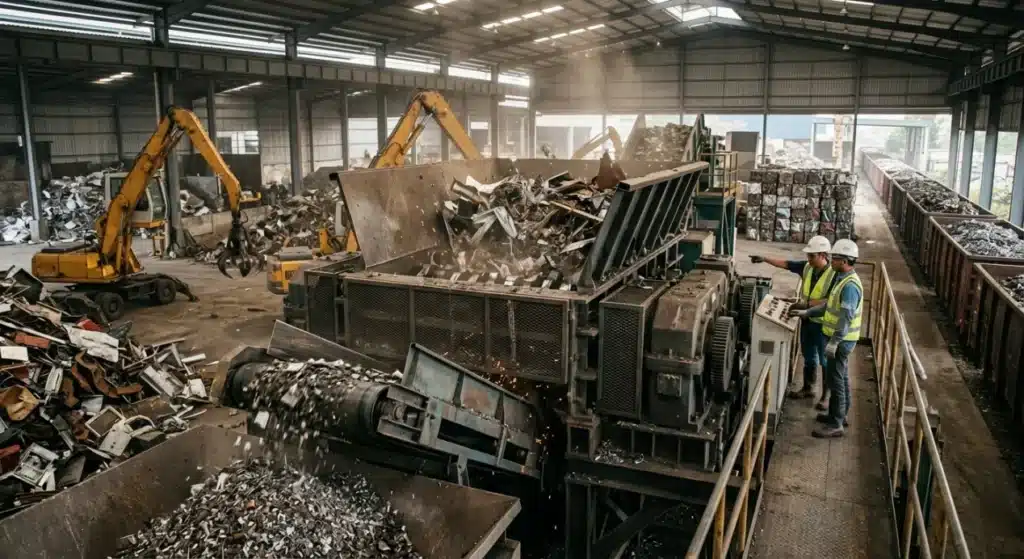
The worldwide need for industrial metal shredders keeps growing. Industries move away from old waste disposal methods toward better recycling setups. These devices hold a key role in turning scrap into useful materials. They aid both financial aims and green targets.
High-capacity shredding shows a major change from simple waste handling to useful recovery. Shredders break down large amounts of mixed metal scrap. This action cuts costs for moving materials and shipping. It also boosts evenness in feedstock for melting work. Steady particle size raises furnace output. It lowers energy needs and waste buildup.
MAXIM machinery focuses on fresh ideas, planning, and making self-made gear. Their scrap metal recycling production line shows this approach. It handles “crushing - impurity removal - sorting - forming” for items like steel, aluminum alloy, and copper. This feeds straight into later melting steps.
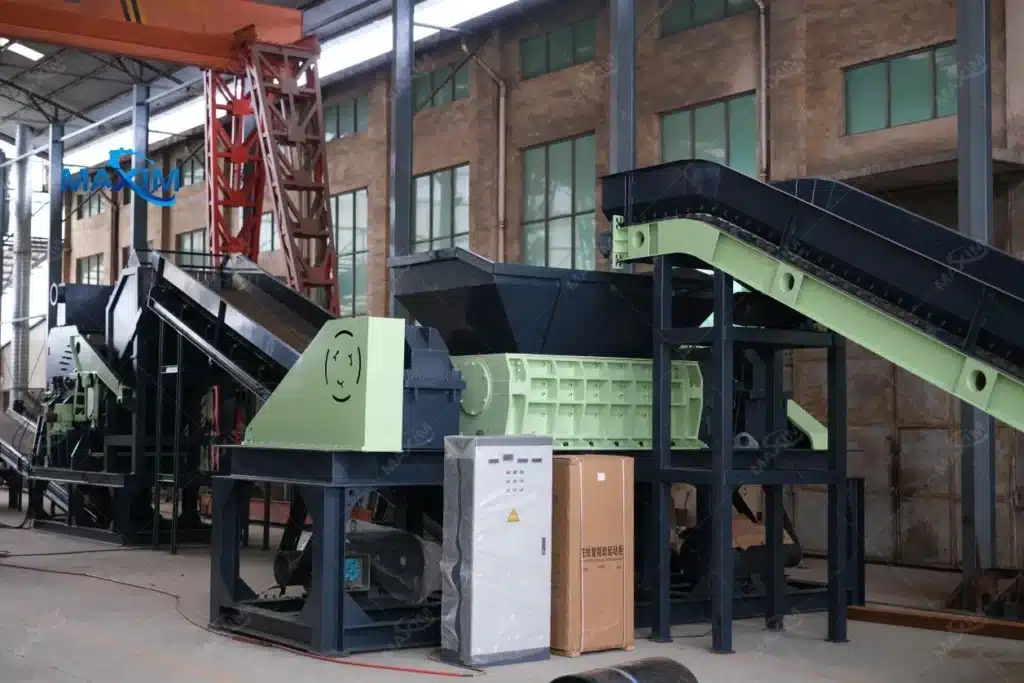
Current industrial metal shredders are built for strong power at slow speeds. These features allow smooth work on thick items like car frames or heavy scrap for melting. The units act as the starting point in green recycling setups. Raw waste turns into clean feedstock there.
With a focus on "resource recycling," specialists work on the study, growth, and building of eco-friendly recycling tools. In circular economy plans, such systems help use resources well. They change thrown-away metals into items ready for reuse. All this happens with little harm to the surroundings.
Choosing the correct shredder setup means weighing output speed, material type, and work output. Each style—single-shaft, twin-shaft, or quad-shaft—gives clear gains based on set aims.
Single-shaft types give exact handling, good for even particle shapes in light metal jobs. Twin-shaft types deal with large heavy metal scrap using a better power spread. Quad-shaft types stand out in making a steady grain size with less shaking.
Power use differs: single-shaft machines need faster turns often, but multi-shaft types reach goals at lower power needs. Yet multi-shaft types call for tougher upkeep plans. For sites aiming at output over 20 tons/hour, multi-shaft choices bring stronger returns over time. They cut stoppages too.
| Configuration | Best For | Advantages | Maintenance Level |
| Single-Shaft | Aluminum profiles | Precise sizing | Moderate |
| Twin-Shaft | Automotive scrap | High torque | Low |
| Quad-Shaft | Mixed metals | Uniform output | High |
Blade shape stands at the heart of shredder strength. Tough alloy steels fight wear from dirt like bolts or cast parts. Fluid power drive setups offer bendable power handling under changing loads. Electric drives keep running steadily with less noise.
Power control stops overloads that lead to blade breaks or motor stress—key when dealing with uneven scrap flows full of hard metals or stuck plastics.
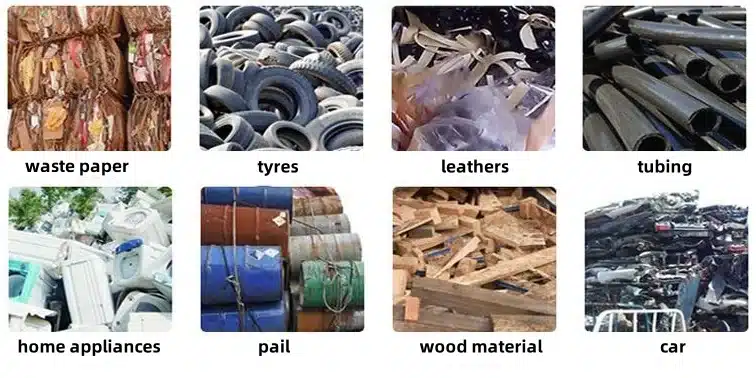
Heavy-duty shredding lines usually add pre-crushers, belts, magnetic splitters, and dust control tools. They process car shells and heavy scrap well. This works by spreading impact loads over several shafts in ongoing runs.
Built-in magnetic split and eddy current split tech separate metals from non-metal dirt well. The production line runs with high auto features and handles 10-50 tons/hour. Belt matching keeps the flow going without breaks, even with changing inputs.
E-waste holds useful metals like copper and aluminum, plus plastics and glues. Careful shredding frees these parts without breaking too much. Such breaking could hurt sorting exactness. Set speed changes cut dirt mixing between heavy and light metal parts in the work.
This method targets electronic waste like old phones, computers, TVs, circuit boards, and home tools. It solves issues of hard taking apart, loss of rare metals, and poison spread.
Besides machine output, gains rely on full-life costs—power use, wear part length, auto level—and how these shape total ownership cost (TCO).
Checking TCO means looking at power use per ton handled and planned blade swap times. Smart upkeep planning from sensor data stretches parts' lives by up to 30%. Money models can guess return times based on power rates and spare costs over time.
Auto features change recycling money matters by cutting worker needs. Joining with magnetic splitters or eddy current setups lets sorting hit over 98% rightness in real time.
The gear has a PLC control setup that backs far-off watching and error alerts. This cuts running and upkeep costs. Data study tools follow output numbers all the time. They spot blocks early to keep work levels high.
Running trust rests on firm preventive upkeep steps, plus following world safety rules.
Regular checks cover blade wear, look every 200 work hours, and oil cycles matched to load strength. Connected sensors track shake levels and heat build-up in gearboxes to spot coming breaks soon. Planned timing cuts surprise stops, even in rough spots common in scrap areas or metal plant chains.
Industrial shredders need to meet CE mark rules for machine safety plus OSHA sound limits under 85 dB(A).
Emission signs (dust, sound, and water waste) get checked by outside tests. Dust control with spray heads keeps the air clean near city spots. Sound block panels lower the noise around worker areas.
With the mission of "Enabling Environmental Protection with Machinery, Creating Value with Recycling," specialists keep pushing deeper into eco-recycling gear fields. MAXIM machinery stays set on growing strong industrial metal shredders. These match the output with green goals in the world recycling areas.
We are excited to announce that MAXIM machinery will be showcasing our latest innovations at the New Environmental Exposition (N-EXPO) & Global Warming Prevention Exhibition 2026. As a leader in sustainable resource recycling, we invite you to explore our advanced solutions for Lithium Battery Recycling, Scrap Metal Processing, and E-waste Recovery.
Don't miss this chance and we look forward to seeing you in Tokyo!
A: Twin-shaft setups with tuned blade shapes stop blocks when working with light aluminum shapes. Setting the shaft speed from 15 to 25 rpm keeps clean slices. It also cuts bending that makes later sorting hard.
A: Blade life ranges from 800–1500 hours based on dirt amounts like stuck ceramics or hard bolts. High-alloy tool steels lengthen work times before sharpening or swaps need to be done.
A: Joining means linking PLC-run belts with magnetic splitters or eddy current parts for step-by-step sorting. This flow lets a smooth shift from shredding to material grouping without handwork breaks.
A: Required parts cover auto reverse actions that start in overloads to avoid machine harm. Stop buttons must sit at many spots around the setup. Locked hopper lids make sure worker safety during upkeep entry.
A request such as “quote a scrap metal recycling line” leaves many technical questions open. Similar scrap can still require different feeding, shredding, conveying, sorting, and discharge arrangements. A better RFQ defines the job before asking for a machine. Material, capacity, sorting goals, final product, and site conditions should all be clear. What Information Should a excerpt …
