
An industrial metal shredder is not selected by motor power alone. The right system depends on the feed, required output, and downstream process. A machine reducing clean steel offcuts has a different duty from a line handling car bodies, appliances, or mixed non-ferrous scrap.
First, describe the feed accurately. Useful details include the largest piece, average thickness, bulk density, shape, moisture, and percentage of non-metallic material.
Long strips may wrap around shafts. Hollow drums deform before cutting. Mixed appliances may contain plastics, insulation, wires, motors, and sealed parts. Heavy plate needs more cutting force than thin sheet, even when both loads weigh the same.
Operators should remove pressurized cylinders, closed containers with unknown residues, batteries, and excessive dirt. Stable performance begins with controlled feed preparation, not only the cutting chamber.
A capacity target should state more than tons per hour. It must define the material condition and discharge size. Loose aluminum cans, dense steel offcuts, and car shells occupy different volumes and load the machine differently.
We normally clarify three objectives:
1.Reduce volume for transport or storage.
2.Produce a controlled size for furnace feed or secondary crushing.
3.Liberate metals from plastics, rubber, coatings, and attachments for sorting.
A smaller discharge often needs more energy and may lower actual throughput. Representative photos, dimensions, and feed tests are therefore valuable before final selection.
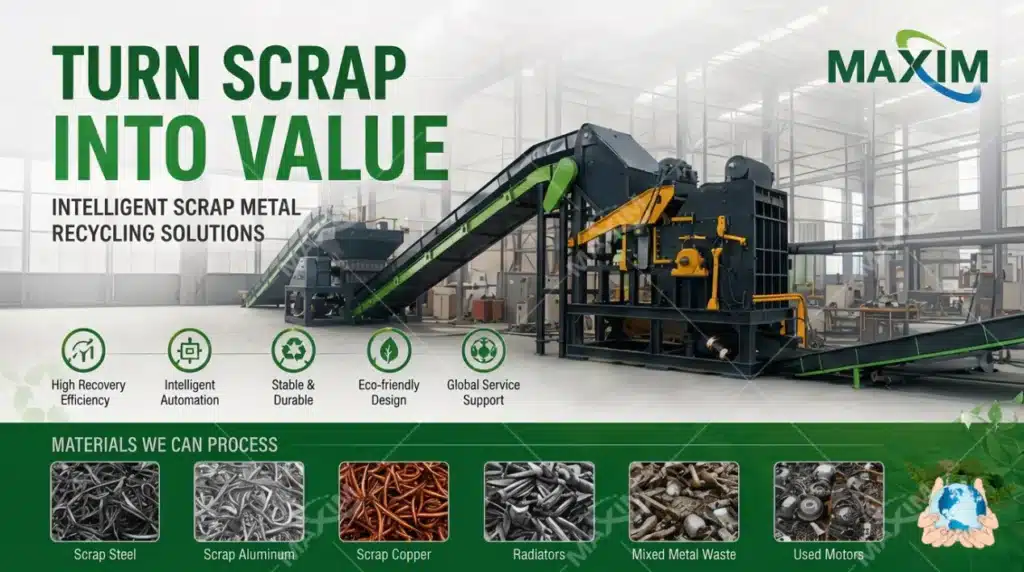
Typical ferrous feed includes sheet metal, stamping offcuts, steel furniture, light structural scrap, and irregular factory waste. The main challenge is variation. Thin material can bridge in the hopper, while thick sections create short, high-load cutting events.
For bulky shapes, a low-speed twin-shaft unit provides controlled pulling and tearing. Clean, compact offcuts may need only primary reduction and magnetic handling. Secondary crushing can be added when the final product must be denser or more uniform.
Vehicle recycling requires pretreatment. Fluids, fuel tanks, batteries, tires, and hazardous parts should be removed first. The remaining shell contains steel, aluminum, wiring, plastics, rubber, glass, and smaller non-ferrous components.
A pre-shredder reduces the body to manageable pieces and protects downstream equipment from oversized feed. For greater liberation, material can continue to a hammer shredder, screen, magnetic separator, and eddy current separator.
Project example: a yard seeking lower transport volume may stop after primary shredding. A processor selling separated ferrous and non-ferrous fractions needs a complete route.
Steel drums, washing machines, refrigerators, cabinets, and bulky scrap are difficult to feed because of their size and hollow structure. Drums must be opened, drained, and checked for residues. Appliances should be depolluted and stripped of restricted components.
The hopper and cutting chamber should suit the largest regular feed. Reverse control, overload protection, and steady conveying help manage irregular loads. After reduction, a magnet can recover ferrous metal; further sorting may be required for aluminum, copper, plastics, and foam.
Aluminum profiles and used beverage cans are lighter than steel and need controlled feeding to prevent surging or low chamber fill. Long profiles can bend and bridge, while thin cans behave differently from cast aluminum pieces.
For mixed non-ferrous feed, the goal is usually both volume reduction and clean recovery. A primary machine creates consistent feed for screening, air classification, or eddy current separation.
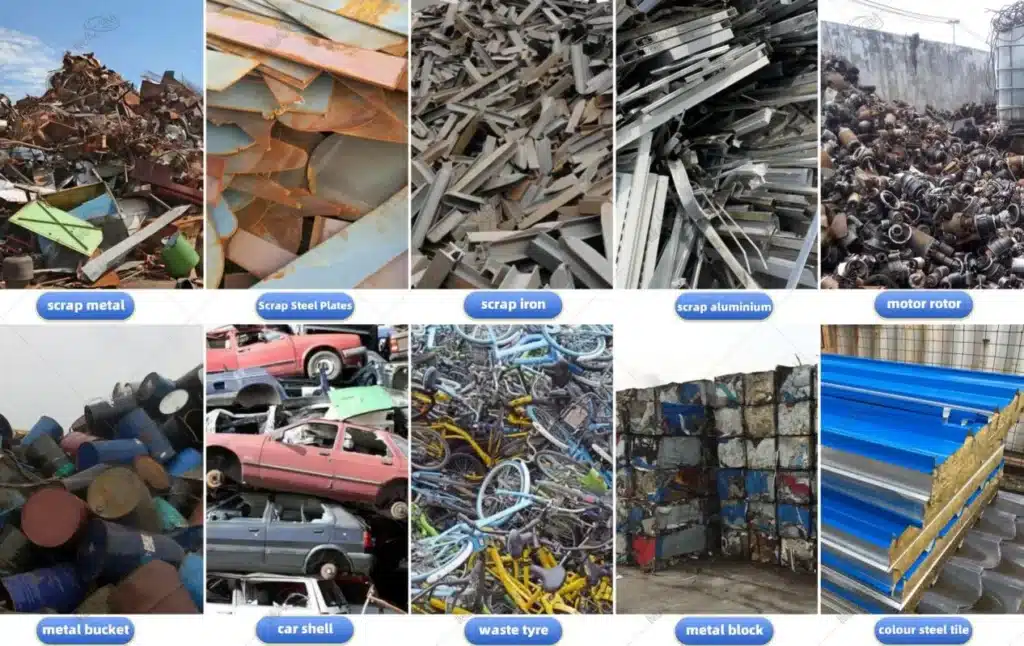
A double-shaft pre-shredder uses slow-rotating cutters to grab, tear, and reduce large items. It suits car shells, drums, appliances, and irregular industrial waste. Low-speed operation supports high torque and limits the violent impact of high-speed crushing.
At MAXIM machinery, we match blade arrangement, chamber size, drive configuration, and discharge control to the feed. PLC-based control can coordinate feeding and monitor operating loads. Where configured, reverse operation can also help clear temporary overloads.
A hammer shredder has a different role. It applies repeated impact after material has reached a suitable feed size. This stage can create smaller, denser fragments and release attached plastics, rubber, coatings, and non-ferrous pieces.
A pre-shredder and hammer mill are complementary rather than interchangeable. The first controls oversized feed; the second improves liberation and prepares material for sorting.
Not every metal stream should be shredded. Long beams, very thick plate, and clean structural steel may be better prepared with a shear. Clean, thin sheet may be baled when transport density is the main goal.
| Feed condition | Preferred first step | Main objective |
| Bulky, mixed, irregular scrap | Double-shaft shredding | Controlled reduction |
| Thick or long structural steel | Shearing | Length reduction |
| Clean, light sheet metal | Baling | Compaction |
| Pre-shredded mixed metal | Hammer crushing | Liberation and density |
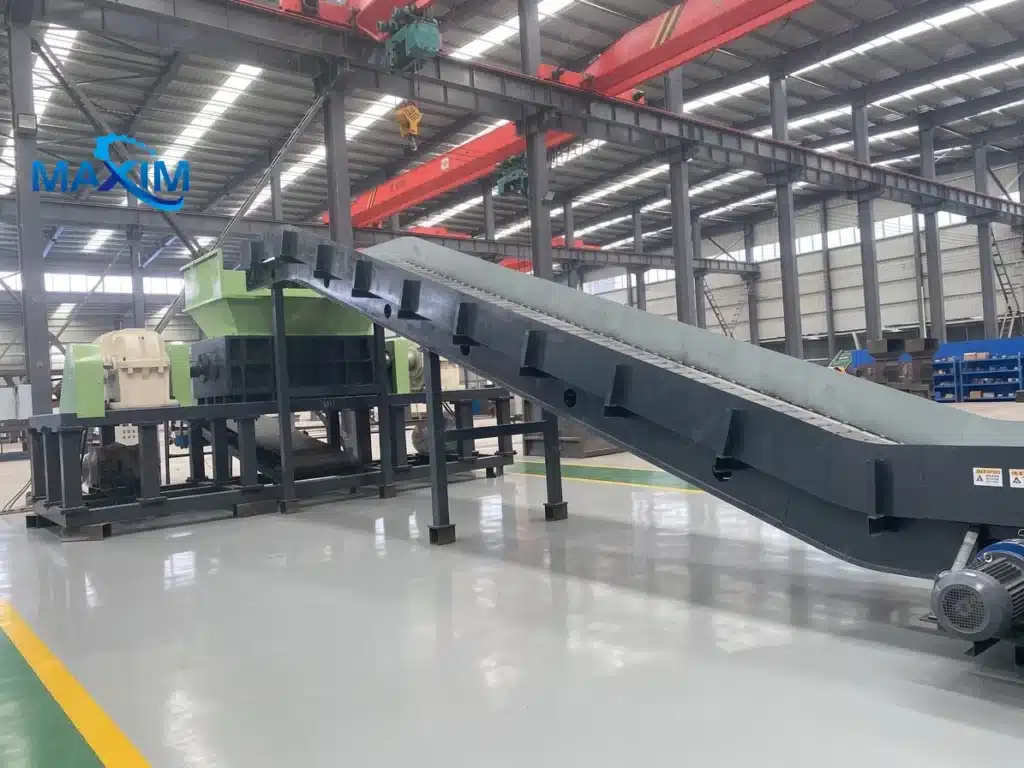
A standalone machine can be sufficient for coarse reduction, easier loading, lower storage volume, or preparation for existing downstream equipment. It also makes sense when a site already has conveyors, magnets, screens, or sorting stations.
Even a simple installation may need an infeed conveyor, discharge conveyor, guarding, and maintenance access. The discharge range and feeding method should be confirmed before production.
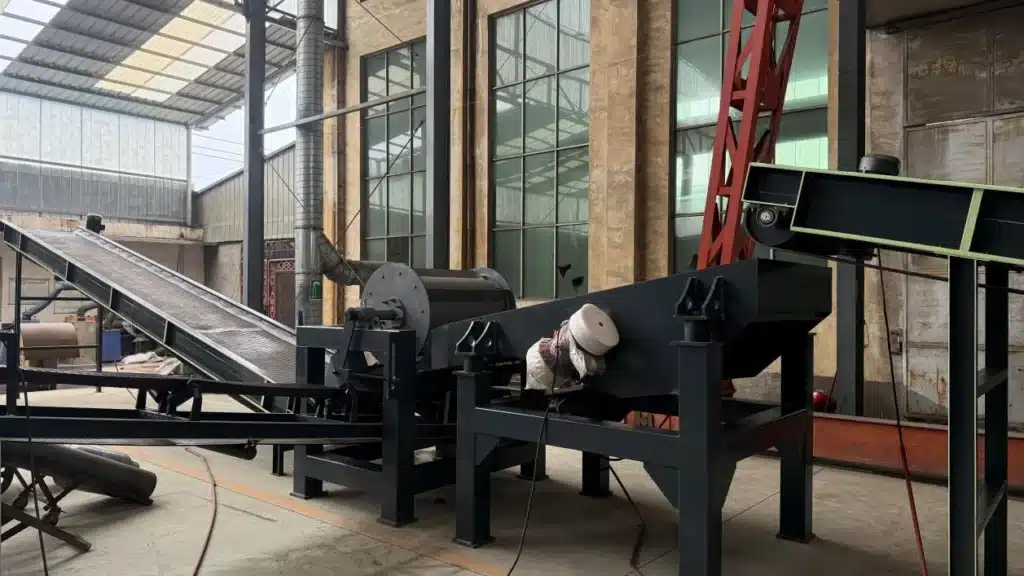
A complete line is justified when incoming scrap is mixed and finished fractions must meet purity or size requirements. MAXIM machinery combines crushing, impurity removal, sorting, and forming for scrap steel, aluminum alloy, and copper. Available configurations can include magnetic and eddy current separation, automated conveying, PLC control, and dust management, with documented scrap-metal line capacities of 10 to 50 tons per hour.
Magnets remove ferrous material. Eddy current separators recover conductive non-ferrous metals from non-metallic fractions. Screens control particle size, while dust collection improves housekeeping and protects operators and equipment.
| Scrap material | Main challenge | Primary equipment | Possible next stage | Recovery goal |
| Steel offcuts | Variable thickness and shape | Double-shaft shredder | Magnetic separation | Volume reduction or furnace feed |
| Car bodies | Large size and mixed composition | Pre-shredder | Hammer mill and sorting | Ferrous and non-ferrous recovery |
| Metal drums | Hollow shape and residue risk | Double-shaft shredder | Magnet | Safe volume reduction |
| Appliances | Mixed materials and attachments | Pre-shredder | Hammer mill, magnet, eddy current | Material liberation |
| Aluminum profiles | Low density and long pieces | Twin-shaft shredder | Screening and non-ferrous sorting | Cleaner aluminum fraction |
This matrix is a starting point. Final selection should consider representative samples, hourly capacity, contamination, output requirements, floor space, and the downstream market.
A: It can process steel scrap, sheet metal, drums, car bodies, appliances, aluminum profiles, cans, and mixed industrial metal waste. The setup depends on size, thickness, contamination, and the required final fraction.
A: A low-speed, high-torque double-shaft pre-shredder is commonly used for primary reduction. A hammer shredder and sorting system may follow when smaller, denser, better-liberated output is required.
A: One machine may process both, but it should be configured for the most demanding feed. Mixed material normally needs magnetic and eddy current separation after shredding.
A: Throughput depends on bulk density, thickness, feed consistency, contamination, and discharge size. Model capacity is only a reference; representative material testing gives a more reliable estimate.
A: A standalone unit suits coarse size reduction or transport preparation. A complete line is better when the project requires controlled feeding, secondary crushing, separation, higher purity, automation, and dust control.
A request such as “quote a scrap metal recycling line” leaves many technical questions open. Similar scrap can still require different feeding, shredding, conveying, sorting, and discharge arrangements. A better RFQ defines the job before asking for a machine. Material, capacity, sorting goals, final product, and site conditions should all be clear. What Information Should a excerpt …
